Medical Design and Outsourcing

  • Home
  • Medical Device Business
    • Mergers & Acquisitions
    • Financial
    • Regulatory
  • Applications
    • Cardiovascular
    • Devices
    • Imaging
    • Implantables
    • Medical Equipment
    • Orthopedic
    • Surgical
  • Technologies
    • Supplies and Components Index
    • Contract Manufacturing
    • Components
    • Electronics
    • Extrusions
    • Materials
    • Motion Control
    • Prototyping
    • Pumps
    • Tubing
  • MedTech Resources
    • Medtech Events in 2026
    • The 2026 Medtech Big 100
    • Medical Device Handbook
    • MedTech 100 Index
    • Subscribe to Print Magazine
    • DeviceTalks
    • Digital Editions
    • eBooks
    • Educational Assets
    • Manufacturer Search
    • Podcasts
    • Webinars / Digital Events
    • Whitepapers
    • Voices
    • Views
    • Video
  • 2026 Leadership
    • 2025 Winners
    • 2024 Winners
    • 2023 Winners
    • 2022 Winners
    • 2021 Winners
  • Women in Medtech
  • Advertise
  • Subscribe

A Way To Objectively Measure Residents’ Surgical Skills? No Sweat

June 13, 2017 By University of Missouri - Columbia

Post-graduate physician training, known as residency, develops skills and expertise within a medical specialty. During five to seven years of surgical training, medical school professors determine the level of clinical competency, confidence, and decision-making skills of each resident physician through personal observations. However, a recent study at the University of Missouri School of Medicine has shown that levels of perspiration can provide an objective evaluation of the surgical skills of resident physicians.

“Within surgical education, skill evaluation is based on a subjective assessment, which essentially is a gut feeling,” says Jacob Quick, MD, assistant professor of acute care surgery at the MU School of Medicine and lead author of the study. “There is a need for an objective, impartial way to determine surgical ability and a resident’s capacity to operate independently. We monitored electrodermal activity during actual surgical procedures. We hypothesized that as training progressed, resident responses to the stress of performing surgical procedures would decline in relationship to their experience level.”

Electrodermal activity, or EDA, is a method of measuring electrical characteristics of the skin. The amount of electrical activity conducted across skin is related to psychological or physiological stimulation. As this increases, glands controlled by the sympathetic nervous system are activated and produce sweat. Because water is a good conductor of electrical activity, sweat can be used to measure emotional and sympathetic responses to stress.

“Essentially, the more nervous we are, the more we sweat,” says Quick, who also serves as a trauma surgeon at MU Health Care. “The more we sweat, the more electrical activity is conducted across the skin. We used skin response sensors worn by residents to monitor their EDA while they performed laparoscopic gallbladder surgeries.”
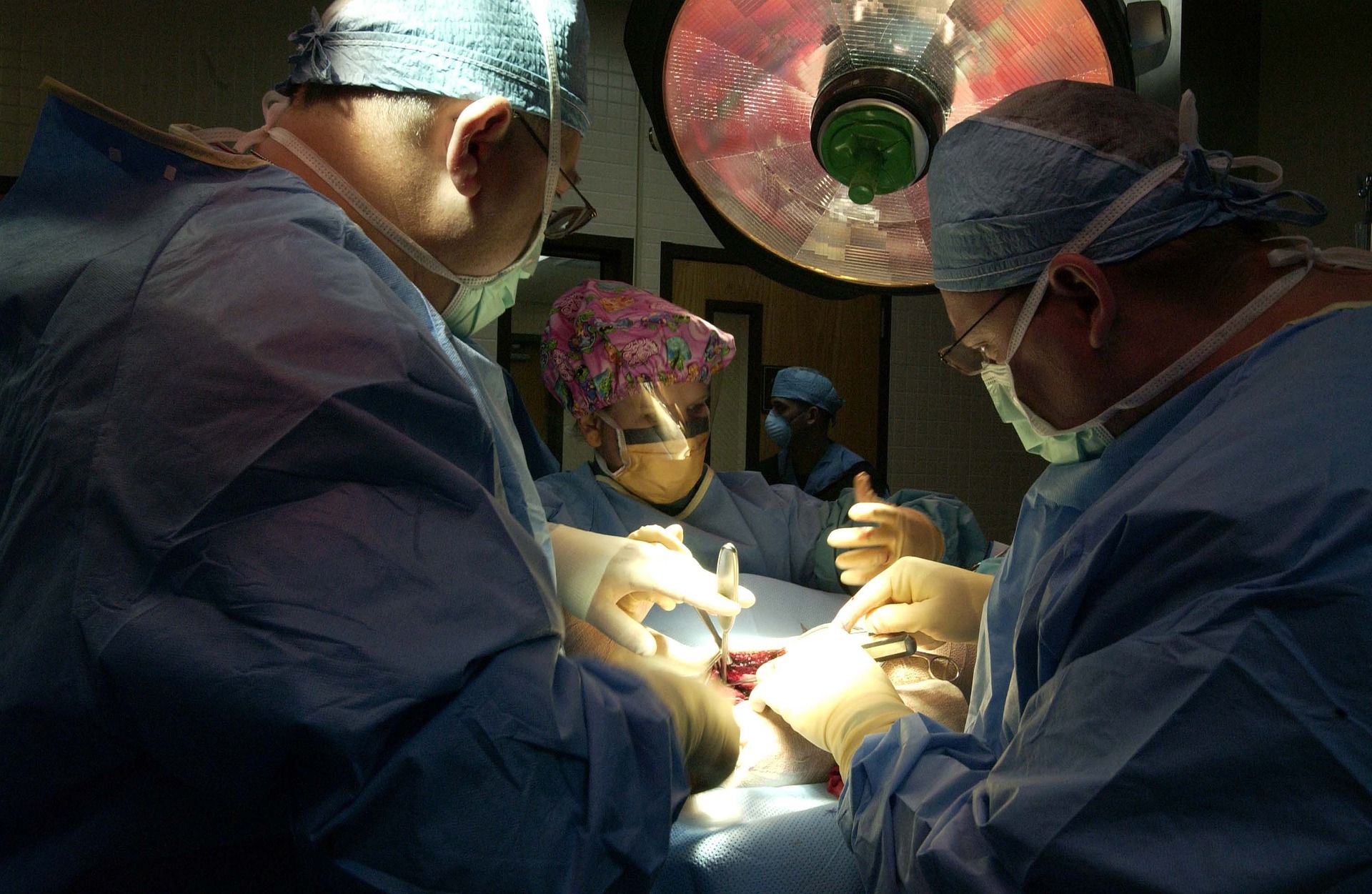
Fourteen general surgery residents and five faculty physicians participated in the study over an eight-month period. EDA responses were measured during each of the 130 surgical procedures monitored. The results were compared to determine common points during procedures where surgeons experienced different levels of EDA responses.

“Our initial findings indicated that at crucial points during the procedures, residents’ EDA increased as much as 20 times more than experienced faculty performing the same surgery,” Quick says. “However, over the course of the study, and as their proficiency developed, surgical residents’ EDA levels began to lower in accordance with their experience.”

Quick said that although the next step will be to add stop-action photography into the evaluation process to further explore objective assessments, EDA may not become a standard training option any time soon.

“This type of monitoring is relatively easy to accomplish,” Quick says. “It can be cost prohibitive, though. While the sensors are reusable, initial equipment costs can be as much as $10,000. Additionally, our study was limited to 14 resident physicians at a single medical center. However, this objective measure of surgical ability could have far-reaching implications on surgical education in the future.”
Related Articles Read More >

The most innovative medical devices of 2026
An illustration showing Corcym's Memo 4D Curve's laser-cut nitinol core.
Laser-cut nitinol and a layered design let these cardiac implants flex
A photo of J&J MedTech SVP and Global Head of Digital Shan Jegatheeswaran.
Where Johnson & Johnson sees opportunity in surgical intelligence
A close of of Medical 21's Maverics graft.
A surgeon’s prayer helped St. Jude Medical founder Manny Villafaña size his latest device
“mdo
EXPAND YOUR KNOWLEDGE AND STAY CONNECTED
Get the latest medical device business news, application and technology trends.

DeviceTalks Weekly

See More >

MDO Digital Edition

Digital Edition

Subscribe to Medical Design & Outsourcing. Bookmark, share and interact with the leading medical design engineering magazine today.

MEDTECH 100 INDEX

Medtech 100 logo
Market Summary > Current Price
The MedTech 100 is a financial index calculated using the BIG100 companies covered in Medical Design and Outsourcing.

New MedTech Resource

Medical Tubing

MassDevice

Mass Device

The Medical Device Business Journal. MassDevice is the leading medical device news business journal telling the stories of the devices that save lives.

Visit Website
MDO ad
Medical Design and Outsourcing
  • MassDevice
  • DeviceTalks
  • MedTech100 Index
  • Medical Tubing + Extrusion
  • Medical Design Sourcing
  • Drug Delivery Business News
  • Drug Discovery & Development
  • Pharmaceutical Processing World
  • R&D World
  • About Us/Contact
  • Advertise With Us
  • Subscribe to Print Magazine
  • Subscribe to our E-Newsletter
  • Listen to our Weekly Podcasts
  • Join our DeviceTalks Tuesdays Discussion

Copyright © 2026 Arrowfly, LLC. All Rights Reserved. The material on this site may not be reproduced, distributed, transmitted, cached or otherwise used, except with the prior written permission of Arrowfly LLC. Site Map | Privacy Policy | RSS

Search Medical Design & Outsourcing

  • Home
  • Medical Device Business
    • Mergers & Acquisitions
    • Financial
    • Regulatory
  • Applications
    • Cardiovascular
    • Devices
    • Imaging
    • Implantables
    • Medical Equipment
    • Orthopedic
    • Surgical
  • Technologies
    • Supplies and Components Index
    • Contract Manufacturing
    • Components
    • Electronics
    • Extrusions
    • Materials
    • Motion Control
    • Prototyping
    • Pumps
    • Tubing
  • MedTech Resources
    • Medtech Events in 2026
    • The 2026 Medtech Big 100
    • Medical Device Handbook
    • MedTech 100 Index
    • Subscribe to Print Magazine
    • DeviceTalks
    • Digital Editions
    • eBooks
    • Educational Assets
    • Manufacturer Search
    • Podcasts
    • Webinars / Digital Events
    • Whitepapers
    • Voices
    • Views
    • Video
  • 2026 Leadership
    • 2025 Winners
    • 2024 Winners
    • 2023 Winners
    • 2022 Winners
    • 2021 Winners
  • Women in Medtech
  • Advertise
  • Subscribe