Medical Design and Outsourcing

  • Home
  • Medical Device Business
    • Mergers & Acquisitions
    • Financial
    • Regulatory
  • Applications
    • Cardiovascular
    • Devices
    • Imaging
    • Implantables
    • Medical Equipment
    • Orthopedic
    • Surgical
  • Technologies
    • Supplies and Components Index
    • Contract Manufacturing
    • Components
    • Electronics
    • Extrusions
    • Materials
    • Motion Control
    • Prototyping
    • Pumps
    • Tubing
  • MedTech Resources
    • Medtech Events in 2026
    • The 2026 Medtech Big 100
    • Medical Device Handbook
    • MedTech 100 Index
    • Subscribe to Print Magazine
    • DeviceTalks
    • Digital Editions
    • eBooks
    • Educational Assets
    • Manufacturer Search
    • Podcasts
    • Webinars / Digital Events
    • Whitepapers
    • Voices
    • Views
    • Video
  • 2026 Leadership
    • 2025 Winners
    • 2024 Winners
    • 2023 Winners
    • 2022 Winners
    • 2021 Winners
  • Women in Medtech
  • Advertise
  • Subscribe

AdvaMed seeks medtech exemption on all import taxes

February 3, 2025 By Jim Hammerand

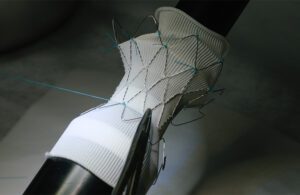
A photo showing a pair of pliers holding one of the nitinol wire struts on a Harmony valve while a thread stitches the polyester and pig tissue to it.

Workers in Tijuana, Mexico, sew each Medtronic Harmony heart valve by hand. Devices made outside the U.S. may be subject to new import taxes under President Donald Trump. [Photo courtesy of Medtronic]

AdvaMed today said it hopes President Donald Trump will exempt medical devices from all import taxes, including new tariffs initiated by Trump on imports from Mexico, Canada and China.

In a statement, AdvaMed President and CEO Scott Whitaker said the medical device manufacturing association has shared concerns with the Trump Administration “about the potential impact tariffs could have on the medical technology supply chain that American patients depend on for their care.”

“In light of that risk, an exemption was provided for most medical devices during President Trump’s first term with respect to the tariffs on China, and we are advocating for a similar approach this time,” Whitaker said. “We will closely monitor for any effects the tariffs may have on this critical supply chain and share that information with the Administration.”

Trump put the Mexico and Canada tariffs on hold today, creating more uncertainly for device manufacturers and their customers and suppliers.

Whitaker’s comments are continued at the end of this post.

Most — if not all — U.S. medical device manufacturers have production facilities outside the U.S. and/or rely on foreign suppliers and contract manufacturers.

For example, Intuitive Surgical last month said Trump’s tariffs could hurt their business because they make instruments for their surgical robotics systems in Mexicali. In its newly published annual report, the company further detailed that risk.

“As we currently manufacture a significant majority of our instruments and accessories in Mexicali, Mexico, a 25% tariff on all imports from Mexico would increase the costs of our products manufactured in Mexico and adversely impact our gross profit,” the company said in its annual report. “Such tariffs and, if enacted, any further legislation or actions taken by the U.S. federal government that restrict trade, such as additional tariffs, trade barriers, and other protectionist or retaliatory measures taken by governments in Europe, Asia, and other countries, could adversely impact our ability to sell products and services in our OUS markets. Tariffs could increase the cost of our products and the components and raw materials that go into making them. These increased costs could adversely impact the gross margin that we earn on our products, which could make our products less competitive and reduce consumer demand. Countries may also adopt other protectionist measures that could limit our ability to offer our products and services. The ultimate impact of any tariffs will depend on various factors, including if any tariffs are ultimately implemented, the timing of implementation, and the amount, scope, and nature of the tariffs.”

Trump also said he wants to tax all imports of semiconductors and chips, which are mostly manufactured abroad and increasingly used by medical device manufacturers.

Related: Medtronic CEO Geoff Martha talks Trump import taxes and supply chain

“Our industry is heavily regulated: FDA decides what products can be put on the market, and then Medicaid, Medicare, and the VA largely determine the reimbursement for procedures using medtech products,” Whitaker continued in his statement. “This means tariffs impact American companies similarly to an excise tax, which would lead to less R&D/innovation, layoffs, higher prices for the above-mentioned payors and patients, or all of the above. Additionally, moving manufacturing from one facility to a different or new facility requires FDA approval, which makes it difficult in the short term to adjust production to the U.S.”

“The increased costs posed by tariffs, and their functioning essentially as an excise tax in practice, could resurrect the climate of concern the medical device excise tax created for nearly a decade,” he said. “During the President’s first term with respect to the tariffs on China, a carve-out was provided for much of the medtech sector, given the risks to the U.S. hospital supply chain. We maintain that the potential supply chain disruption and its downstream effects on patients remain a risk, should tariffs be implemented. Shortages of critical medical technologies are a real concern in our initial modeling. Tariffs could hold back the innovation potential of the U.S. medtech industry. R&D spending would likely be the first and most direct casualty, threatening America’s medtech innovation leadership. And increased tariffs may even have the unintended consequence of boosting the competitiveness of medtech industries of other nations.”

“We hope that these critical facts resonate with the Administration, and we will continue to make our case on behalf of the patients our companies serve,” Whitaker concluded.


About The Author

Jim Hammerand

Jim Hammerand is the managing editor of Arrowfly's Medical Design & Outsourcing, where he leads coverage of medtech innovation, design, engineering and manufacturing. He also reports breaking news at Arrowfly's MassDevice and contributes to our DeviceTalks podcasts and live events. Hammerand has more than two decades of journalism experience spanning newspapers, magazines, websites, live events, radio and TV news. For nearly a decade, Hammerand reported and edited business news for American City Business Journals as a reporter and digital editor at the Minneapolis/St. Paul Business Journal and then as managing editor of the Puget Sound Business Journal in Seattle. He holds degrees in journalism and management from the University of Minnesota and has won journalism awards from the Society of Professional Journalists, American Society of Business Publication Editors, and Trade, Association, Business Publications International. Connect with him on LinkedIn or by email at [email protected].

Related Articles Read More >

The most innovative medical devices of 2026
A photo of PTFE coating delamination.
Passing the tape test doesn’t mean your coating is reliable
An illustration showing Corcym's Memo 4D Curve's laser-cut nitinol core.
Laser-cut nitinol and a layered design let these cardiac implants flex
A photo of J&J MedTech SVP and Global Head of Digital Shan Jegatheeswaran.
Where Johnson & Johnson sees opportunity in surgical intelligence
“mdo
EXPAND YOUR KNOWLEDGE AND STAY CONNECTED
Get the latest medical device business news, application and technology trends.

DeviceTalks Weekly

See More >

MDO Digital Edition

Digital Edition

Subscribe to Medical Design & Outsourcing. Bookmark, share and interact with the leading medical design engineering magazine today.

MEDTECH 100 INDEX

Medtech 100 logo
Market Summary > Current Price
The MedTech 100 is a financial index calculated using the BIG100 companies covered in Medical Design and Outsourcing.

New MedTech Resource

Medical Tubing

MassDevice

Mass Device

The Medical Device Business Journal. MassDevice is the leading medical device news business journal telling the stories of the devices that save lives.

Visit Website
MDO ad
Medical Design and Outsourcing
  • MassDevice
  • DeviceTalks
  • MedTech100 Index
  • Medical Tubing + Extrusion
  • Medical Design Sourcing
  • Drug Delivery Business News
  • Drug Discovery & Development
  • Pharmaceutical Processing World
  • R&D World
  • About Us/Contact
  • Advertise With Us
  • Subscribe to Print Magazine
  • Subscribe to our E-Newsletter
  • Listen to our Weekly Podcasts
  • Join our DeviceTalks Tuesdays Discussion

Copyright © 2026 Arrowfly, LLC. All Rights Reserved. The material on this site may not be reproduced, distributed, transmitted, cached or otherwise used, except with the prior written permission of Arrowfly LLC. Site Map | Privacy Policy | RSS

Search Medical Design & Outsourcing

  • Home
  • Medical Device Business
    • Mergers & Acquisitions
    • Financial
    • Regulatory
  • Applications
    • Cardiovascular
    • Devices
    • Imaging
    • Implantables
    • Medical Equipment
    • Orthopedic
    • Surgical
  • Technologies
    • Supplies and Components Index
    • Contract Manufacturing
    • Components
    • Electronics
    • Extrusions
    • Materials
    • Motion Control
    • Prototyping
    • Pumps
    • Tubing
  • MedTech Resources
    • Medtech Events in 2026
    • The 2026 Medtech Big 100
    • Medical Device Handbook
    • MedTech 100 Index
    • Subscribe to Print Magazine
    • DeviceTalks
    • Digital Editions
    • eBooks
    • Educational Assets
    • Manufacturer Search
    • Podcasts
    • Webinars / Digital Events
    • Whitepapers
    • Voices
    • Views
    • Video
  • 2026 Leadership
    • 2025 Winners
    • 2024 Winners
    • 2023 Winners
    • 2022 Winners
    • 2021 Winners
  • Women in Medtech
  • Advertise
  • Subscribe