Medical Design and Outsourcing

  • Home
  • Medical Device Business
    • Mergers & Acquisitions
    • Financial
    • Regulatory
  • Applications
    • Cardiovascular
    • Devices
    • Imaging
    • Implantables
    • Medical Equipment
    • Orthopedic
    • Surgical
  • Technologies
    • Supplies and Components Index
    • Contract Manufacturing
    • Components
    • Electronics
    • Extrusions
    • Materials
    • Motion Control
    • Prototyping
    • Pumps
    • Tubing
  • MedTech Resources
    • Medtech Events in 2026
    • The 2026 Medtech Big 100
    • Medical Device Handbook
    • MedTech 100 Index
    • Subscribe to Print Magazine
    • DeviceTalks
    • Digital Editions
    • eBooks
    • Educational Assets
    • Manufacturer Search
    • Podcasts
    • Webinars / Digital Events
    • Whitepapers
    • Voices
    • Views
    • Video
  • 2026 Leadership
    • 2025 Winners
    • 2024 Winners
    • 2023 Winners
    • 2022 Winners
    • 2021 Winners
  • Women in Medtech
  • Advertise
  • Subscribe

CPM For Knee Or Shoulder Joints: Advantage Only In Two Therapeutic Indications

August 8, 2018 By Institute for Quality and Efficiency in Health Care

Patients who have had knee or shoulder surgery or who require conservative treatment can benefit from training with motor-driven continuous passive motion (CPM) devices. However, this only applies to two therapeutic indications, and in each case only to one treatment outcome. Patients with stiff shoulder have less pain with CPM treatment than with physiotherapy alone. The range of motion after total knee replacement is improved if CPM is used in addition to physiotherapy. This is the result of the final report published by the Institute for Quality and Efficiency in Health Care (IQWiG). Hence, the conclusion was less favourable than the conclusion of the preliminary report, where the Institute had determined greater benefit of CPM also for pain in rotator cuff tear, a condition involving the rupture of tendons in the shoulder.

Motor-driven CPM devices allow movement of the joints without the patients needing to use their muscles. With this method, intensive activation of the joints is possible already shortly after surgery.

CPM is used to improve mobility, prevent stiffness and promote healing. It is usually not applied on its own, but as part of a multimodal therapy, supplementing physiotherapy.

Compared with the preliminary report, the researchers could analyse data from two additional studies. The evidence base was still best for the use of CPM in addition to physiotherapy after total knee replacement surgery. Data of 1693 patients were available for this therapeutic indication, whereas data of fewer than 160 patients were available for each of the remaining six research questions.
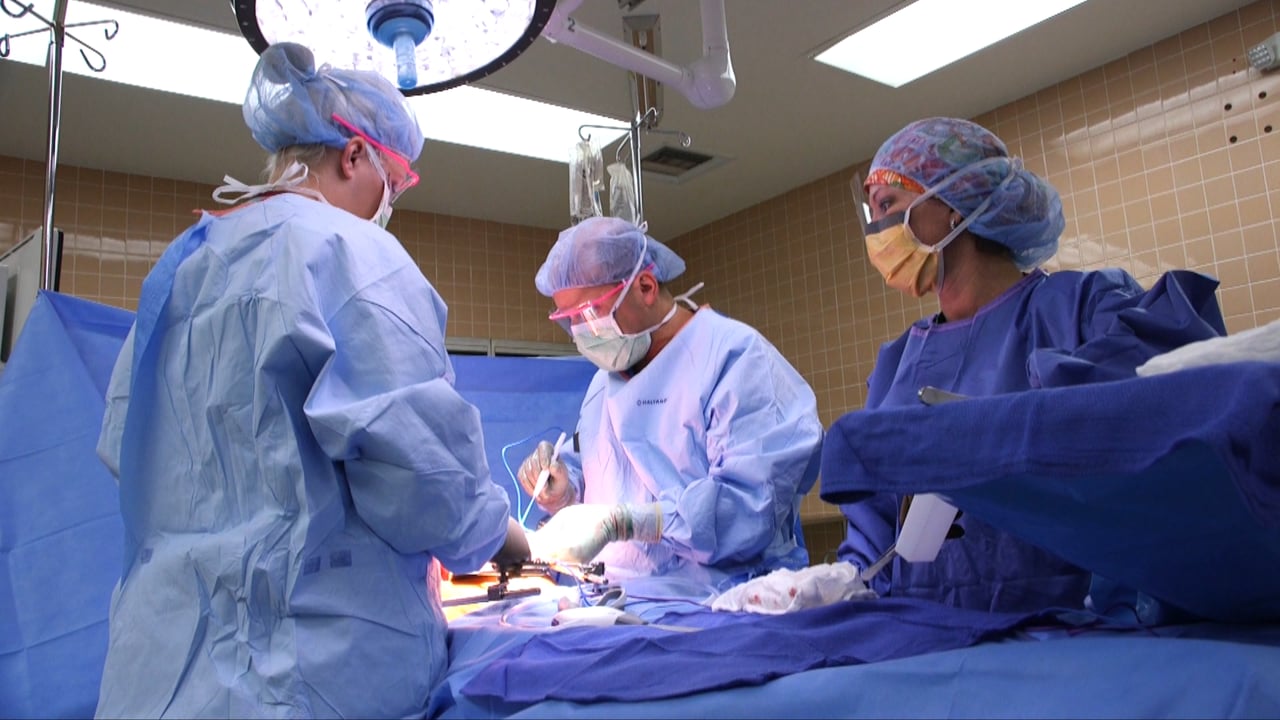
(Image credit: screen grab from Vimeo)

For rotator cuff tear, a condition involving the rupture of tendons in the shoulder requiring surgery, data from two studies with 155 participants in total were now available to the Institute for the comparison of CPM in combination with physiotherapy versus physiotherapy alone. In the preliminary report, this number was 100. Since the study additionally analysed had an opposing result for the outcome “pain”, the Institute no longer sees an advantage in its final report.

Regarding the therapeutic indication of stiff shoulder, however, there is still an indication of greater benefit of CPM. The assessment in the therapeutic indication of total knee replacement also remained the same with IQWiG determining a hint of greater benefit. CPM used directly after surgery in addition to physiotherapy improves the patients’ ability to move their knees.

The final report also identified evidence gaps: Usable data on health-related quality of life and adverse events are still missing. IQWiG recommends conducting further randomized controlled trials (RCTs) in the therapeutic indications where currently no (greater) benefit can be determined. In these studies, it would be important to standardize both the administration of analgesics and the respective treatment regimens of CPM and physiotherapy, and to provide detailed descriptions of their beginning and duration. Without this information, it is difficult to interpret the results.

In this final report, IQWiG assessed the benefit and harm of CPM only for knee and shoulder joints. Another completed assessment dealt with controlled active motion (CAM) devices for knees in the treatment of anterior cruciate ligament ruptures.
Related Articles Read More >

The most innovative medical devices of 2026
An illustration showing Corcym's Memo 4D Curve's laser-cut nitinol core.
Laser-cut nitinol and a layered design let these cardiac implants flex
A photo of J&J MedTech SVP and Global Head of Digital Shan Jegatheeswaran.
Where Johnson & Johnson sees opportunity in surgical intelligence
A close of of Medical 21's Maverics graft.
A surgeon’s prayer helped St. Jude Medical founder Manny Villafaña size his latest device
“mdo
EXPAND YOUR KNOWLEDGE AND STAY CONNECTED
Get the latest medical device business news, application and technology trends.

DeviceTalks Weekly

See More >

MDO Digital Edition

Digital Edition

Subscribe to Medical Design & Outsourcing. Bookmark, share and interact with the leading medical design engineering magazine today.

MEDTECH 100 INDEX

Medtech 100 logo
Market Summary > Current Price
The MedTech 100 is a financial index calculated using the BIG100 companies covered in Medical Design and Outsourcing.

New MedTech Resource

Medical Tubing

MassDevice

Mass Device

The Medical Device Business Journal. MassDevice is the leading medical device news business journal telling the stories of the devices that save lives.

Visit Website
MDO ad
Medical Design and Outsourcing
  • MassDevice
  • DeviceTalks
  • MedTech100 Index
  • Medical Tubing + Extrusion
  • Medical Design Sourcing
  • Drug Delivery Business News
  • Drug Discovery & Development
  • Pharmaceutical Processing World
  • R&D World
  • About Us/Contact
  • Advertise With Us
  • Subscribe to Print Magazine
  • Subscribe to our E-Newsletter
  • Listen to our Weekly Podcasts
  • Join our DeviceTalks Tuesdays Discussion

Copyright © 2026 Arrowfly, LLC. All Rights Reserved. The material on this site may not be reproduced, distributed, transmitted, cached or otherwise used, except with the prior written permission of Arrowfly LLC. Site Map | Privacy Policy | RSS

Search Medical Design & Outsourcing

  • Home
  • Medical Device Business
    • Mergers & Acquisitions
    • Financial
    • Regulatory
  • Applications
    • Cardiovascular
    • Devices
    • Imaging
    • Implantables
    • Medical Equipment
    • Orthopedic
    • Surgical
  • Technologies
    • Supplies and Components Index
    • Contract Manufacturing
    • Components
    • Electronics
    • Extrusions
    • Materials
    • Motion Control
    • Prototyping
    • Pumps
    • Tubing
  • MedTech Resources
    • Medtech Events in 2026
    • The 2026 Medtech Big 100
    • Medical Device Handbook
    • MedTech 100 Index
    • Subscribe to Print Magazine
    • DeviceTalks
    • Digital Editions
    • eBooks
    • Educational Assets
    • Manufacturer Search
    • Podcasts
    • Webinars / Digital Events
    • Whitepapers
    • Voices
    • Views
    • Video
  • 2026 Leadership
    • 2025 Winners
    • 2024 Winners
    • 2023 Winners
    • 2022 Winners
    • 2021 Winners
  • Women in Medtech
  • Advertise
  • Subscribe