By Sunil Inamdar, VP of Design Services and Engineering, Solesis
As catheter-based interventions become more complex, the sheath can no longer be treated as a standard supporting component. It is a critical part of the delivery system, influencing how a device moves through the vasculature, interfaces with the anatomy and supports consistent placement and deployment.
Today’s vascular procedures often require devices to pass through smaller access points, travel longer distances and navigate challenging anatomy. At the same time, delivery systems must accommodate increasingly complex balloons, implants and therapeutic devices. These demands make catheter sheath development a system-level engineering challenge.
Successful sheath design begins by translating the requirements of the procedure and device into a customized material and layer architecture. Profile, flexibility, surface characteristics, durability, geometry and device compatibility must be considered together. Decisions about one characteristic can affect the others, making early alignment between material selection, sheath architecture and manufacturing approach essential.
Designing the Sheath Around Device Performance
The relationship between inner diameter and outer diameter is one of the most important considerations in vascular sheath development. Device teams need enough internal space to accommodate the therapeutic device while minimizing the sheath’s external profile. Thin-wall materials and customized single- or multi-layer designs can help engineers balance these competing requirements.
The appropriate architecture also depends on the access point, target anatomy and procedural workflow. Radial, femoral, transpedal, neurovascular and structural heart procedures each create different requirements related to sheath length, flexibility, surface performance and compatibility with the broader delivery platform.
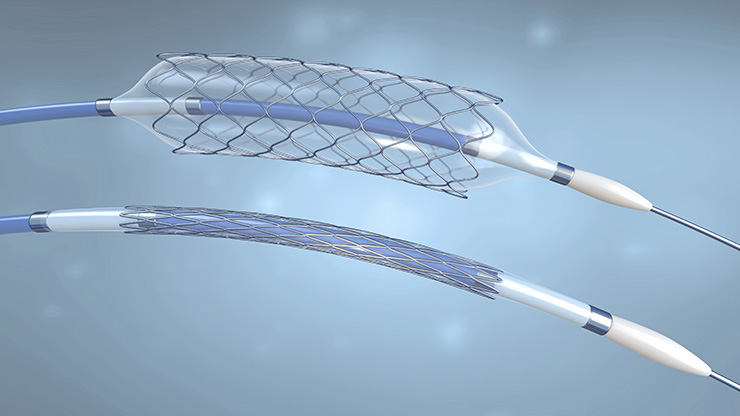
This is why the sheath should be designed as part of the complete device system rather than selected as an isolated polymer component. Its materials, layers and manufacturing processes must integrate with the catheter, reinforcement structure, balloon or implantable device and downstream assembly requirements.
Connecting Material and Layer Design With Manufacturing
No single material or manufacturing method is appropriate for every vascular sheath. The right solution may require a thin extruded film, a seamless dip-molded component, a thermoformed geometry or a layered architecture that provides differentiated properties within the sheath structure.
Polyzen, part of the Solesis family of companies, works with MedTech teams to evaluate these pathways based on the functional requirements of the device. Its capabilities include films starting at 0.5 mil options and customizable material, thickness and surface characteristics.
Polyzen also offers multiple forming pathways, including extrusion, dip molding, layering and thermoforming. This flexibility allows the material and manufacturing approach to be configured around the needs of the sheath rather than forcing the program into a predetermined process.
Just as importantly, manufacturability and qualification should be considered early. A promising prototype must ultimately become a consistent, scalable component. Aligning performance requirements with material availability, repeatable processing, validation and commercial production can provide a stronger foundation for development.
From Sheath Requirements to Commercial Manufacturing
Polyzen supports catheter sheath and delivery-system programs from material and process evaluation through validation and commercial manufacturing. Its experience spans vascular access, peripheral vascular, interventional cardiology, structural heart, electrophysiology and other demanding delivery applications.
By combining polymer expertise, material and layer design, multiple forming technologies and ISO 13485-certified quality management systems, Polyzen helps device teams translate complex sheath requirements into customized, manufacturable solutions.
Read the full article, Designing Vascular Access Sheaths for Complex Interventions, to learn how access strategy, sheath architecture, material selection and manufacturing decisions come together in the development of next-generation vascular delivery systems.
Read and Learn MoreSponsored content by Solesis