Medical Design and Outsourcing

  • Home
  • Medical Device Business
    • Mergers & Acquisitions
    • Financial
    • Regulatory
  • Applications
    • Cardiovascular
    • Devices
    • Imaging
    • Implantables
    • Medical Equipment
    • Orthopedic
    • Surgical
  • Technologies
    • Supplies and Components Index
    • Contract Manufacturing
    • Components
    • Electronics
    • Extrusions
    • Materials
    • Motion Control
    • Prototyping
    • Pumps
    • Tubing
  • MedTech Resources
    • Medtech Events in 2026
    • The 2025 Medtech Big 100
    • Medical Device Handbook
    • MedTech 100 Index
    • Subscribe to Print Magazine
    • DeviceTalks
    • Digital Editions
    • eBooks
    • Educational Assets
    • Manufacturer Search
    • Podcasts
    • Webinars / Digital Events
    • Whitepapers
    • Voices
    • Views
    • Video
  • 2026 Leadership
    • 2025 Winners
    • 2024 Winners
    • 2023 Winners
    • 2022 Winners
    • 2021 Winners
  • Women in Medtech
  • Advertise
  • Subscribe

3 questions with cardiac electrophysiologist Dr. Peter Weiss

January 6, 2026 By Jim Hammerand

A photo of cardiac electrophysiologist Dr. Peter Weiss.

Dr. Peter Weiss is a cardiac electrophysiologist and a University of Arizona associate professor of medicine at Banner-University Medical Center Phoenix. [Photo courtesy of the University of Arizona]

Cardiac electrophysiologist Dr. Peter Weiss is one of the biggest boosters of robotic magnetic navigation, serving as a consultant to Stereotaxis ahead of the FDA’s approval of the MAGiC cardiac ablation catheter.

In addition to his medical practice and work with Stereotaxis, Weiss is a founding member and former president of the Society for Cardiac Robotic Navigation (SCRN) and a University of Arizona associate professor of medicine at Banner-University Medical Center Phoenix, where he’s the director of ventricular arrhythmia management and robotics.

We asked Weiss three questions ahead of the latest Stereotaxis milestone to help device developers better understand the needs of electrophysiologists (EPs) and their patients. The following has been lightly edited for length and clarity.

MDO: What unmet needs does the Stereotaxis MAGiC ablation catheter solve for EPs?

An illustration of the Stereotaxis MAGiC ablation catheter.

The Stereotaxis MAGiC catheter is used with Stereotaxis robotic magnetic navigation systems for cardiac ablation. [Image courtesy of Stereotaxis]

Weiss: “For more than 15 years and over 150,000 procedures worldwide, magnetic navigation has facilitated safe and effective EP ablation procedures in a wide variety of patients as has been described in over 400 peer-reviewed publications. All of this has been accomplished with legacy technology, particularly the available ablation catheters. The MAGiC catheter is an important step into the present and future of this technology, allowing electrophysiologists to continue to provide this important and unique approach to the care of some of our most complex and challenging patients in need of catheter ablation for arrhythmias.”

MDO: What are the challenges that remain for EPs even after this latest system?

Weiss: “There are several ongoing challenges that continue to impact the care of EP patients.

“First, the ability to integrate technologies across platforms and the time it takes for regulatory approvals to support this. A specific example in this case might be the approval of a new radiofrequency (RF) ablation catheter, with the potential for rapid technical evolution allowing for pulsed field applications as well. How will this play out in the current regulatory environment?

“Second, continued access to what we describe as an ‘open EP ecosystem.’ Many of us support the concept that having a broad range of choices when applying available technologies to the care of patients is always best. To a greater or lesser extent, many of the strategic technology companies dominating our field have moved towards closed ecosystems that limit this choice. With the rapid evolution of EP technology, allowing for potential interoperability would allow us to choose the best tools for each patient in each case.

“Third, I am incredibly excited about the future of robotics in endovascular procedures, including but not limited to EP. Robotics has had marked impact on areas such as soft tissue surgery and orthopedics. With the advent of robotic platforms with smaller footprint, smaller capital expense, more versatile compatibility with other lab systems such as fluoroscopy, a widening landscape of disposables, and even the potential for clinically relevant remote procedures, it seems that we are nearing an important tipping point in the application of robotics in the care of patients who may benefit from endovascular procedures including EP, peripheral and neuro interventions, and invasive cardiology.”

MDO: Can you offer your perspective on the latest findings around pulsed-field ablation (PFA) safety (for example, this and this) and what we still have yet to learn on topics like microbubbles?

Weiss: “PFA is in its early postmarket period. It is no surprise that associated complications are coming to the surface and beginning to be explored in the medical literature. To date, reports of phrenic nerve palsy, hemolysis, coronary spasm, and microbubbles have been the main examples.

“The discussion is complex, as PFA delivery is highly variable depending on a variety of factors such as energy totals, waveforms, and delivery system form factors. This is quite different than thermal ablation platforms which are much more uniform in their biophysics. Due to this, future research in these areas will need to focus on PFA as a whole, but also each system according to its unique attributes.

“Key to determining longer term risks and benefits of each system would be rigorous post marketing registries, as is being put in place through Heart Rhythm Society with its new initiative to develop an industry wide, state of the art platform for collecting real-world data on PFA. Our hope is that PFA continues its evolution as a transformative approach to arrhythmia care, but that our enthusiasm as a field for its efficiency and apparent effectiveness/safety profile is tempered with appropriate caution and skeptical analysis.”

Related: Do PFA microbubbles matter? We asked Abbott’s top doc in electrophysiology and Talking PFA safety with Boston Scientific’s Dr. Brad Sutton


About The Author

Jim Hammerand

Jim Hammerand is the managing editor of Arrowfly's Medical Design & Outsourcing, where he leads coverage of medtech innovation, design, engineering and manufacturing. He also reports breaking news at Arrowfly's MassDevice and contributes to our DeviceTalks podcasts and live events. Hammerand has more than two decades of journalism experience spanning newspapers, magazines, websites, live events, radio and TV news. For nearly a decade, Hammerand reported and edited business news for American City Business Journals as a reporter and digital editor at the Minneapolis/St. Paul Business Journal and then as managing editor of the Puget Sound Business Journal in Seattle. He holds degrees in journalism and management from the University of Minnesota and has won journalism awards from the Society of Professional Journalists, American Society of Business Publication Editors, and Trade, Association, Business Publications International. Connect with him on LinkedIn or by email at [email protected].

Related Articles Read More >

A photo of J&J MedTech SVP and Global Head of Digital Shan Jegatheeswaran.
Where Johnson & Johnson sees opportunity in surgical intelligence
A close of of Medical 21's Maverics graft.
A surgeon’s prayer helped St. Jude Medical founder Manny Villafaña size his latest device
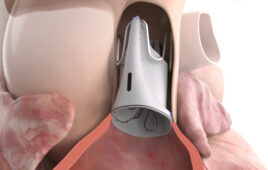
A photo of Edwards Lifesciences' Autus size-adjustable heart valve.
A heart valve that grows with children shows what pediatric devices can become
The Medtech Innovation Board logo
Leading medical device experts and MDO launch Medtech Innovation Board
“mdo
EXPAND YOUR KNOWLEDGE AND STAY CONNECTED
Get the latest medical device business news, application and technology trends.

DeviceTalks Weekly

See More >

MDO Digital Edition

Digital Edition

Subscribe to Medical Design & Outsourcing. Bookmark, share and interact with the leading medical design engineering magazine today.

MEDTECH 100 INDEX

Medtech 100 logo
Market Summary > Current Price
The MedTech 100 is a financial index calculated using the BIG100 companies covered in Medical Design and Outsourcing.

New MedTech Resource

Medical Tubing

MassDevice

Mass Device

The Medical Device Business Journal. MassDevice is the leading medical device news business journal telling the stories of the devices that save lives.

Visit Website
MDO ad
Medical Design and Outsourcing
  • MassDevice
  • DeviceTalks
  • MedTech100 Index
  • Medical Tubing + Extrusion
  • Medical Design Sourcing
  • Drug Delivery Business News
  • Drug Discovery & Development
  • Pharmaceutical Processing World
  • R&D World
  • About Us/Contact
  • Advertise With Us
  • Subscribe to Print Magazine
  • Subscribe to our E-Newsletter
  • Listen to our Weekly Podcasts
  • Join our DeviceTalks Tuesdays Discussion

Copyright © 2026 Arrowfly, LLC. All Rights Reserved. The material on this site may not be reproduced, distributed, transmitted, cached or otherwise used, except with the prior written permission of Arrowfly LLC. Site Map | Privacy Policy | RSS

Search Medical Design & Outsourcing

  • Home
  • Medical Device Business
    • Mergers & Acquisitions
    • Financial
    • Regulatory
  • Applications
    • Cardiovascular
    • Devices
    • Imaging
    • Implantables
    • Medical Equipment
    • Orthopedic
    • Surgical
  • Technologies
    • Supplies and Components Index
    • Contract Manufacturing
    • Components
    • Electronics
    • Extrusions
    • Materials
    • Motion Control
    • Prototyping
    • Pumps
    • Tubing
  • MedTech Resources
    • Medtech Events in 2026
    • The 2025 Medtech Big 100
    • Medical Device Handbook
    • MedTech 100 Index
    • Subscribe to Print Magazine
    • DeviceTalks
    • Digital Editions
    • eBooks
    • Educational Assets
    • Manufacturer Search
    • Podcasts
    • Webinars / Digital Events
    • Whitepapers
    • Voices
    • Views
    • Video
  • 2026 Leadership
    • 2025 Winners
    • 2024 Winners
    • 2023 Winners
    • 2022 Winners
    • 2021 Winners
  • Women in Medtech
  • Advertise
  • Subscribe