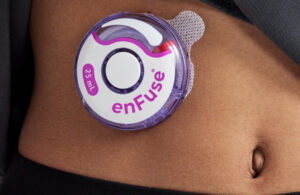
The Enable Injections enFuse on-body injector is worn on a patient’s stomach for large-volume, subcutaneous drug delivery. [Photo courtesy of Enable Injections]
The enFuse OBI secured its initial combination product FDA approval in 2023 for adults with paroxysmal nocturnal hemoglobinuria, a rare blood disorder. That milestone made enFuse the “first purely mechanical, large-volume, on-body subcutaneous drug delivery device” on the market, Enable Injections EVP and Chief Technology Officer Matt Huddleston said at the time.
In a Medical Design & Outsourcing interview, Huddleston — the engineer who led the company’s R&D efforts and is now chief commercial officer while still serving as de facto CTO — explained the technology as a simple elastomeric balloon attached to a needle, instead of the complex motors, sensors and electronic components used for wearable diabetes devices.
Enable Injections EVP and Chief Commercial Officer Matt Huddleston [Photo courtesy of Enable Injections]
“The people who are getting these kind of therapies now are used to sitting down tied to an IV chair or with a nurse sitting over them giving them a syringe,” Huddleston said. “We want you to be going about your day, and we find the abdomen is the best location to deliver the drug for mobility.”
The device also has a tissue tent on the bottom of the device that stretches the tissue before the stainless steel needle’s insertion to make sure the needle reaches its target for drug delivery.
“What nurses are really good at is when they have a needle in their hand — whether it’s a syringe or a butterfly needle they’re attaching — they have complete visibility of the needle going in,” he said. “When you get an injection, you see nurses either pinch the skin to bunch it up or they stretch it. In either case, they have full control, full visibility. … What we wanted to do was to pre-stress the tissue with the device so when the needle goes in, it goes in right in the same anatomical spot.”
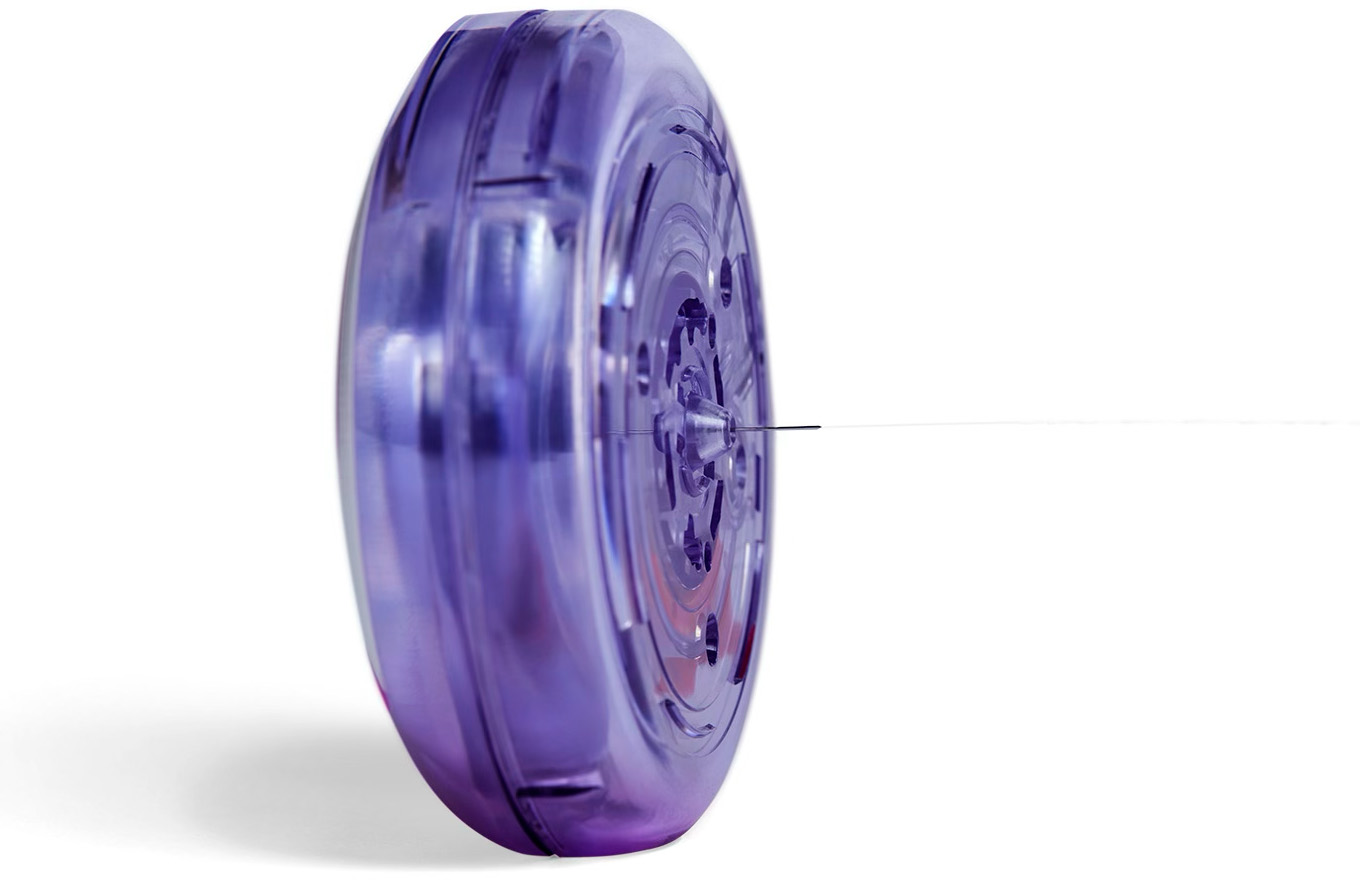
The Enable Injections enFuse on-body injector has a thin, retractable needle for subcutaneous drug delivery and a raised “tissue tent” that automatically stretches the tissue at the injection site to ensure drug delivery at the correct depth and into the appropriate anatomical space. [Photo courtesy of Enable Injections]
But it’s the silicone-based balloon that’s the “heart of the device,” Huddleston said.
“We wanted an inert product that could be compatible short-term with any kind of biologic peptide or antibody-drug conjugate (ADC), and in some cases that balloon is going to see 700% to 800% strain going from its original position to its final position,” he said.
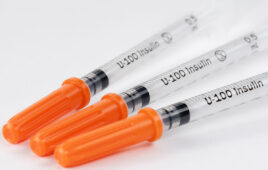
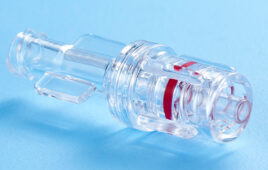
There are two ways to get the drug from vials into the balloon: a syringe transfer system that uses a standard Luer lock syringe, and an automated system that uses compressed nitrogen gas to move the drug from a vial to the device.
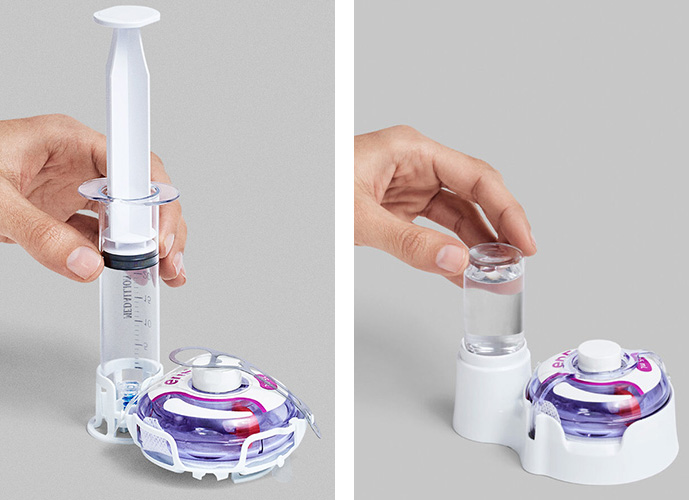
The Enable Injections enFuse on-body injector can be filled with drugs from vials with a syringe (left) or an automated system. [Photos courtesy of Enable Injections]
We’ll have more from this interview at Medical Design & Outsourcing soon. Subscribe to our free newsletter to watch for the next part.