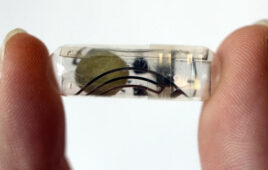
“Innovation defines our future,” says Enovis R&D Engineering VP Suneethi Gudapati. “We’re never satisfied with the status quo and believe innovation is essential to our success.”
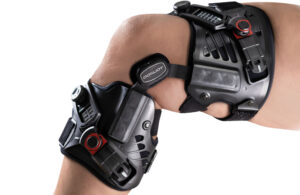
The Enovis DonJoy ROAM knee brace is designed to unload the pressure of unicompartmental osteoarthritis or other knee pain. [Photo courtesy of Enovis]
Suneethi Gudapati is VP of R&D engineering for U.S. bracing and supports at Enovis, joining the company in 2024 after working at Stryker and Philips.
“One underappreciated aspect of bracing and support products is their role beyond stabilization,” Gudapati said.
“They often incorporate graduated compression to improve circulation, have historical roots dating back to the 1500s with innovators like Ambroise Paré, and can redistribute biomechanical loads to facilitate healing or even slow disease progression in custom applications,” she continued. “These devices are essential enablers of mobility and quality of life.”
In an interview with Medical Design & Outsourcing, Gudapati shared her perspective on innovation, leadership, product development, technology and what’s ahead for her field. The following has been lightly edited for space and clarity.
MDO: Can you tell us what you do at Enovis?
Suneethi: “My career story is a medtech adventure mixed with a dash of ice cream entrepreneurship. As VP of R&D for Enovis Bracing and Supports in sunny Carlsbad, California, I’m basically the chief innovator leading a team responsible for R&D, project management and sustaining activities. My role involves collaborating with key stakeholders to identify risks early in the new product introduction (NPI) process, implementing process discipline to enhance engineering designs, and establishing business strategies that improve productivity while maintaining cost neutrality. We’re all about creating bracing and supports products that help people move better, recover faster, and live pain-free, whether it’s a knee brace for an athlete, ankle protection for weekend warriors or a back support solution for everyday business professionals. In this role, I have the opportunity to leverage my extensive experience in medical device innovation and leadership.”
How did you get to this point in your career?
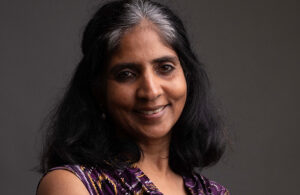
Enovis VP of R&D Engineering for U.S. Bracing and Supports Suneethi Gudapati [Photo courtesy of Enovis]
How have bracing and support products changed in recent decades?
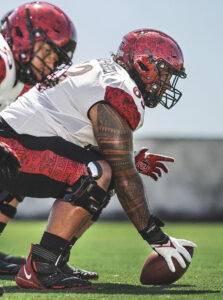
Enovis says its DonJoy Defiance Pro braces have the greatest strength-to-weight ratio of any knee brace on the market. [Photo courtesy of Enovis]
How are you approaching the design of braces and supports to improve wearability and comfort?
Suneethi: “At Enovis, we prioritize wearability and comfort, which ultimately leads to better patient compliance and improved outcomes. We utilize lightweight, breathable materials like carbon fiber and employ 3D scanning and printing for a more customized fit. Additionally, we explore smart braces with sensors for real-time feedback, enhancing patient comfort and recovery. This methodical approach, honed from my experience streamlining R&D, aims to deliver all-day wearability without compromising safety or efficacy.”
We’re tracking a lot of trends in medtech, from sensor-enabled smart devices to miniaturization and sustainability. What are the biggest trends in your field? Where is this space headed?
Suneethi: “The bracing and support field is experiencing key trends: sensor-enabled devices for real-time monitoring, miniaturization for sleeker designs, and sustainability through eco-friendly materials. Future trends could include AI-integrated customization, 3D-printed solutions, and the use of technology tools like our Motion iQ app that allows patients to track their recovery journey and encourages patient engagement and compliance. This space is headed toward predictive, adaptive technologies that help prevent injuries and enhance recovery, which is aligned with Enovis’ focus on continuous improvement and commitment to innovation within the medtech space.”
What are some innovations your team has brought to market or is working on in development?
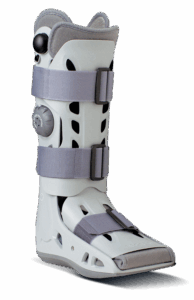
The Enovis Aircast AirSelect Elite [Photo courtesy of Enovis]
What sort of innovations are you looking for from outside Enovis to enable new and improved products in this space?
Suneethi: “Advanced biomaterials for even lighter, biocompatible braces, artificial intelligence/machine learning for predictive design to identify wear patterns early, robotics for precision manufacturing, sustainability tech like recyclable polymers, and sensor partners for smarter monitoring.”
What are you most excited about in your field?
Suneethi: “I am most excited about the shift toward personalized medicine in bracing and supports. This allows for highly tailored solutions that adapt to individual needs, improving outcomes in prevention, treatment and recovery. Drawing from my background in product development, the potential to transform patient lives through these advancements is particularly motivating.”
Can you offer any insight into any R&D efforts you’re undertaking with advanced technologies like additive manufacturing, robotics, or any other cutting-edge materials, components or manufacturing processes?
Suneethi: “We are always exploring up-and-coming technologies and cutting-edge materials to help us design products that are lighter, more comfortable and customizable. At Enovis, we like to say that innovation defines our future. We’re never satisfied with the status quo and believe innovation is essential to our success and the customers and patients we serve.”
Where are the biggest trade-offs in the design and engineering of bracing and support products?
Suneethi: “Key trade-offs include strength versus weight, where robust materials enhance protection but add bulk; cost versus complexity, as modular designs increase flexibility but raise production costs; and customization versus scalability, where 3D printing offers personalization but limits mass production. Above all, we prioritize patient needs, balancing comfort and safety, to improve outcomes and help restore motion for life.”
What have you learned about leadership and team performance in your career?
Suneethi: “I’ve learned it’s less about being the boss and more about being the ultimate team hype-person. It’s cheerleader meets strategist. Over the years, managing global teams across North America, EMEA, and APAC at Philips and now Enovis, I’ve seen that high performance comes from trust, talent development, and a bit of fun chaos. The key lesson is that people thrive when you give them ownership. At Philips, I deployed talent strategies that built high-performing orgs, optimized processes for 30% productivity gains, and led remediations that resolved FDA consent decrees. The real magic is listening and analyzing historical data for product roadmaps or involving suppliers early to slash quality issues.”
Any advice you could share?
Suneethi: “My advice is to empower your crew. Delegate real responsibility. Second, celebrate wins big. Ice cream parties worked wonders in my franchise days. Third, focus on growth. Invest in training for short- and long-term strategies. And don’t forget work-life balance. Burnout is the real enemy. If your team’s not innovating or laughing occasionally, reassess.”
How can leaders inspire and empower their teams to innovate?
Suneethi: “It’s like lighting a fire under a rocket. Give the team fuel, clear the launchpad, and watch them soar. From leading NPI launches at Stryker and Philips to streamlining R&D at Enovis, I’ve learned leaders empower their teams by creating safe spaces for outside the box, even wild ideas. Start with vision. At Enovis, I am establishing strategies that will improve productivity by encouraging cross-functional brainstorming, like having engineers, manufacturing, quality, and suppliers identify risks early on. Foster curiosity with ‘what if’ sessions, like my school science programs at Subzero where kids innovated ice cream flavors. Reward risks, not just results. I’ve seen teams transform supply chains by optimizing 30% less non-quality costs. Provide tools and training. And lead by example. Empowerment means trusting your team to own things. Imagine your team pitching the next big brace tech. What’s stopping them? It’s critical for leaders to be instrumental in removing those barriers.”
Anything else that you’d like to share?
Suneethi: “I would like to emphasize the value of resilience and continuous learning, lessons reinforced through my entrepreneurial experience in my ice cream franchises via educational initiatives. In the medical device industry, applying similar innovative thinking has been key to success. I extend my appreciation to my teams for their dedication and invite connections on professional networks to discuss industry advancements and how Enovis is truly creating better together.”