Three members of BVI’s U.S. Surgical Leadership Council share where they see great potential for improvements in eye care.
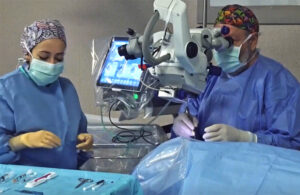
BVI’s R-Evo Smart phaco machine in an operating room [Photo courtesy of BVI]
The future of ophthalmic innovation is shaped not only by technology, but by the people who use it every day to transform lives.
That’s why BVI created the U.S. Surgical Leadership Council (SLC), a group of leading surgeons committed to elevating surgical standards, addressing unmet clinical needs, and accelerating meaningful innovation across the spectrum of eye care.
Each member of the SLC brings a unique perspective from the front lines of ophthalmic surgery. As practicing physicians and recognized thought leaders, they play a vital role in helping us anticipate what’s next and ensure that the solutions we deliver are built for real-world impact.
BVI Chief Commercial Officer Andy Chang was previously president of Carl Zeiss Meditec USA and GM and SVP at Bausch + Lomb Surgical. [Photo courtesy of BVI]
Below, three members of our U.S. Surgical Leadership Council — Dr. Robert Weinstock, Dr. Vance Thompson, and Dr. George Waring — discuss their thoughts on where innovation is most needed and where it has the potential to make the greatest difference over the next several years.
The need for integration and true accommodative lenses
By Dr. Robert Weinstock, director of cataract and refractive surgery at the Eye Institute of West Florida
Over time, innovation in ophthalmology has largely been incremental. While we’ve seen an expansion in diagnostic and surgical tools, the result is a fragmented ecosystem of technologies from multiple manufacturers, many of which don’t communicate with one another. Today’s reality in both the clinic and operating room is a patchwork of standalone systems, with biometry, topography and OCT devices on one end, and femtosecond lasers, phaco machines and intraoperative microscopes on the other.
Dr. Robert Weinstock is director of cataract and refractive surgery at the Eye Institute of West Florida. [Photo courtesy of BVI]
Another major gap is the lack of a truly accommodative intraocular lens. While we’ve made strides with multifocal and extended depth-of-focus lenses, we’re still cheating Mother Nature. The holy grail of lens-based vision correction — restoring full accommodation after cataract surgery — remains an unmet need. Achieving this would redefine what’s possible in lens replacement procedures.
Infusion pressure: An overlooked challenge in cataract surgery
By Dr. Vance Thompson, founder of Vance Thompson Vision and University of South Dakota professor of ophthalmology
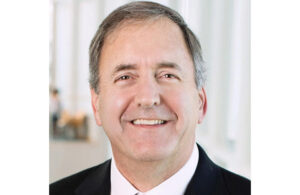
Dr. Vance Thompson is the founder of Vance Thompson Vision and professor of ophthalmology at the University of South Dakota. [Photo courtesy of BVI]
If I could improve one technology, it would be a fluidics system that limits infusion volume and pressure. Addressing this would make cataract surgery gentler, safer and more protective of the delicate internal structures of the eye.
Looking ahead, I believe robotic-assisted cataract surgery powered by artificial intelligence to precisely control infusion and other key parameters could become one of the most impactful innovations of the next five years. Such a system would offer real-time checks and balances to make surgery more consistent, efficient, and tissue-sparing.
Presbyopia: the next frontier
By Dr. George Waring, founder and medical director of the Waring Vision Institute
Presbyopia is a global epidemic, with more than 4 billion affected eyes and counting. As our population ages, the demand for surgical solutions is growing rapidly. It’s already the fastest-growing segment of our practice.
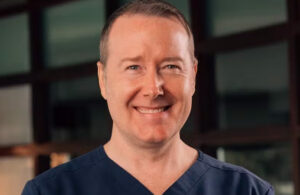
Dr. George Waring is the founder and medical director of the Waring Vision Institute. [Photo courtesy of BVI]
With the right product and indication, we could see exponential growth in presbyopia-correcting surgery and finally bring meaningful relief to this large patient population.
Read more MDO Contributions and learn how to submit your own
The opinions expressed in this blog post are the author’s only and do not necessarily reflect those of Medical Design & Outsourcing or its employees.