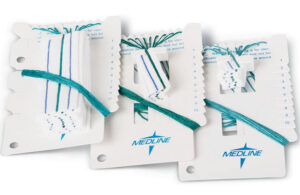
Medline voluntarily recalled all SKUs of its Medline-branded neuro sponge category. [Image courtesy of Medline]
In a letter to healthcare providers warning about supply disruptions, the FDA linked the shortage to a recent supplier issue, noting the Class 2 recall of Medline Industries neurosurgical sponge products with no set return date.
“The manufacturing disruption in supply of these devices is expected to impact patient care and may require adjustments to the clinical management of patients receiving neurosurgery or microsurgery,” the agency said in the letter.
Medline sent a letter to customers on March 13, 2026, warning that “higher-than-expected endotoxin levels” were identified on the company’s branded neurosurgical patties, sponges and strips and cautioned that out-of-specification endotoxin levels may be present in on-market products.
Related: FDA pilots one-day inspectional assessments for AI-identified low-risk facilities
Medline initiated the recall in early March and instructed customers to identify, quarantine and destroy affected products. Medline updated its neuro sponge product page to say that it has voluntarily recalled all SKUs in its Medline-branded neuro sponge category.
“While we continue to explore alternatives, there is no definite market re-entry date at this time,” Medline said on its website.
Neurosurgical patties, sponges and strip devices (product code HBA) are used during neurosurgery and microsurgery to absorb fluid and protect delicate tissue. Use of recalled products may lead to febrile response, local transient inflammation, hypotension or nausea and may require medical or surgical intervention, the FDA said.

Medline’s X-Ray Detectable Neuro Sponge [Image courtesy of Medline]
Meanwhile, the FDA recommends healthcare providers affected by the shortage preserve supply for patients at highest risk.
“Providers should use their clinical judgment when developing and implementing conservation strategies,” the agency said.
To assist with preservation strategies, the FDA recommended reserving neurosurgical patties, sponges and strips for intracranial neurosurgical operations and delicate neural tissue protection where alternatives are unsuitable, and for cases requiring high absorbency with minimal linting.
It also recommended that providers consider using FDA-authorized alternatives appropriate to the specific surgical application when possible and diversify supply sources for those alternatives.
The agency encouraged healthcare providers to report supply chain challenges and suspected adverse events involving the affected devices.
Medical Design & Outsourcing has sought comment from Medline and will update this post with more information as appropriate.