Medical Design and Outsourcing

  • Home
  • Medical Device Business
    • Mergers & Acquisitions
    • Financial
    • Regulatory
  • Applications
    • Cardiovascular
    • Devices
    • Imaging
    • Implantables
    • Medical Equipment
    • Orthopedic
    • Surgical
  • Technologies
    • Supplies and Components Index
    • Contract Manufacturing
    • Components
    • Electronics
    • Extrusions
    • Materials
    • Motion Control
    • Prototyping
    • Pumps
    • Tubing
  • MedTech Resources
    • Medtech Events in 2026
    • The 2025 Medtech Big 100
    • Medical Device Handbook
    • MedTech 100 Index
    • Subscribe to Print Magazine
    • DeviceTalks
    • Digital Editions
    • eBooks
    • Educational Assets
    • Manufacturer Search
    • Podcasts
    • Webinars / Digital Events
    • Whitepapers
    • Voices
    • Views
    • Video
  • 2026 Leadership
    • 2025 Winners
    • 2024 Winners
    • 2023 Winners
    • 2022 Winners
    • 2021 Winners
  • Women in Medtech
  • Advertise
  • Subscribe

How blood tests could diagnose brain injury

August 9, 2018 By Danielle Kirsh

test-tubes

[Image from unsplash.com]

Researchers at the University of Rochester are studying a blood test that will help doctors determine if patients could have a traumatic brain injury following a blow to the head.

Currently, physicians rely on subjective markers like headaches, nausea and light sensitivity to determine if there is bleeding or bruising in the brain. They made an educated guess on who has brain trauma and needs a head CT scan. The new blood test, however, can give an objective indicator of injury that can be received quickly and easily in busy emergency departments.

The FDA approved the test early this year as part of a fast track program that allows breakthrough technologies to get to patients quicker. The test, known as the Banyan Brain Trauma Indicator, helps evaluate patients with a suspected traumatic brain injury or concussion. It went though a clinical trial that had close to 2,000 patients with a head injury in 22 emergency departments in the U.S. and Europe. Banyan Biomarkers, the company that developed the test, is not working with commercial partners to bring the blood test to hospitals and emergency departments.

“Many concussion patients don’t seek medical care for their injury, a decision due in part to the perception that emergency departments have nothing to offer in terms of diagnosis,” Jeffrey J. Bazarian, the study’s lead author, said in a press release. “The results of this study show that we now have something to offer–a brain biomarker blood test. The ability of this test to predict traumatic injuries on head CT scan will soon allow emergency physicians to provide patients with an unbiased report on the status of their brain.”

The researchers suggest that the Banyan Brain Trauma Indicator could be valuable for emergency room physicians while reassuring concerned patients and families.

The test works by detecting two brain proteins that are typically present in the blood after someone revived a hit to the head. The study showed that if the test was negative, it was unlikely that there was traumatic intracranial injury present and that a CT scan was unneeded. When the test was positive, that was an indicator that a brain injury could be present and the patient should have a head CT scan done for further assessment.

In a clinical trial, the Banyan Brain Trauma Indicator test was positive in 97.6% of patients who had a traumatic intracranial injury on a head CT scan. The test also showed that the probability of a patient with a negative test result who had a normal CT scan was 99.6%.

The blood test works up to 12 hours after an injury and detects the presence of the brain proteins UCH-L1 and GFAP. The researchers say that these biomarkers are only elevated when someone is hit in the head and not other body parts like the shoulder or abdomen.

Banyan Brain Trauma Indicator blood tests are approved to be used in patients who are 18 years or older. The researchers suggest that it has the chance to reduce CT scans and radiation exposure. CT scans are commonly used to diagnose brain injuries, but less than 10% of head CTs show injury, according to the researchers. Using the blood tests could eliminate the need to use CT scans and allow people to get out of the emergency room quicker.

The research was published in The Lancet Neurology journal and was funded by Banyan Biomarkers and the U.S. Army medical Research and Material Command.


About The Author

Danielle Kirsh

Danielle Kirsh is an award-winning journalist and senior editor for Medical Design & Outsourcing, MassDevice, and Medical Tubing + Extrusion, and the founder of Women in Medtech and lead editor for Big 100. She received her bachelor's degree in broadcast journalism and mass communication from Norfolk State University and is pursuing her master's in global strategic communications at the University of Florida. You can connect with her on Twitter and LinkedIn, or email her at [email protected].

Related Articles Read More >

A photo of J&J MedTech SVP and Global Head of Digital Shan Jegatheeswaran.
Where Johnson & Johnson sees opportunity in surgical intelligence
A close of of Medical 21's Maverics graft.
A surgeon’s prayer helped St. Jude Medical founder Manny Villafaña size his latest device
A photo of the Paradromics Connexus brain-computer interface on a fingertip.
How Paradromics designed its Connexus brain-computer interface system
The 1.84 volt paper battery (brown circle structure) was tested in pigs with a bioabsorbable radio-frequency identification (RFID) device.
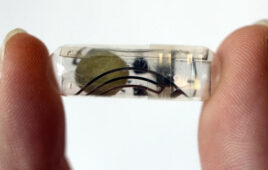
MIT researchers develop bioresorbable batteries for ingestible medical devices
“mdo
EXPAND YOUR KNOWLEDGE AND STAY CONNECTED
Get the latest medical device business news, application and technology trends.

DeviceTalks Weekly

See More >

MDO Digital Edition

Digital Edition

Subscribe to Medical Design & Outsourcing. Bookmark, share and interact with the leading medical design engineering magazine today.

MEDTECH 100 INDEX

Medtech 100 logo
Market Summary > Current Price
The MedTech 100 is a financial index calculated using the BIG100 companies covered in Medical Design and Outsourcing.

New MedTech Resource

Medical Tubing

MassDevice

Mass Device

The Medical Device Business Journal. MassDevice is the leading medical device news business journal telling the stories of the devices that save lives.

Visit Website
MDO ad
Medical Design and Outsourcing
  • MassDevice
  • DeviceTalks
  • MedTech100 Index
  • Medical Tubing + Extrusion
  • Medical Design Sourcing
  • Drug Delivery Business News
  • Drug Discovery & Development
  • Pharmaceutical Processing World
  • R&D World
  • About Us/Contact
  • Advertise With Us
  • Subscribe to Print Magazine
  • Subscribe to our E-Newsletter
  • Listen to our Weekly Podcasts
  • Join our DeviceTalks Tuesdays Discussion

Copyright © 2026 Arrowfly, LLC. All Rights Reserved. The material on this site may not be reproduced, distributed, transmitted, cached or otherwise used, except with the prior written permission of Arrowfly LLC. Site Map | Privacy Policy | RSS

Search Medical Design & Outsourcing

  • Home
  • Medical Device Business
    • Mergers & Acquisitions
    • Financial
    • Regulatory
  • Applications
    • Cardiovascular
    • Devices
    • Imaging
    • Implantables
    • Medical Equipment
    • Orthopedic
    • Surgical
  • Technologies
    • Supplies and Components Index
    • Contract Manufacturing
    • Components
    • Electronics
    • Extrusions
    • Materials
    • Motion Control
    • Prototyping
    • Pumps
    • Tubing
  • MedTech Resources
    • Medtech Events in 2026
    • The 2025 Medtech Big 100
    • Medical Device Handbook
    • MedTech 100 Index
    • Subscribe to Print Magazine
    • DeviceTalks
    • Digital Editions
    • eBooks
    • Educational Assets
    • Manufacturer Search
    • Podcasts
    • Webinars / Digital Events
    • Whitepapers
    • Voices
    • Views
    • Video
  • 2026 Leadership
    • 2025 Winners
    • 2024 Winners
    • 2023 Winners
    • 2022 Winners
    • 2021 Winners
  • Women in Medtech
  • Advertise
  • Subscribe