By Jessie Cooper, LyondellBasell (LYB)
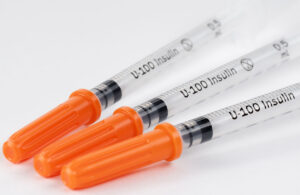
Disposable drug delivery system material selection may seem straightforward until the full set of requirements comes into view. [Photo courtesy of LyondellBasell (LYB)]
The type of resin selected for a disposable drug delivery device can affect tooling design, molding consistency, sterilization performance and the amount of validation work needed to assess the final device. As single-use injectors and delivery systems become more complex and more demanding, material selection has become one of the key decisions made early in the process with the potential to reduce downstream issues or create them.
Polymer selection and validation requires three key considerations. First, device manufacturers need confidence in the material itself, the supplier’s production practices, and availability to provide long-term support. Second, they must understand how the resin will perform under sterilization and real-world use conditions and align with regulatory requirements. Third, they should evaluate whether the material can deliver consistent, repeatable molding performance as the program transitions from the prototype and sampling phases to full-scale production.
Validate manufacturing practices and supplier reliability
Beyond the polymer’s technical data sheet, device manufacturers should start by assessing whether a given material is produced and supported for medical use. This includes evaluating the supplier’s quality systems, traceability practices and ability to maintain lot-to-lot consistency.
It is also important to understand how material changes are managed and communicated, as well as the controls in place to address quality issues, supply disruptions and other risks. Robust supplier notification-of-change and management-of-change processes give customers greater visibility into potential changes, allowing them to assess impacts and address validation or regulatory requirements before implementation.
If the resin is intended for a highly controlled application, determine if plant audits are possible and whether the supplier has the technical depth to support validation questions. Medical molding materials may meet all the required property specifications on paper yet still introduce challenges if the manufacturing practices behind it are not disciplined enough for the application.
Prioritize compatibility and sterilization to avoid costly revalidation
After establishing confidence in the supply chain, the focus shifts to material compatibility and sterilization performance, areas where an early misstep can lead to costly revalidation efforts later in development. At this stage, polymer selection becomes more technically demanding, as the material must satisfy multiple requirements simultaneously. Important factors include biocompatibility expectations, risks from extractables and leachables and the level of regulatory support available from the resin manufacturer, such as USP information, ISO 10993-related data, FDA documentation or a Drug Master File (DMF) when applicable.
Sterilization compatibility is equally critical. Common sterilization methods such as gamma irradiation, use of ethylene oxide (EtO), autoclave, and e-beam can all affect polymers differently, potentially causing discoloration, embrittlement, or dimensional changes or shifts in mechanical properties due to heat, radiation or moisture exposure.
As a result, sterilization performance cannot be evaluated in isolation. The material must still meet the device’s functional requirements after processing. Mechanical and physical properties such as stiffness, impact resistance, optical clarity, chemical resistance and temperature capability should therefore be assessed in the context of both the intended application and the chosen sterilization method.
Sustainability is increasingly entering these conversations through improved recyclability and options with a lower-carbon footprint. Sustainability initiatives still need to be evaluated through the same rigorous lens of processing performance, regulatory documentation and downstream validation requirements.
Repeatable injection molding
A final question to ask is whether the material will support repeatable production once the mold is qualified and volumes begin to scale. For disposable drug delivery components, this often comes down to practical injection molding considerations. Are the flow characteristics suitable for filling thin walls and high length-to-thickness ratio features? Does the resin consistently achieve the required dimensional tolerances? How will shrinkage affect dimensional stability, fit, and part ejection?
Cycle time also matters, especially for thin-wall geometries, fine details or assembly-critical interfaces. A resin that looks strong on paper can become a problem if it creates a narrow process window or excessive part-to-part variation. The best materials support not just initial moldability, but enable stable, predictable, and repeatable manufacturing.
Real-world conditions still matter
Don’t overlook a material’s performance under real-world conditions. Disposable drug delivery devices may encounter a range of environmental and use-related stresses throughout their lifecycle, including transportation, storage, handling and exposure to the drug product itself.
Temperature fluctuations, humidity, chemical exposure, impact events and extended storage periods can all influence material behavior in ways that are not always apparent during early development. Understanding how the polymer responds under these conditions helps reduce the risk of unexpected performance issues and provides greater confidence that the final device will perform as intended throughout its shelf life and use cycle.
The earlier you ask these questions, the better
When suppliers, converters and OEM teams work together on disposable drug delivery systems, material selection may seem straightforward until the full set of requirements comes into view. Manufacturing discipline, regulatory expectations, sterilization compatibility, mechanical performance and processability all intersect much earlier than many teams expect.

Jessie Cooper is a LyondellBasell (LYB) engineer supporting injection molding applications. [Photo courtesy of LYB]
Jessie Cooper is an application development and technical services distribution and injection molding engineer at LyondellBasell (LYB) supporting injection molding applications. Her work focuses on connecting material selection with manufacturability and performance requirements for disposable drug delivery devices.
Read more MDO Contributions and learn how to submit your own.
The opinions expressed in this blog post are the author’s only and do not necessarily reflect those of Medical Design & Outsourcing or its employees.