Medical Design and Outsourcing

  • Home
  • Medical Device Business
    • Mergers & Acquisitions
    • Financial
    • Regulatory
  • Applications
    • Cardiovascular
    • Devices
    • Imaging
    • Implantables
    • Medical Equipment
    • Orthopedic
    • Surgical
  • Technologies
    • Supplies and Components Index
    • Contract Manufacturing
    • Components
    • Electronics
    • Extrusions
    • Materials
    • Motion Control
    • Prototyping
    • Pumps
    • Tubing
  • MedTech Resources
    • Medtech Events in 2026
    • The 2026 Medtech Big 100
    • Medical Device Handbook
    • MedTech 100 Index
    • Subscribe to Print Magazine
    • DeviceTalks
    • Digital Editions
    • eBooks
    • Educational Assets
    • Manufacturer Search
    • Podcasts
    • Webinars / Digital Events
    • Whitepapers
    • Voices
    • Views
    • Video
  • 2026 Leadership
    • 2025 Winners
    • 2024 Winners
    • 2023 Winners
    • 2022 Winners
    • 2021 Winners
  • Women in Medtech
  • Advertise
  • Subscribe

IV and Cellular Fluids Power Flexible Batteries

August 11, 2017 By University of Illinois College of Agricultural, Consumer, and Environmental Sciences

This is an artistic rendering of fiber-shaped implantable batteries using biocompatible electrolytes. (Credit: Guo et al.)

Researchers in China have engineered bendable batteries that can run on body-inspired liquids such as normal IV saline solution and cell-culture medium. In their work, published August 10 in the journal Chem, the authors designed alternatives to lithium-ion batteries by focusing on the mechanical-stress demands of wearable electronics such as smartwatches and the safety requirements of implantable electronics.

“Current batteries like the lithium-ion ones used in medical implants generally come in rigid shapes,” says co-senior author Yonggang Wang, a chemistry professor at Fudan University and the Collaborative Innovation Center of Chemistry for Energy Materials. “Additionally, most of the reported flexible batteries are based on flammable organic or corrosive electrolytes, which suffer from safety hazards and poor biocompatibility for wearable devices, let alone implantable ones.”

Safety measures for wearable and implantable batteries have generally involved structural reinforcement to prevent hazardous chemicals from leaking out. Instead, the researchers, led by Wang and macromolecular science professor Huisheng Peng, swapped out those toxic and flammable liquids for cheap and environmentally conscious sodium-ion solutions. Among those solutions were two biocompatible ones suitable for implantable devices, given that they pose no harm to the surface or interior of the body. Although electrolyte leakage is still undesired, its danger is minimized by the use of either the normal saline solution pumped into the body in most IV treatments or a cell-culture medium that contains amino acids, sugars, and vitamins in addition to sodium ions and thus mimics the fluid that surrounds human cells.

Freed from leakage concerns, which can require so much protective material that batteries become bulky and unbendable, the researchers designed two types of flexible batteries — a 2D “belt”-shaped battery for which they adhered thin electrode films to a net of steel strands and a 1D fiber-shaped battery for which they embedded nanoparticles of electrode material around a carbon nanotube backbone. Besides testing biocompatible fluids, the authors also tested ordinary sodium sulfate, a safe and fairly inert solution, as a liquid electrolyte suitable for use in external wearable devices.

With sodium sulfate solution as the electrolyte, both battery types outperformed most of the reported wearable lithium-ion batteries in terms of charge-holding capacity (an indicator of how long a battery can function without recharging) and power output for their size. That performance held up when the authors folded and bent the batteries to mimic the impact of wrapping a sensor, watch, or similar device around one’s arm. Charge-holding capacity was only marginally reduced for the saline- and cell-culture-based batteries, most likely because they had slightly lower sodium-ion content than the sodium sulfate solution.

An undesired side reaction involving their fiber-shaped battery is even pointing the researchers toward possible biomedical applications. The same carbon nanotubes that make up the skeleton of the 1D battery can also accelerate the conversion of dissolved oxygen into hydroxide ions, a process that harms battery effectiveness if left uncontrolled but as a stand-alone process boasts therapeutic potential for treating cancer and bacterial infections.

“We can implant these fiber-shaped electrodes into the human body to consume essential oxygen, especially for areas that are difficult for injectable drugs to reach,” says Wang. “Deoxygenation might even wipe out cancerous cells or pathogenic bacteria since they are very sensitive to changes in living environment pH. Of course, this is hypothetical right now, but we hope to investigate further with biologists and medical scientists.”


Related Articles Read More >

The most innovative medical devices of 2026
Reconstructed 3D fluorescence image of the stained biohybrid mesh-tissue integration. The red, green, and blue colors correspond to the mesh, F-actin, and nuclei, respectively.
Researchers mesh electronics with human cells to develop living battery
A photo of the Paradromics Connexus brain-computer interface on a fingertip.
How Paradromics designed its Connexus brain-computer interface system
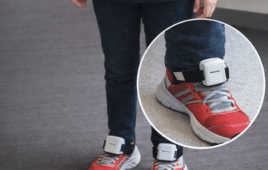
A photo of the wearable gait sensors used in the study.
Yale-led study finds wearable sensors match motion capture for gait tracking in knee osteoarthritis
“mdo
EXPAND YOUR KNOWLEDGE AND STAY CONNECTED
Get the latest medical device business news, application and technology trends.

DeviceTalks Weekly

See More >

MDO Digital Edition

Digital Edition

Subscribe to Medical Design & Outsourcing. Bookmark, share and interact with the leading medical design engineering magazine today.

MEDTECH 100 INDEX

Medtech 100 logo
Market Summary > Current Price
The MedTech 100 is a financial index calculated using the BIG100 companies covered in Medical Design and Outsourcing.

New MedTech Resource

Medical Tubing

MassDevice

Mass Device

The Medical Device Business Journal. MassDevice is the leading medical device news business journal telling the stories of the devices that save lives.

Visit Website
MDO ad
Medical Design and Outsourcing
  • MassDevice
  • DeviceTalks
  • MedTech100 Index
  • Medical Tubing + Extrusion
  • Medical Design Sourcing
  • Drug Delivery Business News
  • Drug Discovery & Development
  • Pharmaceutical Processing World
  • R&D World
  • About Us/Contact
  • Advertise With Us
  • Subscribe to Print Magazine
  • Subscribe to our E-Newsletter
  • Listen to our Weekly Podcasts
  • Join our DeviceTalks Tuesdays Discussion

Copyright © 2026 Arrowfly, LLC. All Rights Reserved. The material on this site may not be reproduced, distributed, transmitted, cached or otherwise used, except with the prior written permission of Arrowfly LLC. Site Map | Privacy Policy | RSS

Search Medical Design & Outsourcing

  • Home
  • Medical Device Business
    • Mergers & Acquisitions
    • Financial
    • Regulatory
  • Applications
    • Cardiovascular
    • Devices
    • Imaging
    • Implantables
    • Medical Equipment
    • Orthopedic
    • Surgical
  • Technologies
    • Supplies and Components Index
    • Contract Manufacturing
    • Components
    • Electronics
    • Extrusions
    • Materials
    • Motion Control
    • Prototyping
    • Pumps
    • Tubing
  • MedTech Resources
    • Medtech Events in 2026
    • The 2026 Medtech Big 100
    • Medical Device Handbook
    • MedTech 100 Index
    • Subscribe to Print Magazine
    • DeviceTalks
    • Digital Editions
    • eBooks
    • Educational Assets
    • Manufacturer Search
    • Podcasts
    • Webinars / Digital Events
    • Whitepapers
    • Voices
    • Views
    • Video
  • 2026 Leadership
    • 2025 Winners
    • 2024 Winners
    • 2023 Winners
    • 2022 Winners
    • 2021 Winners
  • Women in Medtech
  • Advertise
  • Subscribe