Shockwave Medical is clearing the way for Johnson & Johnson MedTech to retake its title as the world’s largest medical device company.

Shockwave Medical’s intravascular lithotripsy catheters generate sonic pressure waves to crack calcium within blood vessels without damaging the surrounding soft tissue. [Image courtesy of Johnson & Johnson MedTech]
Medtronic has reigned atop Medical Design & Outsourcing‘s annual Medtech Big 100 ranking by revenue ever since 2016. Medtronic passed J&J on that year’s ranking after buying Covidien for $50 billion in January 2015. Two weeks before Medtronic announced that deal, J&J completed the $4 billion sale of its Ortho-Clinical Diagnostics business to Carlyle.
Now, the tables have turned, with Medtronic seeking to separate its diabetes business (which had 2025 revenue of $2.8 billion) before the end of 2026 as Shockwave — purchased by J&J for $13.1 billion in May 2024 — fuels double-digit growth in J&J’s cardiovascular business.
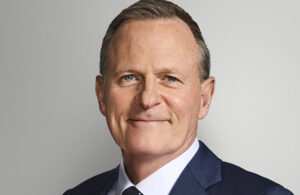
Johnson & Johnson EVP and J&J MedTech Worldwide Chair Tim Schmid [Photo courtesy of Johnson & Johnson]
J&J MedTech is “by far and away now one of the largest and certainly the fastest-growing medtech company in cardiovascular,” Schmid said on the company’s July 16 earnings call, crediting not only Shockwave but also Abiomed (purchased for $16.6 billion in 2022) and the electrophysiology portfolio, which includes pulsed-field ablation technology for treating atrial fibrillation.
More Medtech Big 100: Read the Big 100 issue of MDO magazine, download our Big 100 Special Report and watch a replay of our webinar discussing the project and industry trends.
Medtronic (including its diabetes business) is ahead of J&J MedTech in our 2025 ranking by less than $1.7 billion in revenue, but J&J is growing at about 5% compared to 4% at Medtronic.
More importantly for future growth, J&J is outspending Medtronic on R&D by more than $1 billion. J&J reported R&D expenses of $3.7 billion in its most recent year — up 19% year-over-year — while Medtronic said it spent $2.7 billion on R&D, down 0.1% year-over-year. (Medtronic spokespeople did not respond to messages from Medical Design & Outsourcing about our Medtech Big 100 coverage.)
Shockwave, which developed its minimally invasive IVL technology for calcified coronary artery disease (CAD) and peripheral artery disease (PAD), is outperforming the deal model estimates J&J calculated when pursuing the company, Schmid said.
Min-Vasive Medtech: Watch on-demand interviews and audience Q&As with minimally invasive engineers from Edwards Lifesciences, Jupiter Endo and Compremium
On that same earnings call, J&J CEO Joaquin Duato said Shockwave’s technology “has transformed the treatment of atherosclerotic cardiovascular disease and is driving significant growth.”
“Shockwave is expected to be our 13th billion-dollar medtech platform by the end of the year, a position that is further strengthened by a compelling body of evidence on the benefits of this technology,” he continued. “This includes data showing an IVL-first approach can achieve excellent outcomes in female patients with complex calcified coronary artery disease.”
And under J&J’s ownership, Shockwave continues to increase its R&D spending. Shockwave spent $145 million on R&D in 2023. That spending now exceeds $200 million per year under J&J, Shockwave Chief Medical Officer Dr. Nick West said in an MDO interview.

Shockwave Medical Chief Medical Officer Dr. Nick West [Photo courtesy of Johnson & Johnson MedTech]
DeviceTalks West: Register now to hear Schmid and West speak at our show in Santa Clara, California on Oct. 15–16, 2025
So how did Shockwave’s deal with J&J come together? The following timeline draws upon regulatory filings, other publicly available information and reporting from MDO and MassDevice.
Shockwave’s first pass at a deal with J&J
In January 2023, executives from Shockwave and J&J discussed potential strategic relationships, but Shockwave said J&J “did not make a proposal to Shockwave with respect to any transaction.”

Former Shockwave Medical CEO Doug Godshall [Photo courtesy of Shockwave]
That same month, Shockwave stock was trading just over $201 per share after posting strong quarterly financials. (That price, however, was down from the $310-per-share price the stock hit in August 2022 after reporting big sales gains and positive clinical trial results.)
In late March 2023, the chair and CEO of another medtech identified only as “Company B” proposed a $260-per-share acquisition of Shockwave, paid half in cash and half in stock. Shockwave’s board turned it down through Godshall on April 2, but asked to make the case for a higher price with on a presentation by management.
Company B increased its offer to $270 per share after the presentation, but Shockwave said it wanted “a significant reverse termination fee” at that price in case regulators spiked the deal. Company B countered at $275 and asked for a window of exclusivity, but Godshall declined, and Company B soon after made a “best and final” offer at $275, plus a $500 million reverse termination fee, among other terms.
Figuring Company B was unlikely to increase its offer again, the Shockwave board directed Godshall to keep negotiating over the reverse termination fee. At the same time, the board told its financial advisor, Perella Weinberg Partners (PWP), to reach out to tell J&J that Shockwave was seriously considering an offer.

Insulet CEO Ashley McEvoy [Photo courtesy of Insulet]
Then the Centers for Medicare & Medicaid Services (CMS) issued a proposed rule with new Shockwaves IVL coverage codes and higher payments, pushing Shockwave’s stock up.
As a result, Godshall told Company B’s CEO that the Shockwave board would need a better offer, but Company B declined on April 17.
Meanwhile, PWP asked J&J to make an offer by April 19, but on April 20, J&J told Shockwave it had other strategic priorities and wouldn’t make an offer in the near term.
The next day, Reuters reported Boston Scientific was considering buying Shockwave, citing unnamed “people with knowledge of the matter.” The news sent Shockwave’s stock above $286 per share.

Shockwave Medical’s E8 catheter is the eight-emitter version of the intravascular lithotripsy developer’s balloon catheter. [Image courtesy of Johnson & Johnson MedTech]
On April 22, Godshall spoke with Company B’s CEO, and the two men agreed to suspend negotiations after failing to close the gap.
On April 26, McEvoy called Godshall to express potential interest in a transaction down the road, but not right away.
On April 30, Company A said it wouldn’t make an offer after all. And with that, despite another report citing an unnamed source in May that Medtronic and J&J were interested, there would be no sale of Shockwave in 2023.
The Shockwave deal comes together

Johnson & Johnson Chair and CEO Joaquin Duato [Photo courtesy of Johnson & Johnson]
On March 14, Duato called Godshall with a price: $320 per share. The deal would be cash, and J&J wanted to complete due diligence review and negotiate a definitive agreement within four weeks.
Two days later, the Shockwave board convened and reconsidered its strategy from the year before.
The board “determined that Shockwave’s value was more likely to be optimized by seeking to improve [J&J’s] offer and using the promise of engaging exclusively with [J&J] to do so rather than soliciting bids from other companies in light of Shockwave’s experience during the 2023 stage of the strategic process with Company A and Company B [and] that process having become public,” Shockwave said in materials it would later send to investors considering whether to approve J&J’s bid.
With that in mind, the Shockwave board directed Godshall to counter J&J’s offer at either $345 or $350 per share (“at management’s discretion”) with the intent to move forward at $330 or higher.
On March 18, Godshall proposed a $350-per-share price on a phone call with Duato, who countered the next day with a “final” offer of $335 and a 30-day window of exclusivity.
With approval from the Shockwave board, Godshall told Duato they could move forward on price, but with a shorter exclusivity period and immediate termination of exclusivity if J&J reduced its proposal below $335.
J&J agreed, and Shockwave gave the company access to internal files for due diligence on March 22.
Two days later, Godshall and other Shockwave executives — President and Chief Commercial Officer Isaac Zacharias, CFO Renee Gaeta and Finance SVP Trinh Phung — offered a presentation in Mountain View, California to J&J leaders Duato, Schmid, Kozak, EVP and CFO Joseph Wolk, and Global Head of Heart Recovery Michael Bodner.
Another two days later, news of acquisition talks leaked once more, boosting Shockwave’s stock price by about 10% to $316. Godshall and Duato got in touch that same day to assure each other they were still committed to the deal.
Negotiations continued. In the final days, Shockwave and J&J came together on a termination fee, agreeing to 3.15% of transaction equity value.

J&J MedTech Worldwide President of Shockwave Isaac Zacharias [Photo courtesy of J&J]
On the morning of April 5, J&J and Shockwave announced the deal before markets opened.
“Shockwave offers a truly differentiated opportunity to further enhance our leadership position in medtech, expand into additional high-growth segments, and ultimately transform the future of cardiovascular treatment,” Schmid said in the announcement. “Shockwave’s IVL technology for treating CAD and PAD, and its strong pipeline, are in a class of their own. We look forward to bringing Shockwave’s solutions into Johnson & Johnson MedTech and the hands of more physicians around the world.”

Shockwave Medical designed the Javelin peripheral intravascular lithotripsy (IVL) catheter to break up calcium in blood vessels through which previous IVL devices could not pass. [Illustration courtesy of Johnson & Johnson MedTech]
“As part of a larger, more diverse organization, with broad expertise and a core focus on improving patient outcomes, we are confident we will be able to further solidify IVL as the global standard of care for patients,” he said. “I am deeply grateful to our team members and colleagues whose efforts have made today’s milestone possible; their accomplishments and passion have been extraordinary. I could not think of a better partner and home than Johnson & Johnson as the Shockwave team prepares to write its next exciting chapter.”
There’s more to come from J&J MedTech and Shockwave, Schmid told MDO.
“We aren’t slowing down,” he said. “With new technologies like the Shockwave Javelin and E8 catheters, and real-world evidence demonstrating the impact of IVL, we’re confident we will continue to help more patients around the world and drive long-term value for Johnson & Johnson.”
Related: J&J’s Shockwave wants to take IVL to the next level with next-gen devices
This article was originally published on Aug. 4, 2025, and updated in September with more resources related to the Medtech Big 100 project.