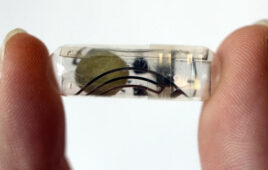
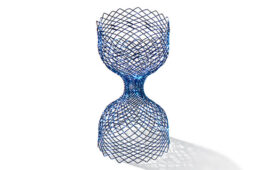
Jupiter Endovascular’s Vertex pulmonary embolism system [Image courtesy of Jupiter Endovascular]
A year before that milestone, we interviewed Jupiter Endovascular VP of Product Development Garrett Gomes to learn more about his company’s Vertex system and the proprietary Transforming Fixation (TFX) technology that makes it possible.
Then, shortly before the 510(k) clearance, we went deeper in an August 2025 interview for our MDO Min-Vasive Medtech series.
In that most recent interview, Gomes offered more detail on Vertex system and potential TFX applications beyond pulmonary embolism, shared lessons from the product development experience (including tips for R&D, prototyping and working with physicians), discussed broader design considerations for catheters and minimally invasive systems, and even laid out what his company is looking for in new hires as it grows.
We’ve made that full interview with Gomes available in our MDO Min-Vasive Medtech Special Report, a free PDF download which also includes interviews with minimally invasive device engineers and development experts from Edwards Lifesciences, Capstan Medical and Compremium, plus links to on-demand video replays of each interview.
Below is an excerpt from our conversation with Gomes in which he explains what’s so special about the Vertex system and the TFX technology that enables it. (The following has been lightly edited for length and clarity.)

Jupiter Endovascular VP of Product Development Garrett Gomes [Photo courtesy of Jupiter Endovascular]
“It was something that we developed for the GI space and showed one of our advisors, and he said, ‘If you make that five times smaller, we can put it in the vasculature.’ And we thought, ‘That’s a lot smaller. How are we going to do that?’ But a week later, we had a prototype. When we showed the advisor, he was ready to jump on board and get this going. It solves a fundamental issue within minimally invasive catheter therapies, where you can navigate in an extremely flexible state so you can tune your catheter to be deliverable, and then you can worry about stability in the other state. You don’t have to worry about getting stability at the same time. You can go back and forth many times. It activates very quickly. It’s almost instantaneous. It doesn’t require capital equipment to go on and off. And it creates this really stable base of operations for you to do your work. It’s like the campsite is set up, now we can go off on our hikes and come back.

This close-up shows the distal end of Jupiter Endovascular’s Vertex catheter. [Image courtesy of Jupiter Endovascular]
“The first application that we’ve chosen is the treatment of pulmonary embolisms with aspiration thrombectomy. We think it’s a perfect application to showcase this technology and provides really meaningful results to a therapy that is fairly new. The guidelines aren’t well established. Even the definition of good results from the therapy isn’t established, but it’s a proven therapy in that it saves lives and it’s clearly safe. So we developed a system that we think takes it to the next level, and allows the physician more control, more stability in these patients who are not particularly stable. They’re very sick and having these large catheters in their bodies isn’t great for them and they can crash pretty quickly. And so we were able to go deep into the pulmonary vasculature to remove large amounts of clot very safely right now. That’s something we’re super excited about and looking forward to seeing where it goes from here.”
MDO Min-Vasive Medtech: Download our free special report featuring interviews with engineers and device development experts from major OEMs and groundbreaking startups