Medical Design and Outsourcing

  • Home
  • Medical Device Business
    • Mergers & Acquisitions
    • Financial
    • Regulatory
  • Applications
    • Cardiovascular
    • Devices
    • Imaging
    • Implantables
    • Medical Equipment
    • Orthopedic
    • Surgical
  • Technologies
    • Supplies and Components Index
    • Contract Manufacturing
    • Components
    • Electronics
    • Extrusions
    • Materials
    • Motion Control
    • Prototyping
    • Pumps
    • Tubing
  • MedTech Resources
    • Medtech Events in 2026
    • The 2025 Medtech Big 100
    • Medical Device Handbook
    • MedTech 100 Index
    • Subscribe to Print Magazine
    • DeviceTalks
    • Digital Editions
    • eBooks
    • Educational Assets
    • Manufacturer Search
    • Podcasts
    • Webinars / Digital Events
    • Whitepapers
    • Voices
    • Views
    • Video
  • 2026 Leadership
    • 2025 Winners
    • 2024 Winners
    • 2023 Winners
    • 2022 Winners
    • 2021 Winners
  • Women in Medtech
  • Advertise
  • Subscribe

Lab Test on Tumor Cells for Personalized Cancer Treatments

February 27, 2015 By Dana-Farber Cancer Institute

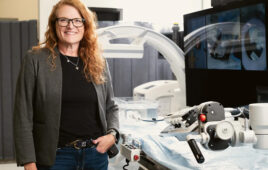
This image shows study authors Anthony Letai, MD, PhD and Joan Montero, PhD, both of the Dana-Farber Cancer Institute. (Credit: Sam Ogden, Dana-Farber)By measuring how vigorously tumor cells turn on “self-destruct” signals when exposed to different cancer drugs, a novel lab test can predict within less than 24 hours which agent is most likely to work against a particular tumor, say researchers from Dana-Farber Cancer Institute.

The scientists say this technique could lead to more reliable and rapid tools for “personalizing” cancer treatments than are now available. Clinical testing has already begun.

A team led by Dana-Farber oncologist Anthony Letai, MD, PhD, reported in the February 26 online edition of the journal Cell that the test consistently predicted the “winner” among many drugs tested against a wide variety of cancer cells in the laboratory. In most cases, the answer emerged 16 hours after the anti-cancer compounds were mixed with tumor cells.

“We demonstrated that [the test] can be exploited to select among many therapies the one that it is best for a single tumor,” the researchers wrote. “We also demonstrated that it can select among many patients those that are most likely to respond to a single therapy.”

The technique is called Dynamic BH3 Profiling, or DBP. It is designed to detect the earliest signs that a cancer cell treated with a drug is beginning to destroy itself through apoptosis, a natural quality-control process that rids the body of unneeded or dangerously abnormal cells.

Although abnormal, cancer cells can survive by blocking the “pro-death” molecular signals that trigger apoptosis. Most chemotherapy treatments work by inducing a wave of pro-death signals in cancer cells to overcome the survival signals. The death process may take several days, but with the DBP test, scientists can identify which drug or drug combination has most effectively jump-started pro-death signaling.

“This new technique represents a completely novel approach to precision medicine because we can test possible treatment directly on patient samples to guide cancer therapy,” said Joan Montero, PhD, the first author on the report. He is a postdoctoral researcher in the Letai group.

The test must be performed on living tumor cells that were removed during surgery or a biopsy, or were frozen in a manner that leaves the cells viable. It will not work on tumor samples that have been preserved in formalin, the investigators said.

In their research, the scientists exposed cancer cells to a long list of “targeted” drugs that block different overactive signaling pathways that prod cancer cells into unruly growth. The drugs were tested against many different types of cancer cells, including non-small cell lung cancers, breast cancers, colon cancers, leukemia, lymphoma, and multiple myeloma.

“Regardless of the pathway inhibited, or what kind of cell the cancer started in, early drug-induced death signaling predicted later cytotoxicity,” explained Letai, a physician and researcher in the Hematologic Neoplasia division at Dana-Farber. “We can take an early peek to see if the cancer cell is being pushed toward death. What makes this especially powerful, is that we’re not restricted to using one drug at a time – it can test the effectiveness of combinations.”

In an experiment using ovarian cancer cells removed from 16 patients, DBP testing was used to predict which tumors would respond to carboplatin, a standard chemotherapy drug. Patients whose cells responded strongly in the laboratory experienced significantly longer delays before their disease progressed.

A major thrust of precision cancer medicine currently is to test a patient’s tumor for DNA mutations that have been found to make the cancer sensitive to certain drugs that target those mutations. This isn’t always successful, and most tumors likely have properties beyond mutations that determine its responsiveness to drugs.

The authors of the new study say the DBP method is potentially more powerful because it directly tests the cancer drugs of interest directly on cells from the patient’s tumor, and quickly determines which drugs can kill the cancer.

Going forward, the Dana-Farber investigators plan to test the predictive power of DBP technique on samples from patients entering clinical trials and monitor if their outcomes correlate with the test results. Once this initial testing is done, they anticipate using DBP in the clinic in the next couple of years.

Related Articles Read More >

A photo of the Paradromics Connexus brain-computer interface on a fingertip.
How Paradromics designed its Connexus brain-computer interface system
A photo of Conexeu Sciences co-founder and Chief Scientific Officer Dr. Claudia Chavez-Munoz.
This tissue engineering scientist is bioprinting next-gen absorbable implants
An image of the September 2026 Medical Design & Outsourcing magazine featuring the Medtech Big 100 ranking of the world's largest medical device companies.
September 2026 issue: The MDO Medtech Big 100 breaks $500 billion
A photo of Capstan Medical CEO Maggie Nixon posing with the structural heart startup's robotic catheter delivery system.
Capstan Medical CEO Maggie Nixon’s career advice, travel tips and how she starts her day
“mdo
EXPAND YOUR KNOWLEDGE AND STAY CONNECTED
Get the latest medical device business news, application and technology trends.

DeviceTalks Weekly

See More >

MDO Digital Edition

Digital Edition

Subscribe to Medical Design & Outsourcing. Bookmark, share and interact with the leading medical design engineering magazine today.

MEDTECH 100 INDEX

Medtech 100 logo
Market Summary > Current Price
The MedTech 100 is a financial index calculated using the BIG100 companies covered in Medical Design and Outsourcing.

New MedTech Resource

Medical Tubing

MassDevice

Mass Device

The Medical Device Business Journal. MassDevice is the leading medical device news business journal telling the stories of the devices that save lives.

Visit Website
MDO ad
Medical Design and Outsourcing
  • MassDevice
  • DeviceTalks
  • MedTech100 Index
  • Medical Tubing + Extrusion
  • Medical Design Sourcing
  • Drug Delivery Business News
  • Drug Discovery & Development
  • Pharmaceutical Processing World
  • R&D World
  • About Us/Contact
  • Advertise With Us
  • Subscribe to Print Magazine
  • Subscribe to our E-Newsletter
  • Listen to our Weekly Podcasts
  • Join our DeviceTalks Tuesdays Discussion

Copyright © 2026 Arrowfly, LLC. All Rights Reserved. The material on this site may not be reproduced, distributed, transmitted, cached or otherwise used, except with the prior written permission of Arrowfly LLC. Site Map | Privacy Policy | RSS

Search Medical Design & Outsourcing

  • Home
  • Medical Device Business
    • Mergers & Acquisitions
    • Financial
    • Regulatory
  • Applications
    • Cardiovascular
    • Devices
    • Imaging
    • Implantables
    • Medical Equipment
    • Orthopedic
    • Surgical
  • Technologies
    • Supplies and Components Index
    • Contract Manufacturing
    • Components
    • Electronics
    • Extrusions
    • Materials
    • Motion Control
    • Prototyping
    • Pumps
    • Tubing
  • MedTech Resources
    • Medtech Events in 2026
    • The 2025 Medtech Big 100
    • Medical Device Handbook
    • MedTech 100 Index
    • Subscribe to Print Magazine
    • DeviceTalks
    • Digital Editions
    • eBooks
    • Educational Assets
    • Manufacturer Search
    • Podcasts
    • Webinars / Digital Events
    • Whitepapers
    • Voices
    • Views
    • Video
  • 2026 Leadership
    • 2025 Winners
    • 2024 Winners
    • 2023 Winners
    • 2022 Winners
    • 2021 Winners
  • Women in Medtech
  • Advertise
  • Subscribe