Medical Design and Outsourcing

  • Home
  • Medical Device Business
    • Mergers & Acquisitions
    • Financial
    • Regulatory
  • Applications
    • Cardiovascular
    • Devices
    • Imaging
    • Implantables
    • Medical Equipment
    • Orthopedic
    • Surgical
  • Technologies
    • Supplies and Components Index
    • Contract Manufacturing
    • Components
    • Electronics
    • Extrusions
    • Materials
    • Motion Control
    • Prototyping
    • Pumps
    • Tubing
  • MedTech Resources
    • Medtech Events in 2026
    • The 2026 Medtech Big 100
    • Medical Device Handbook
    • MedTech 100 Index
    • Subscribe to Print Magazine
    • DeviceTalks
    • Digital Editions
    • eBooks
    • Educational Assets
    • Manufacturer Search
    • Podcasts
    • Webinars / Digital Events
    • Whitepapers
    • Voices
    • Views
    • Video
  • 2026 Leadership
    • 2025 Winners
    • 2024 Winners
    • 2023 Winners
    • 2022 Winners
    • 2021 Winners
  • Women in Medtech
  • Advertisers
    • Advertise
    • PR Submissions
    • Eblast Submissions
  • Subscribe

Magnetic fields can destroy biofilms on implants: Here’s how

August 14, 2017 By Danielle Kirsh

AMF

[Image from UT Southwestern]

Alternating magnetic fields may be the key to fighting bacteria that grows on artificial joints, according to new research from the University of Texas Southwestern.

Researchers at UT Southwestern claim that short exposure to high-frequency alternating magnetic fields (AMF) has the potential to destroy bacteria that ends up in biofilms growing on the surface of implants.

The researchers, Rajiv Chopra and David Greenburg, found that the magnetic fields heat the surface of metal prosthetic joints to destroy bacterial biofilms. If the direction of the magnetic fields is moved back and forth quickly, the electrical currents will only flow along the outer edge of the metal where the biofilm is found.

“That was the lightbulb in the conversation,” said Chopra, associate professor of radiology, in a press release. “You have a pathogen that can’t be treated with conventional drugs. You have a physical effect – heating on the surface of a metal – that’s often a complication for imaging technologies such as MRI. We’ve taken two things that are problems and, by putting them together, we’ve turned up a solution.”

Biofilm is a group of microorganisms that adhere to a surface and, over time, cause chronic infections and become resistant to antibiotics. The New England Journal of Medicine reports that biofilm infections are more likely to arise in people who have cystic fibrosis, diabetes and chronic obstructive pulmonary disease. About 648,000 people had a total of 721,800 healthcare-related infections in 2011.

Biofilm infections are one of the most serious complications that occur with hip and knee replacement surgeries, according to Greenburg.

“We were looking for better ways to target and treat biofilms. Our idea was to put a coil around the joint and run a current through it to create alternating magnetic fields,” Greenburg said. “Human tissue isn’t conductive but metal is, so only the implant would heat up.”

Electrical currents are delivered through a wire that creates a magnetic field. The magnetic field is concentrated in the center of the coil. The direction of the magnetic field depends on which way the electricity is flowing. If the electric current are more than 100 kHz, the metal surface of the prosthetics in the coil will begin to heat.

The researchers used a prosthetic joint model to demonstrate that applying heat to the metal surface through AMF could destroy biofilm and kill bacteria. They also tested the method on several different types of bacteria that are known to create biofilms on artificial joints and found that the magnetic fields worked on all of the species.

Antibiotic treatment effectiveness was also increased when receiving AMF.

“Think about heat as a drug for a minute,” Greenburg said. “Sometimes in infectious diseases we want to know whether two drugs are synergistic, meaning one plus one equals four, which is the case with AMF and antibiotics. That’s important because if treatments are synergistic, you can use lower concentrations of each, which has implications for safety as well as cost.”

The researchers also tested the AMF method in mouse models and found that high-power and short-duration doses of AMF minimized heat damage to surrounding tissues. The high power allows for it to reach a target temperature on the metal surface quickly before the heat can accumulate in surrounding tissues.

Currently, patients have to have biofilm-covered prosthetics removed and have a temporary spacer put in while receiving intravenous antibiotics over a six-week period. Then they have to go through a second knee replacement surgery.

“Periprosthetic joint infections are a devastating complication to patients and are a significant financial burden to our health care system,” said orthopaedic surgeon Kenneth Estrera, an assistant professor at UT Southwestern. “The research by Dr. Greenberg and Dr. Chopra may lead to a solution to the most challenging problem in joint arthroplasty surgery.”

This research was published in the journal Scientific Reports.

(See the best minds in medtech live at DeviceTalks Boston on Oct. 2.)

You may also like:

  • Pseudomonas bacteria forming a biofilm
    This bacterial discovery could prevent biofilms
  • Vomaris white and gold electrical bandage
    Vomaris’s technology disrupts biofilm-induced antibiotic resistance
  • antibiotic-releasing nanofibers
    Nanofiber coating prevents infections of prosthetic joints

About The Author

Danielle Kirsh

Danielle Kirsh is an award-winning journalist and senior editor for Medical Design & Outsourcing, MassDevice, and Medical Tubing + Extrusion, and the founder of Women in Medtech and lead editor for Big 100. She received her bachelor's degree in broadcast journalism and mass communication from Norfolk State University and is pursuing her master's in global strategic communications at the University of Florida. You can connect with her on Twitter and LinkedIn, or email her at [email protected].

Related Articles Read More >

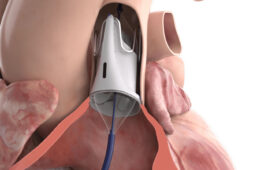
An illustration showing the Autus size-adjustable heart valve being expanded years after implantation with a minimally invasive balloon catheter.
The first-of-its-kind Autus pediatric heart valve is designed for expansion and durability
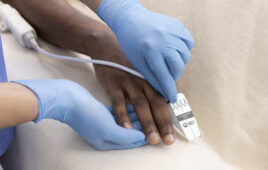
A photo of BD's VitaWave Plus finger cuff on a patient.
How BD developed noninvasive monitoring with tech made for space
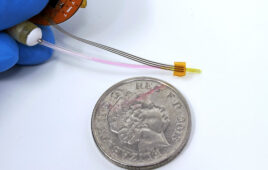
The MIT researcher's implant, LUCID.
MIT researchers design implantable ultrasound-powered drug delivery device to minimize tumor recurrence
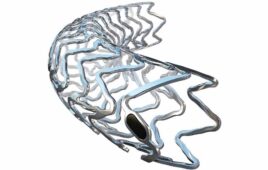
An image of the Teleflex Freesolve RMS resorbable magnesium scaffold.
Teleflex Interventional leader sees resorbables as ‘the next frontier’ of PCI
“mdo
EXPAND YOUR KNOWLEDGE AND STAY CONNECTED
Get the latest medical device business news, application and technology trends.

DeviceTalks Weekly

See More >

MDO Digital Edition

Digital Edition

Subscribe to Medical Design & Outsourcing. Bookmark, share and interact with the leading medical design engineering magazine today.

MEDTECH 100 INDEX

Medtech 100 logo
Market Summary > Current Price
The MedTech 100 is a financial index calculated using the BIG100 companies covered in Medical Design and Outsourcing.

New MedTech Resource

Medical Tubing

MassDevice

Mass Device

The Medical Device Business Journal. MassDevice is the leading medical device news business journal telling the stories of the devices that save lives.

Visit Website
MDO ad
Medical Design and Outsourcing
  • MassDevice
  • DeviceTalks
  • MedTech100 Index
  • Medical Tubing + Extrusion
  • Medical Design Sourcing
  • Drug Delivery Business News
  • Drug Discovery & Development
  • Pharmaceutical Processing World
  • R&D World
  • About Us/Contact
  • Advertise With Us
  • Subscribe to Print Magazine
  • Subscribe to our E-Newsletter
  • Listen to our Weekly Podcasts
  • Join our DeviceTalks Tuesdays Discussion

Copyright © 2026 Arrowfly, LLC. All Rights Reserved. The material on this site may not be reproduced, distributed, transmitted, cached or otherwise used, except with the prior written permission of Arrowfly LLC. Site Map | Privacy Policy | RSS

Search Medical Design & Outsourcing

  • Home
  • Medical Device Business
    • Mergers & Acquisitions
    • Financial
    • Regulatory
  • Applications
    • Cardiovascular
    • Devices
    • Imaging
    • Implantables
    • Medical Equipment
    • Orthopedic
    • Surgical
  • Technologies
    • Supplies and Components Index
    • Contract Manufacturing
    • Components
    • Electronics
    • Extrusions
    • Materials
    • Motion Control
    • Prototyping
    • Pumps
    • Tubing
  • MedTech Resources
    • Medtech Events in 2026
    • The 2026 Medtech Big 100
    • Medical Device Handbook
    • MedTech 100 Index
    • Subscribe to Print Magazine
    • DeviceTalks
    • Digital Editions
    • eBooks
    • Educational Assets
    • Manufacturer Search
    • Podcasts
    • Webinars / Digital Events
    • Whitepapers
    • Voices
    • Views
    • Video
  • 2026 Leadership
    • 2025 Winners
    • 2024 Winners
    • 2023 Winners
    • 2022 Winners
    • 2021 Winners
  • Women in Medtech
  • Advertisers
    • Advertise
    • PR Submissions
    • Eblast Submissions
  • Subscribe