Regulatory pressure, rising hospital expectations and outdated hardware are converging into a challenge manufacturers can no longer postpone.

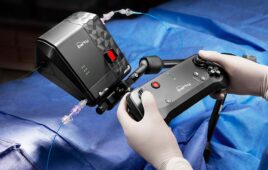
CMR Surgical initiated a recall of its Versius surgical robotics system in June 2026 because secure boot was not enabled at the time of manufacturing, which presented a potential cybersecurity risk. [Photo courtesy of CMR Surgical]
A growing number of medical device manufacturers are under pressure to add IoT connectivity to devices that were never designed for it.
Many were built 5, 10, or 15 years ago and still perform their primary clinical function perfectly well. Because they are regulated systems, changing them is difficult and expensive, so major redesigns are often postponed until they become unavoidable.
This tension came into sharp focus in July 2026 when the FDA issued a Class 2 recall notice for the Versius Surgical System US. The reason was simple but telling: Secure boot had not been enabled at manufacturing time, creating a potential cybersecurity risk.
The recall received little coverage, yet it highlights a widespread issue across legacy medical devices and serves as a clear warning for manufacturers. Regulatory requirements and hospital expectations are shifting faster than many teams realize, and the longer the delay, the harder the transition becomes.
Hospitals now expect connected capabilities as standard. They want network integration, remote monitoring, fleet management, software updates, data collection, and cloud connectivity. The core driver behind all of this is interoperability. Devices must be able to connect to the hospital backbone so their data can be included in the electronic health record. HL7 formats, communication with the rest of the hospital systems, and visibility at the nurses’ station are now baseline expectations.
Some device manufacturers respond by updating software and adding connected features, but many are trying to build modern connected medical devices on top of hardware that was never designed for modern cybersecurity. The gaps become visible quickly. Different parts of the organization start to see the difficulties. Teams realize that cybersecurity expectations have changed since the last time they walked through this. New submissions are required. New problems emerge. The further they go, the more those problems mount.
This is the hardware gap. It is a growing divide between what regulators now expect, what software‑only approaches can realistically achieve, and what manufacturers can deliver under commercial timelines.
What manufacturers may miss when they add connectivity
Some manufacturers try to meet new connectivity requirements by updating software, but the underlying issue is that the hardware often lacks the security capabilities that modern cybersecurity requires.
They may not realize they need security services for the hardware, and that those services are not present. They may not be ready to upgrade the hardware to get them. In some cases, the implications have not dawned on them. In others, they believe they can compensate with software or that regulators will allow them to avoid the issue. These are illusory responses. They may help in the short term, but the only approach that truly works is implementing hardware‑level security.
Many cybersecurity discussions focus on SBOMs, vulnerability management, penetration testing, and secure software development. Underneath all of these sits a more fundamental question: Can the device establish trust in the first place? The issue teams usually recognize is the absence of secure boot. They understand the need to defend communications from the device back to the hospital or to the cloud, but they do not always realize that this may require hardware changes.
Over the last decade, security hardware has become standard in consumer devices. Since 2016, and certainly with Windows 11, a Trusted Platform Module (TPM) is required to run the operating system. That module secures the keys used to protect communications with software encryption. This is the level of hardware support that modern cybersecurity assumes, and it is the level that many legacy medical devices lack.
More from S3 Connected Health: Unlocking the power of data for connected medical devices
The real challenge
As manufacturers push legacy devices toward modern connectivity, the real challenge is understanding what new expectations actually require beneath the surface.
The shift toward hardware‑rooted trust marks a fundamental change in how medical devices must defend themselves inside hospital networks. In the second part of this article coming soon (sign up for MDO’s free email newsletter so you don’t miss it), we will move from the symptoms of the hardware gap to its underlying mechanics, exploring how secure boot, secure storage, and cryptographic engines work together to establish trust — and why software‑only approaches can’t close the gap.

John O’Gorman is principal technology officer for cybersecurity and data analytics at S3 Connected Health. [Photo courtesy of S3]
John O’Gorman is principal technology officer for cybersecurity and data analytics at S3 Connected Health, where his team focuses on securing the next generation of healthcare technologies, including connected medical devices, FDA cybersecurity submissions, and AI-enabled autonomous decision-making systems that support patient care. He previously held roles at Microsoft, Symantec, and several leading medtech companies, and he also serves on the advisory board of CeADAR, Ireland’s Centre for Applied AI.
Read more MDO Contributions and learn how to submit your own.
The opinions expressed in this blog post are the author’s only and do not necessarily reflect those of Medical Design & Outsourcing or its employees.