Medical Design and Outsourcing

  • Home
  • Medical Device Business
    • Mergers & Acquisitions
    • Financial
    • Regulatory
  • Applications
    • Cardiovascular
    • Devices
    • Imaging
    • Implantables
    • Medical Equipment
    • Orthopedic
    • Surgical
  • Technologies
    • Supplies and Components Index
    • Contract Manufacturing
    • Components
    • Electronics
    • Extrusions
    • Materials
    • Motion Control
    • Prototyping
    • Pumps
    • Tubing
  • MedTech Resources
    • Medtech Events in 2026
    • The 2026 Medtech Big 100
    • Medical Device Handbook
    • MedTech 100 Index
    • Subscribe to Print Magazine
    • DeviceTalks
    • Digital Editions
    • eBooks
    • Educational Assets
    • Manufacturer Search
    • Podcasts
    • Webinars / Digital Events
    • Whitepapers
    • Voices
    • Views
    • Video
  • 2026 Leadership
    • 2025 Winners
    • 2024 Winners
    • 2023 Winners
    • 2022 Winners
    • 2021 Winners
  • Women in Medtech
  • Advertise
  • Subscribe

Medical device startups: Here’s how you handle requirements

January 29, 2018 By Chris Newmarker

Developing the product requirements is one of the most complex activities associated with product development, yet one of the most important. 

Bill Betten, Betten Systems Solutions

checkbox checked box requirements medical devices medtech startups

[Image, from Flickr, is marked as public domain]

This is the third in a series of articles that discusses the design of innovative products in the highly regulated medical environment. The previous two articles focused on the process framework needed to guide the overall development and the development of a project plan for execution. If the process serves as the foundation for the development and the “plan” serves as the blueprint for development, the requirements determine what it is that you’re developing. Applying these principles to your development process will result in a faster and cheaper path to market.

As a reminder, this series focuses on the definition and execution of product development activities post-funding and includes the following:

  • Idea – Without it, nothing to be developed
  • Process – The structure for development 
  • Plan – The blueprint 
  • Requirements – The details (The article you’re reading.)
  • Regulatory/ reimbursement – Critical to the medical device space
  • Verification/validation – The right product doing the right thing
medtech medical device startups requirements

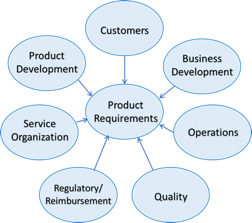
Figure 1: Typical inputs into the requirements process. [Image courtesy of Bill Betten]
Developing the product requirements is one of the most complex activities associated with product development, yet one of the most important.  As the saying goes, “if you don’t know where you’re going, any road will get you there.” (That’s from Lewis Carroll.)  The requirements for the project define where you’re going. One of the biggest challenges in developing good requirements is identifying and gathering input from all the stakeholders. Much has been written on the topic, particularly regarding gathering the “voice of the customer.” Requirements are often thought of as written specifications developed by engineers after talking to the marketing personnel who theoretically understand the customers’ needs.  Yet in today’s development efforts, the range of inputs extends far beyond the buyer of the system, the traditional “customer” noted in Figure 1.  Gathering input for the requirements in medical devices is even more complicated, however, as even the “customer” is complex, potentially including the end user, payer, patient, clinician, caregiver, procurement organization or key opinion leaders. In addition, the requirements are also driven by the regulatory, reimbursement, and safety and hazard analysis constraints incumbent in the medical product development process.

medtech medical device startups requirements

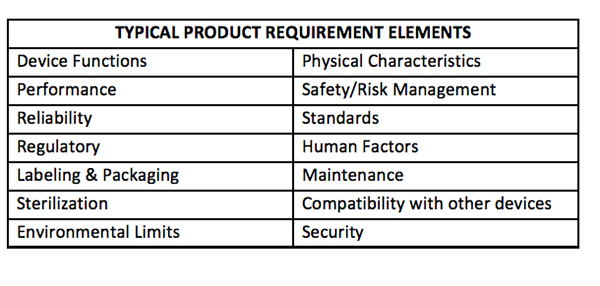
Figure 2: Representative product requirements [Image courtesy of Bill Betten]
A variety of methods exist for gathering this information from these stakeholders.  These methods range from direct questions and interviews of individuals to advisory boards and observational research.  In many devices that are based on a predicate device, the requirements may be derived from the preceding device to minimize regulatory complications.

medtech medical device startups requirements

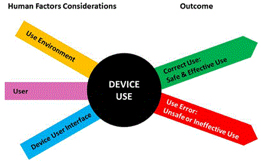
Figure 3: Interactions among human factors and user experience considerations [Courtesy of FDA].

An additional constraint upon the development of requirements for medical devices is imposed by the FDA and its emphasis on human factors and usability of the device.  This emphasis has become explicit through FDA guidance intended to increase the probability that medical devices will be safe and effective for the intended users, uses and use environments. These interactions involve the three major components of the device-user system: (1) device users, (2) device use environments and (3) device user interfaces.  The interactions among the three components and the possible results are depicted graphically in Figure 3. This emphasis has become so prevalent in forming design requirements that numerous consulting firms focus completely on early understanding, definition, and execution of these design attributes and focus only on that effort with customers.

The requirements will form the basis not only for the product design, its features, functions, and risk mitigation, but extend completely through to the verification and validation process, subject of a future article in this installment.  To that end, requirements should be clear, traceable, and verifiable.  Other things to keep in mind during the development of requirements include the following:

  • Involve all the stakeholders in the process of defining the problem and the requirements
  • Complete the problem statement before defining the requirements
  • Avoid stating the problem in terms of solutions
  • Identify the high-level system functions
  • State the requirements clearly and unambiguously
  • Identify mandatory versus tradeoff requirements and quantify and prioritize if appropriate

Medical manufacturers do not have the luxury of launching products to gather user feedback after launch or to make changes quickly, unlike tactics commonly used in the consumer space, particularly in software-based products.  The medical regulatory environment requires tracing from initial requirements to demonstration that those requirements have been met, certainly a demonstration of rigor not mandated in industrial and consumer productions.  In addition, the post-launch monitoring requirements that exist regarding medical devices ensures that product issues and deviations from desired performance are identified, tracked, and resolved.

Development of solid requirements should be the confluence of inputs from the business, user and technology constituencies.  Even in a development environment that stresses rapid iteration, i.e. “fail fast,” the development and refinement of requirements will enable you to “succeed quickly,” reducing expensive and time-consuming iterations late in the product development cycle.  For consumer products, incorrect requirements may lead to expensive changes after products have launched.  For regulated medical devices, incomplete or inaccurate requirements may lead to delays in approval, potential recalls, or worst case, harm to the patient. Time taken to define the requirements well at the beginning will ensure that your journey will be swifter and more efficient.

Next up, we’ll examine how the two “Rs” –  regulatory and reimbursement – influence the development of your product and need to be an integral and early part of your product development process>>

Bill Betten is the president of Betten Systems Solutions, a product development realization consulting organization. Betten utilizes his years of experience in the medical industry to advance device product developments into the medical and life sciences industries. Betten most recently served as director of business solutions for Devicix/Nortech Systems, a contract design and manufacturing firm. He also served as VP of business solutions at Logic PD, medical technology director at TechInsights, VP of engineering at Nonin Medical, and in a variety of technology and product development roles at various high-tech firms. 

The opinions expressed in this blog post are the author’s only and do not necessarily reflect those of MedicalDesignandOutsourcing.com or its employees.

You may also like:

  • regulatory reimbursement doors hurdles challenges bureaucracy
    Medical device startups: Here’s how you handle regulatory and reimbursement

  • Medical device startups: Here’s how you successfully plan

  • Medical device startups: Here are the secrets of success

About The Author

Avatar photo
Chris Newmarker

Chris Newmarker is the executive editor of WTWH Media life science's news websites and publications including MassDevice, Medical Design & Outsourcing and more. A professional journalist of 18 years, he is a veteran of UBM (now Informa) and The Associated Press whose career has taken him from Ohio to Virginia, New Jersey and, most recently, Minnesota. He’s covered a wide variety of subjects, but his focus over the past decade has been business and technology. He holds bachelor’s degrees in journalism and political science from Ohio State University. Connect with him on LinkedIn or email at [email protected].

Related Articles Read More >

An illustration showing Corcym's Memo 4D Curve's laser-cut nitinol core.
Laser-cut nitinol and a layered design let these cardiac implants flex
A photo of J&J MedTech SVP and Global Head of Digital Shan Jegatheeswaran.
Where Johnson & Johnson sees opportunity in surgical intelligence
A close of of Medical 21's Maverics graft.
A surgeon’s prayer helped St. Jude Medical founder Manny Villafaña size his latest device
The 1.84 volt paper battery (brown circle structure) was tested in pigs with a bioabsorbable radio-frequency identification (RFID) device.
MIT researchers develop bioresorbable batteries for ingestible medical devices
“mdo
EXPAND YOUR KNOWLEDGE AND STAY CONNECTED
Get the latest medical device business news, application and technology trends.

DeviceTalks Weekly

See More >

MDO Digital Edition

Digital Edition

Subscribe to Medical Design & Outsourcing. Bookmark, share and interact with the leading medical design engineering magazine today.

MEDTECH 100 INDEX

Medtech 100 logo
Market Summary > Current Price
The MedTech 100 is a financial index calculated using the BIG100 companies covered in Medical Design and Outsourcing.

New MedTech Resource

Medical Tubing

MassDevice

Mass Device

The Medical Device Business Journal. MassDevice is the leading medical device news business journal telling the stories of the devices that save lives.

Visit Website
MDO ad
Medical Design and Outsourcing
  • MassDevice
  • DeviceTalks
  • MedTech100 Index
  • Medical Tubing + Extrusion
  • Medical Design Sourcing
  • Drug Delivery Business News
  • Drug Discovery & Development
  • Pharmaceutical Processing World
  • R&D World
  • About Us/Contact
  • Advertise With Us
  • Subscribe to Print Magazine
  • Subscribe to our E-Newsletter
  • Listen to our Weekly Podcasts
  • Join our DeviceTalks Tuesdays Discussion

Copyright © 2026 Arrowfly, LLC. All Rights Reserved. The material on this site may not be reproduced, distributed, transmitted, cached or otherwise used, except with the prior written permission of Arrowfly LLC. Site Map | Privacy Policy | RSS

Search Medical Design & Outsourcing

  • Home
  • Medical Device Business
    • Mergers & Acquisitions
    • Financial
    • Regulatory
  • Applications
    • Cardiovascular
    • Devices
    • Imaging
    • Implantables
    • Medical Equipment
    • Orthopedic
    • Surgical
  • Technologies
    • Supplies and Components Index
    • Contract Manufacturing
    • Components
    • Electronics
    • Extrusions
    • Materials
    • Motion Control
    • Prototyping
    • Pumps
    • Tubing
  • MedTech Resources
    • Medtech Events in 2026
    • The 2026 Medtech Big 100
    • Medical Device Handbook
    • MedTech 100 Index
    • Subscribe to Print Magazine
    • DeviceTalks
    • Digital Editions
    • eBooks
    • Educational Assets
    • Manufacturer Search
    • Podcasts
    • Webinars / Digital Events
    • Whitepapers
    • Voices
    • Views
    • Video
  • 2026 Leadership
    • 2025 Winners
    • 2024 Winners
    • 2023 Winners
    • 2022 Winners
    • 2021 Winners
  • Women in Medtech
  • Advertise
  • Subscribe