Fredrikson attorney Carl Numrich [Photo courtesy of Fredrikson]
In the latest story from our interview with two lawyers who work with medical device OEMs, their outsourcing partners and PE firms, we discussed the trends behind those deals, a leading dealbreaker, and what to expect from medtech M&A in the months and years ahead. (Our first story covered the PE business model, and the second story dug into what private equity means for medtech OEMs, suppliers and their employees.)
Jamie Snelson and Carl Numrich are shareholders at Minneapolis-based law firm Fredrikson, which represents private equity platform sponsors including KKR (which is buying CDMO Integer for $5.7 billion), Bain Capital and Morgan Stanley.
Snelson works with medtech OEMs and was previously in-house legal counsel for Medtronic. He’s helped the world’s largest medical device company buy public companies and stock and assets of private businesses, along with dispositions, strategic investments and technology licensing deals.
Numrich represents PE firms and investment firms such as Audax, Arcline, Kolos Partners and Goldner Hawn.
The following has been lightly edited for clarity and space.
MDO: Is now a better time to roll up companies that might have previously faced regulatory scrutiny or even been shot down in past years?
Snelson: “There’s something to that, although regulatory scrutiny in antitrust is very volatile. In healthcare and some other sectors, not only do you have to think about the the federal framework, but also the states. Several states have taken on some of the regulatory scrutiny that perhaps in previous years was was held by federal regulators. That’s an issue on the minds of our clients in medical technology, particularly when they’re engaging in larger deals that are subject to required notices, etc., and that’s true here in the U.S. and outside of the U.S., too.”
Numrich: “As we see private equity increasingly becoming global, both looking at deals outside of the U.S. and bringing in LPs (limited partners) from around the world, there’s an overlay of foreign direct investment and other merger control analyses that you have to go through in deals that can can impact deal certainty and the ability to get deals done.”
Medtech Big 100: Join MDO editors for a discussion of the top movers and trends in our upcoming ranking of the world’s largest medical device companies
If a company on the OEM side or the supplier side is looking to potentially sell their business or work with PE now or in the future, what should they start doing to get ready for that?
Numrich: “Regulatory compliance is the biggest piece when you’re looking at selling a medtech or healthcare company. It’s expected that you are compliant and that you can demonstrate that compliance in a nice, neat way. There’s the normal diligence that every business owner needs to go through when they’re looking to sell their business, and that’s all of the diligence around making sure your corporate records and your equity documents and your material contracts and employment compliance and benefits and IP and all are nice, neat, organized in a manner that can be presented and bear out the deal thesis for the buyer. That’s all important, and that’s true in every deal, but I think in healthcare and medtech deals, being able to demonstrate the regulatory compliance, FDA compliance in a way that gives the buyer comfort that you’re thinking about it, that it’s an everyday activity for you, not something you’ve put together at the last minute to show a buyer, but demonstrates true compliance and that it’s part of your culture, it’s really important.
“The same is true with data privacy and security increasingly in this this day and age. Something I’ve seen kill more deals over the last couple of years than anything else is data breaches that were not handled appropriately. We can get through a data breach and diligence on the buy side, but if only if it’s been handled appropriately and there’s supporting documentation to show that it’s done. Those are the keys, and figuring out how to get those ducks in a row, get everything in a package that can be presented in a nice, orderly way is really important.”
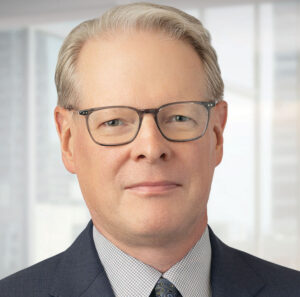
Fredrikson attorney Jamie Snelson [Photo courtesy of Fredrikson]
What kind of changes are you expecting as far as valuations, deal size and deal speed?
Snelson: “Everything’s faster than it used to be … across all of our practices and M&A in particular. There are a lot of dynamics that people are getting more comfortable with. The uncertainty that has been introduced at different times over the past several years, people are comfortable digesting more quickly and pursuing strategies that make sense to them in the long run. I think that’s true for our private equity clients. That’s true for our strategic clients as well. We see good deal activity and pipeline here at Fredrikson and in the market. We think that’s going to be ongoing for the foreseeable future.”
We’ve seen a lot of medtech spinoffs and divestitures. Is there any reason to believe that’s going to slow down or speed up?
Snelson: “I don’t think so. There’s great appetite for that on both sides of the equation. Often we see strategics that are almost continuously reevaluating their core technologies and core product lines, and as they determine they’re going to invest more or less in a particular area of their business there are often private equity buyers that are very interested in those kinds of what we call ‘carve-out’ deals where a larger company is is carving out a business line or product line or assets that are no longer core to their strategy We’ve seen a lot of that. Those deals are very legal intensive, and Carl and I like those deals a lot.”
Medtech pay analysis: Medtronic discloses pay for Diabetes leaders ahead of MiniMed IPO
Numrich: “On the private equity side, a lot of assets are being held for a very long time in the fund lifecycle. So you’ve seen a lot of continuation vehicles on the private equity side with an asset that was bought in an earlier fund, it’s time to return to LPs (limited partners), but the asset isn’t ripe for an exit. That’s another place where in the deal lifecycle in PE, you’ll see assets that are being held and then either put through a continuation vehicle of an entire fund or of a specific asset in order to return to LPs, and occasionally you’ll see a carve-out or an investor-out of a PE portfolio company alongside that to get to a place where you can return to LPs while still holding an asset for for a more lucrative exit down the road.”
Subscribe to our free newsletter to watch for the next article from this interview.