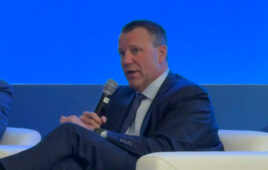
Medtronic Chair and CEO Geoff Martha said his company’s exposure to Chinese imports is less than 1% of revenue. About 7% of the company’s annual sales come from Chinese business. [Photo via Adobe Stock]
While he cautioned that “it’s still a bit early to speculate about different policies, whether it be health care policy or exactly what’s going to happen or not going to happen to tariffs,” Martha said his team is “running … and preparing for different scenarios.”
“I don’t want to get into that speculation,” he said in response to a question about Medtronic’s supply chain when Trump returns to power on today’s earnings call for the company’s second quarter of fiscal 2025. (He also disclosed a supplier issue that throttled availability of the PulseSelect pulse field ablation system – read more about that here.)
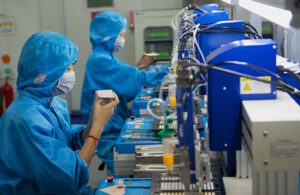
But Martha did say that the company’s “exposure to importing products from China [is] small. It’s less than 1% of our revenue.”
Medtronic is headquartered in Ireland for tax purposes, but maintains its operational headquarters in Fridley, Minnesota.
While campaigning, Trump promised to levy tariffs of at least 60% on imports from China and a 10% tariff on imports from all other countries. Those import taxes would almost certainly increase costs for medical device developers, manufacturers and their partners and customers.
That’s just one of the many questions medtech leaders are grappling with in the wake of Trump’s election.
Martha sought to reassure investors that the underlying medtech market is “healthy.”

Medtronic CEO and Chair Geoff Martha [Photo courtesy of Medtronic]
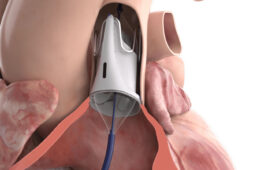
First look: Medtronic’s Sphere-360 pulsed field ablation catheter design has some new tricks
“This innovation is what’s driving a lot of this growth, plus just demographics. So I think it’s a healthy market. And under any administration, if you go back decades, whether it be in the U.S. or other countries, healthcare is an important priority for any government. And so we feel good in that way,” Martha said.
Medtronic and U.S.-Chinese competition
Even before the election, Medtronic warned investors of the risks to its business due to “the ongoing global economic competition and trade tensions between the U.S. and China,” as the company put it in its annual report for fiscal 2024 in August.
“Although we have been able to mitigate some of the impact on Medtronic from increased duties imposed by both sides (through petitioning both governments for 23 tariff exclusions and other mitigations), the risk remains of additional tariffs and other kinds of restrictions,” the company said in its lengthy disclosure of factors affecting operations. “Tariff exclusions awarded to Medtronic by the U.S. Government require periodic renewal, and policies for granting exclusions could shift.”
According to that annual report, Chinese sales made up about 7% of Medtronic’s revenue for fiscal 2024 (ended April 26).
“The U.S. and China … could impose other types of restrictions such as limitations on government procurement or technology export restrictions, which could affect Medtronic’s access to the markets,” the company said.
Medtech pay analysis: Medtronic CEO pay jumps 30%, employment and median worker pay drop