Medical Design and Outsourcing

  • Home
  • Medical Device Business
    • Mergers & Acquisitions
    • Financial
    • Regulatory
  • Applications
    • Cardiovascular
    • Devices
    • Imaging
    • Implantables
    • Medical Equipment
    • Orthopedic
    • Surgical
  • Technologies
    • Supplies and Components Index
    • Contract Manufacturing
    • Components
    • Electronics
    • Extrusions
    • Materials
    • Motion Control
    • Prototyping
    • Pumps
    • Tubing
  • MedTech Resources
    • Medtech Events in 2026
    • The 2025 Medtech Big 100
    • Medical Device Handbook
    • MedTech 100 Index
    • Subscribe to Print Magazine
    • DeviceTalks
    • Digital Editions
    • eBooks
    • Educational Assets
    • Manufacturer Search
    • Podcasts
    • Webinars / Digital Events
    • Whitepapers
    • Voices
    • Views
    • Video
  • 2026 Leadership
    • 2025 Winners
    • 2024 Winners
    • 2023 Winners
    • 2022 Winners
    • 2021 Winners
  • Women in Medtech
  • Advertise
  • Subscribe

With Medtronic’s next-gen RDN devices and procedures advancing, Project Galileo is next

July 14, 2025 By Jim Hammerand

Medtronic Renal Denervation GM Jason Fontana offers an update on new Symplicity Spyral devices, procedures and a feature they’re investigating.
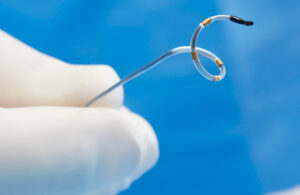
A photo of Medtronic's Symplicity Spyral renal denervation catheter with a gloved hand for scale.

Medtronic’s Symplicity Spyral renal denervation catheter uses nitinol to expand inside a patient’s kidney arteries. Medtronic is studying multi-organ denervation and developing a longer catheter for access via the wrist instead of the femoral artery. [Photo courtesy of Medtronic]

Medtronic’s renal denervation (RDN) business is in the early stages of a new project to add a key feature to its minimally invasive hypertension technology as it makes progress on a new catheter design and treats its first patients in a study of multi-organ denervation.

“We’re advancing our catheter and advancing our procedural approach at the same time,” Medtronic RDN GM Jason Fontana said in a Medical Design & Outsourcing interview.

Medtronic’s FDA-approved Symplicity Spyral RDN system delivers radiofrequency energy to a patient’s renal (kidney) arteries using a self-expanding nitinol catheter.

Nitinol innovation: Download our free special report featuring nitinol expertise and tips from medical device OEMs

Through what the team calls Project Pulsar, Medtronic has developed a next-generation catheter with a longer length for transradial wrist access instead of femoral access. Radial access is gaining traction for catheter procedures like percutaneous coronary interventions thanks to better outcomes than femoral access.

“We’re trying to head down the pathway of a wrist-based approach to doing renal denervation, because we know from the coronary perspective it’s safer with less adverse events for patients. They’re able to go home sooner. You don’t have that potential for femoral bruising or leg bruising,” Fontana said.

An illustration of Medtronic's Symplicity Spyral renal denervation (RDN) ablation catheter ablating nerves inside the renal artery.

Medtronic’s Symplicity Spyral renal denervation (RDN) ablation catheter expands inside the renal arteries to apply energy that calms overactive nerves that help regulate blood pressure. [Illustration courtesy of Medtronic]

“Renal denervation is an incredibly safe procedure,” he later continued. “In all our clinical trials and clinical studies, there’s been very few adverse events. The general risks of the procedure, I would put into the same categories as any interventional procedure. The risks are more related to the procedure access than anything else. In an anything-that-could-happen world, the fear going into this was whether there would be any stenosis of the renal artery or impact to the renal artery. We’ve seen pristine safety from a restenosis perspective.”

Min-Vasive Medtech: Watch live interviews and audience Q&As with minimally invasive engineers from Edwards Lifesciences, Jupiter Endo and Compremium

Feedback has been positive from physicians using the Symplicity Spyral catheter for RDN and in the multi-organ study, Fontana said. The catheter can expand enough to treat both the renal and hepatic arteries, so there won’t be significant changes to the therapeutic end of the catheter.

“The performance of the catheter has been really fantastic across the board: utilization, deliverability, it’s been great,” he said. “[At Medtronic, that’s] been something that we’ve been proud of forever with our stents, balloons and guides.”

Related: What Medtronic learned on its long road to RDN approval

Medtronic’s Project Gemini

Medtronic’s Spyral GEMINI pilot program (an abbreviation for Global pilot study of rEnal and hepatic coMbINed denervatIon) is comparing RDN against denervation of the arteries in both the kidneys and the liver.
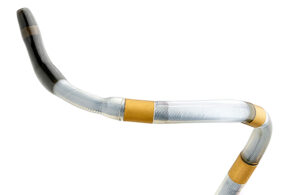
A close-up of Medtronic's Symplicity Spyral renal denervation (RDN) catheter for treating hypertension.

This illustration of the Symplicity Spyral renal denervation (RDN) catheter shows the electrodes that delivery radiofrequency energy. [Image courtesy of Medtronic]

“We’re trying to take more variability out of the conversation,” Fontana said. “There’s always variability with the patient, and we’re trying to get bigger drops in blood pressure and/or more response. Our approach to doing that is to lower the sympathetic nerve activity in the kidney, and then the next big area is the liver. … We did the preclinical work and we presented at ACC that [exactly] that happened: If you add hepatic to renal, you get bigger drops and tighter drops in norepinephrine, the signal from the kidney. We had all this preclinical work, we knew we could do it safely, we knew our algorithm was designed for the hepatic artery, and now we’ve had our first patients.”

“This is kind of a pilot design because it’s never been done before,” he continued. “It’s the first time we’re putting our catheter into the hepatic artery in a human. We have an off-med trial and we have an on-med trial, and we’re basically using the datasets we’ve created as our backdrop to compare this approach to.”

Medtronic has tweaked its RDN generator’s energy delivery algorithm for the multi-organ denervation procedure.

“What we’ve learned preclinically is that the common hepatic artery is made up a little bit differently than your renal artery for appropriate reasons — it’s a different organ,” Fontana said. “We adjusted the algorithm for the tissue we’re going to be delivering energy to in the liver. It’s a little bit thicker of a vessel wall, it’s got a little bit different adventitia.”

Medtronic is using two separate generators in the multi-organ study, but they’re working to offer both energy algorithms in a single generator, Fontana said.

The multi-organ approach offers a lesson for other device developers.

A photo of Medtronic Coronary and Renal Denervation Operating Unit Global Marketing VP and Renal Denervation GM Jason Fontana

Medtronic Coronary and Renal Denervation Operating Unit Global Marketing VP and Renal Denervation GM Jason Fontana [Photo courtesy of Medtronic]

“At a macro level, if you’re an engineer, you tend to get focused on your one area,” Fontana said. “We were focused on the kidney and sympathetic activity in the kidney, and literally the liver has been staring at us the entire time. Every patient we’ve ever treated, it’s right there, and you realize there’s so much sympathetic activity in the liver that maybe we weren’t thinking about. Then you understand it, you learn more about it and realize you can take that opportunity. We learned there was sympathetic nerve activity there — it’s obviously there for a reason — and we’re able to take advantage of it. So if you’re an engineer, you may be focused on that one thing, but every once in a while, pull back a little bit and just see what you’re doing and where else it could be done or where else it could be applicable.”

Medtronic’s Project Galileo

As Medtronic moves forward on Project Pulsar and Project Gemini, there’s a new space-themed program in the works in Ireland. Project Galileo will try to find a signal of intraprocedural efficacy so the physician knows the job is done, Fontana said.

“That’s looking at changes in constriction of the vessels, both pre- and post-renal denervation,” he said. “… Think of it like mapping for atrial fibrillation. … With renal denervation, we treat and then we look to the blood pressure. If there was a way that we could do our treatment and then check and say, ‘OK, we got all the nerves, we’re done,’ that’s what we’re at the beginnings of right now with Galileo. … You’d want to use the same catheter, but use a different energy level and then measure an impact.”

While the Medtronic RDN team’s focus is on hypertension for now, there’s potential for multi-organ denervation to treat other conditions like diabetes.

Related: Medtronic execs say renal denervation for AFib could be on the horizon

“There’s some interesting cardiometabolic options that potentially down the road could be addressed,” Fontana said. “… We’re focused on making sure we can do a safe and effective procedure, and then the next steps will follow.”

We asked whether RDN can help Medtronic remain the world’s largest device company after separating from its diabetes business.

“Unfortunately, hypertension is a really big problem around the world,” he said. “… Our diabetes separation is about focus in both areas. We know diabetic patients need focus, and our team has done a great job there. The partnership with Abbott, everything we’re doing, that’s going to really drive focus there. And then on our side and on the Medtronic side, RDN, pulsed-field ablation, tricuspid, mitral, even in the cardiovascular space, there are these big areas of opportunity that now we can heavily focus on. And then if you think about Hugo and surgical and [neuromod], Medtronic’s been able to now really double down on some of these big areas. RDN for patients with hypertension has that opportunity to be one of these growth drivers going forward.”

Previously: RDN ‘could be the biggest thing we ever do,’ CEO Geoff Martha says

About The Author

Jim Hammerand

Jim Hammerand is the managing editor of Arrowfly's Medical Design & Outsourcing, where he leads coverage of medtech innovation, design, engineering and manufacturing. He also reports breaking news at Arrowfly's MassDevice and contributes to our DeviceTalks podcasts and live events. Hammerand has more than two decades of journalism experience spanning newspapers, magazines, websites, live events, radio and TV news. For nearly a decade, Hammerand reported and edited business news for American City Business Journals as a reporter and digital editor at the Minneapolis/St. Paul Business Journal and then as managing editor of the Puget Sound Business Journal in Seattle. He holds degrees in journalism and management from the University of Minnesota and has won journalism awards from the Society of Professional Journalists, American Society of Business Publication Editors, and Trade, Association, Business Publications International. Connect with him on LinkedIn or by email at [email protected].

Related Articles Read More >

A clinician guides a needle and wire into the side of a patient's neck during a central venous catheter insertion.
New campaign targets fibrin sheath CVC complication
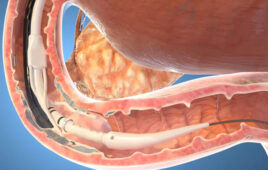
An illustration of Fractyl Health's Revita system in using ablation in the dueodenum.
This minimally invasive ablation device shows promise to keep pounds off after GLP-1s
A photo of the Zeus CathX Medical facility in Cartago, Costa Rica.
Zeus plans new catheter manufacturing facility in Costa Rica
The MDO Min-Vasive Medtech webinar series features medical device R&D experts from major OEMs and groundbreaking startups.
We’ve got a medtech legend, teleprocedures and autonomous robots for the 2026 MDO Min-Vasive Medtech webinar series
“mdo
EXPAND YOUR KNOWLEDGE AND STAY CONNECTED
Get the latest medical device business news, application and technology trends.

DeviceTalks Weekly

See More >

MDO Digital Edition

Digital Edition

Subscribe to Medical Design & Outsourcing. Bookmark, share and interact with the leading medical design engineering magazine today.

MEDTECH 100 INDEX

Medtech 100 logo
Market Summary > Current Price
The MedTech 100 is a financial index calculated using the BIG100 companies covered in Medical Design and Outsourcing.

New MedTech Resource

Medical Tubing

MassDevice

Mass Device

The Medical Device Business Journal. MassDevice is the leading medical device news business journal telling the stories of the devices that save lives.

Visit Website
MDO ad
Medical Design and Outsourcing
  • MassDevice
  • DeviceTalks
  • MedTech100 Index
  • Medical Tubing + Extrusion
  • Medical Design Sourcing
  • Drug Delivery Business News
  • Drug Discovery & Development
  • Pharmaceutical Processing World
  • R&D World
  • About Us/Contact
  • Advertise With Us
  • Subscribe to Print Magazine
  • Subscribe to our E-Newsletter
  • Listen to our Weekly Podcasts
  • Join our DeviceTalks Tuesdays Discussion

Copyright © 2026 Arrowfly, LLC. All Rights Reserved. The material on this site may not be reproduced, distributed, transmitted, cached or otherwise used, except with the prior written permission of Arrowfly LLC. Site Map | Privacy Policy | RSS

Search Medical Design & Outsourcing

  • Home
  • Medical Device Business
    • Mergers & Acquisitions
    • Financial
    • Regulatory
  • Applications
    • Cardiovascular
    • Devices
    • Imaging
    • Implantables
    • Medical Equipment
    • Orthopedic
    • Surgical
  • Technologies
    • Supplies and Components Index
    • Contract Manufacturing
    • Components
    • Electronics
    • Extrusions
    • Materials
    • Motion Control
    • Prototyping
    • Pumps
    • Tubing
  • MedTech Resources
    • Medtech Events in 2026
    • The 2025 Medtech Big 100
    • Medical Device Handbook
    • MedTech 100 Index
    • Subscribe to Print Magazine
    • DeviceTalks
    • Digital Editions
    • eBooks
    • Educational Assets
    • Manufacturer Search
    • Podcasts
    • Webinars / Digital Events
    • Whitepapers
    • Voices
    • Views
    • Video
  • 2026 Leadership
    • 2025 Winners
    • 2024 Winners
    • 2023 Winners
    • 2022 Winners
    • 2021 Winners
  • Women in Medtech
  • Advertise
  • Subscribe