Medical Design and Outsourcing

  • Home
  • Medical Device Business
    • Mergers & Acquisitions
    • Financial
    • Regulatory
  • Applications
    • Cardiovascular
    • Devices
    • Imaging
    • Implantables
    • Medical Equipment
    • Orthopedic
    • Surgical
  • Technologies
    • Supplies and Components Index
    • Contract Manufacturing
    • Components
    • Electronics
    • Extrusions
    • Materials
    • Motion Control
    • Prototyping
    • Pumps
    • Tubing
  • MedTech Resources
    • Medtech Events in 2026
    • The 2026 Medtech Big 100
    • Medical Device Handbook
    • MedTech 100 Index
    • Subscribe to Print Magazine
    • DeviceTalks
    • Digital Editions
    • eBooks
    • Educational Assets
    • Manufacturer Search
    • Podcasts
    • Webinars / Digital Events
    • Whitepapers
    • Voices
    • Views
    • Video
  • 2026 Leadership
    • 2025 Winners
    • 2024 Winners
    • 2023 Winners
    • 2022 Winners
    • 2021 Winners
  • Women in Medtech
  • Advertisers
    • Advertise
    • PR Submissions
    • Eblast Submissions
  • Subscribe

MIT engineers develop drug delivery patch for post-heart attack healing

November 5, 2025 By Sean Whooley

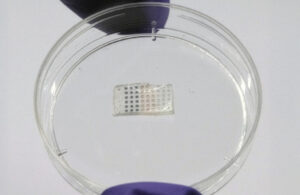
A photo of MIT's heart-tissue-healing patch in a petri dish.

This photo shows MIT’s heart patch in a petri dish. [Photo courtesy of MIT]

Engineers at MIT say they developed a flexible drug delivery patch for promoting healing and tissue regeneration after heart attacks.

The patch, placed on the heart after a heart attack, can help both heal and regenerate cardiac tissue. MIT said its engineers designed the patch to carry several different drugs capable of release at different times on a pre-programmed schedule.

In a study of rats, the researchers demonstrated that the treatment reduced the amount of damaged heart tissue by 50% and significantly improved cardiac function.

If approved for use in humans, the patch could help heart attack victims recover more cardiac function than currently possible.

“When someone suffers a major heart attack, the damaged cardiac tissue doesn’t regenerate effectively, leading to a permanent loss of heart function. The tissue that was damaged doesn’t recover,” Ana Jaklenec, a principal investigator at MIT’s Koch Institute for Integrative Cancer Research, said in a news release. “Our goal is to restore that function and help people regain a stronger, more resilient heart after a myocardial infarction.”

Jaklenec was senior author of the new study alongside Robert Langer, the David H. Koch Institute Professor at MIT. Their findings appeared in Cell Biomaterials with former MIT postdoc Erika Wang  as lead author

‘Tiny coffee cups with lids’

Many patients have bypass surgery after a heart attack, which improves blood flow but fails to repair the damaged cardiac tissue. The MIT team set out to create a patch capable of application to the heart at the same time as surgery.

Diseases such as heart conditions require phase-specific treatment, but most available systems release drugs all at once. The researchers believed that timed delivery over an extended period would better synchronize therapy and recovery.

“We wanted to see if it’s possible to deliver a precisely orchestrated therapeutic intervention to help heal the heart, right at the site of damage, while the surgeon is already performing open-heart surgery,” Jaklenec said.

The researchers adapted drug delivery microparticles they had already developed in previous efforts. MIT said these microparticles consist of capsules “similar to tiny coffee cups with lids.” The capsules are made from the polymer PLGA and can be sealed with a drug inside.

MIT said the researchers can change the molecular weight of the polymers used to form the lids to control how quickly they degrade. This enables them to program certain releases at specific times. To conduct the study, they designed particles that break down during days 1-3, 7-9 and 12-14 after implantation.

This method allowed for a regimen of three drugs that promote heart healing in different ways. The first set released neuregulin-1, a growth factor that helps to prevent cell death. Next, it released VEGF, a growth factor that promotes formation of blood vessels surrounding the heart. Finally, it released a small-molecule drug called GW788388, which inhibits the formation of scar tissue.

The researchers embedded rows of the particles into thin sheets of a hydrogel made from alginate and PEGDA. For the study, they created compact, miniature patches only a few millimeters across.

“We encapsulate arrays of these particles in a hydrogel patch, and then we can surgically implant this patch into the heart. In this way, we’re really programming the treatment into this material,” Wang said.

Testing the drug delivery patches

MIT Drug Delivery Patch for heart attack tissue (1)

MIT engineers developed a flexible drug-delivery patch designed to carry several different drugs that can be released at different times, on a pre-programmed schedule. [Image courtesy of MIT]

The researchers tested their patches on spheres of heart tissue with cardiomyocytes generated from induced pluripotent stem cells. These spheres included endothelial cells and human ventricular cardiac fibroblasts.

Mimicking the effects of a heart attack, the researchers exposed the tissue to low-oxygen conditions before applying the patches. Tjey said the patches promoted blood vessel growth, helped cell survival and reduced the amount of developed fibrosis.

Testing on a rat model of a heart attack, the researchers also saw significant improvements following treatment. Animals treated with the patch showed 33% higher survival rates than those with no treatment or IV injection of the same drugs. Researchers also saw a 50% reduction in the amount of damaged tissue and significantly increased cardiac output.

MIT said the researchers observed that the patches eventually dissolve over time. Eventually, they become a very thin layer over the course of a year without disrupting the heart’s mechanical function.

The patch requires surgical implantation. However, the researchers want to explore using the microparticles in stents for drug delivery on a programmed schedule.

“This is an important way to combine drug delivery and biomaterials to potentially new treatments for patients,” Langer said.

About The Author

Avatar photo
Sean Whooley

Sean Whooley is an associate editor who mainly produces work for MassDevice, Medical Design & Outsourcing and Drug Delivery Business News. He received a bachelor's degree in multiplatform journalism from the University of Maryland, College Park. You can connect with him on LinkedIn or email him at [email protected].

Related Articles Read More >

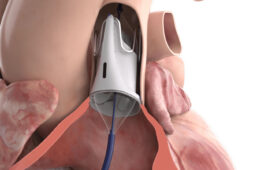
An illustration showing the Autus size-adjustable heart valve being expanded years after implantation with a minimally invasive balloon catheter.
The first-of-its-kind Autus pediatric heart valve is designed for expansion and durability
J&J EP leader Michael Bodner offers a PFA program update
Guardant Health Shield
Guardant’s colorectal cancer blood test wins most innovative medtech of 2026
Feminai's breast sensor patch
AdvaMed and MedTech Innovator name 2026 prize winners and finalists
“mdo
EXPAND YOUR KNOWLEDGE AND STAY CONNECTED
Get the latest medical device business news, application and technology trends.

DeviceTalks Weekly

See More >

MDO Digital Edition

Digital Edition

Subscribe to Medical Design & Outsourcing. Bookmark, share and interact with the leading medical design engineering magazine today.

MEDTECH 100 INDEX

Medtech 100 logo
Market Summary > Current Price
The MedTech 100 is a financial index calculated using the BIG100 companies covered in Medical Design and Outsourcing.

New MedTech Resource

Medical Tubing

MassDevice

Mass Device

The Medical Device Business Journal. MassDevice is the leading medical device news business journal telling the stories of the devices that save lives.

Visit Website
MDO ad
Medical Design and Outsourcing
  • MassDevice
  • DeviceTalks
  • MedTech100 Index
  • Medical Tubing + Extrusion
  • Medical Design Sourcing
  • Drug Delivery Business News
  • Drug Discovery & Development
  • Pharmaceutical Processing World
  • R&D World
  • About Us/Contact
  • Advertise With Us
  • Subscribe to Print Magazine
  • Subscribe to our E-Newsletter
  • Listen to our Weekly Podcasts
  • Join our DeviceTalks Tuesdays Discussion

Copyright © 2026 Arrowfly, LLC. All Rights Reserved. The material on this site may not be reproduced, distributed, transmitted, cached or otherwise used, except with the prior written permission of Arrowfly LLC. Site Map | Privacy Policy | RSS

Search Medical Design & Outsourcing

  • Home
  • Medical Device Business
    • Mergers & Acquisitions
    • Financial
    • Regulatory
  • Applications
    • Cardiovascular
    • Devices
    • Imaging
    • Implantables
    • Medical Equipment
    • Orthopedic
    • Surgical
  • Technologies
    • Supplies and Components Index
    • Contract Manufacturing
    • Components
    • Electronics
    • Extrusions
    • Materials
    • Motion Control
    • Prototyping
    • Pumps
    • Tubing
  • MedTech Resources
    • Medtech Events in 2026
    • The 2026 Medtech Big 100
    • Medical Device Handbook
    • MedTech 100 Index
    • Subscribe to Print Magazine
    • DeviceTalks
    • Digital Editions
    • eBooks
    • Educational Assets
    • Manufacturer Search
    • Podcasts
    • Webinars / Digital Events
    • Whitepapers
    • Voices
    • Views
    • Video
  • 2026 Leadership
    • 2025 Winners
    • 2024 Winners
    • 2023 Winners
    • 2022 Winners
    • 2021 Winners
  • Women in Medtech
  • Advertisers
    • Advertise
    • PR Submissions
    • Eblast Submissions
  • Subscribe