Medical Design and Outsourcing

  • Home
  • Medical Device Business
    • Mergers & Acquisitions
    • Financial
    • Regulatory
  • Applications
    • Cardiovascular
    • Devices
    • Imaging
    • Implantables
    • Medical Equipment
    • Orthopedic
    • Surgical
  • Technologies
    • Supplies and Components Index
    • Contract Manufacturing
    • Components
    • Electronics
    • Extrusions
    • Materials
    • Motion Control
    • Prototyping
    • Pumps
    • Tubing
  • MedTech Resources
    • Medtech Events in 2026
    • The 2025 Medtech Big 100
    • Medical Device Handbook
    • MedTech 100 Index
    • Subscribe to Print Magazine
    • DeviceTalks
    • Digital Editions
    • eBooks
    • Educational Assets
    • Manufacturer Search
    • Podcasts
    • Webinars / Digital Events
    • Whitepapers
    • Voices
    • Views
    • Video
  • 2026 Leadership
    • 2025 Winners
    • 2024 Winners
    • 2023 Winners
    • 2022 Winners
    • 2021 Winners
  • Women in Medtech
  • Advertise
  • Subscribe

MIT says tiny, wireless ‘antennas’ could enable high-resolution biosensing

January 9, 2025 By Chris Newmarker

This is an MIT rendering of the micrometer-wide "antennas" for high-resolution biosensing.

A rendering of the micrometer-wide “antennas” for high-resolution biosensing [Image courtesy of Marta Airaghi and Benoit Desbiolles/MIT]

MIT researchers recently announced that they have developed a technique to provide high-resolution biosensing without wires.

In a paper published in the journal Science Advances, the researchers described organic electro-scattering antennas (OCEANs) for wireless, light-based probing of cellular electrical signals. They said these OCEANs could provide micrometer spatial resolution, potentially from thousands of sites, during in vitro studies.

The next step, though, is to test their optical sensing arrays with actual cell cultures grown on top.

“Being able to record the electrical activity of cells with high throughput and high resolution remains a real problem. We need to try some innovative ideas and alternate approaches,”  Benoît Desbiolles, a former postdoc in the MIT Media Lab and lead author of a paper on the devices, said in an MIT news release.

Devices that record electrical signals in cell cultures and other liquid environments have traditionally relied on wires, limiting the number of sensors that could be deployed. However, the MIT researchers’ antennas — each only 1 micrometer wide, or one-hundredth the width of a human hair — take advantage of how the polymer poly(3,4-ethylenedioxythiophene):polystyrene sulfonate (PEDOT:PSS) can attract or repulse positive ions from the surrounding liquid environment when there is electrical activity nearby. Resulting changes to the polymer’s chemical configuration and electronic structure alters its refractive index, changing how it scatters light.

Shining light onto the antenna changes the intensity of the light in proportion to the liquid’s electrical signal. Researchers can then use an optical microscope to capture the scattered light from the thousands of antennas in the array to measure electrical signals to achieve high-resolution biosensing, according to the MIT researchers.

The researchers fabricated the arrays in the MIT.nano facilities. They started with a glass substrate, depositing layers of conductive and then insulating material on top, with each of the layers optically transparent. They then used a focused ion beam to cut hundreds of nanoscale holes into the top layers.

“This instrument is basically like a pen where you can etch anything with a 10-nanometer resolution,” Desbiolles said.

The researchers submerged their chip in a solution containing the precursor building blocks for the polymer. An electric current applied to the solution attracted the precursor material into the tiny holes on the chip, with the mushroom-shaped antennas “growing” from the bottom up.

Desbiolles and his colleagues think it could be possible to even create millions of antennas with this process.

“This technique could be easily adapted so it is fully scalable. The limiting factor is how many antennas we can image at the same time,” Desbiolles said.

The researchers designed the high-resolution biosensing arrays to have cells cultured directly on top of them and put under an optical microscope for analysis. They optimized the dimensions of the antennas and adjusted parameters, which enabled them to achieve high enough sensitivity to monitor signals with voltages as low as 2.5 mV in simulated experiments. That’s just a small fraction of the voltage produced by neurons for communication.

“Bioelectricity is fundamental to the functioning of cells and different life processes. However, recording such electrical signals precisely has been challenging,” said Deblina Sarkar, the paper’s senior author and an assistant professor in the Media Lab and MIT Center for Neurobiological Engineering and head of the Nano-Cybernetic Biotrek Lab.

“The organic electro-scattering antennas (OCEANs) we developed enable recording of electrical signals wirelessly with micrometer spatial resolution from thousands of recording sites simultaneously,” she continued. “This can create unprecedented opportunities for understanding fundamental biology and altered signaling in diseased states as well as for screening the effect of different therapeutics to enable novel treatments.”


About The Author

Avatar photo
Chris Newmarker

Chris Newmarker is the executive editor of WTWH Media life science's news websites and publications including MassDevice, Medical Design & Outsourcing and more. A professional journalist of 18 years, he is a veteran of UBM (now Informa) and The Associated Press whose career has taken him from Ohio to Virginia, New Jersey and, most recently, Minnesota. He’s covered a wide variety of subjects, but his focus over the past decade has been business and technology. He holds bachelor’s degrees in journalism and political science from Ohio State University. Connect with him on LinkedIn or email at [email protected].

Related Articles Read More >

A photo of the Paradromics Connexus brain-computer interface on a fingertip.
How Paradromics designed its Connexus brain-computer interface system
A photo of Maxon CEO Eugen Elmiger.
Maxon names new leaders in CEO, deputy CEO and COO roles
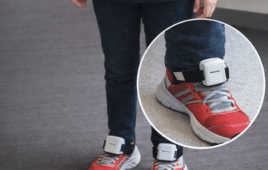
A photo of the wearable gait sensors used in the study.
Yale-led study finds wearable sensors match motion capture for gait tracking in knee osteoarthritis
How Vitestro’s first-of-its-kind Aletta robot autonomously draws blood
“mdo
EXPAND YOUR KNOWLEDGE AND STAY CONNECTED
Get the latest medical device business news, application and technology trends.

DeviceTalks Weekly

See More >

MDO Digital Edition

Digital Edition

Subscribe to Medical Design & Outsourcing. Bookmark, share and interact with the leading medical design engineering magazine today.

MEDTECH 100 INDEX

Medtech 100 logo
Market Summary > Current Price
The MedTech 100 is a financial index calculated using the BIG100 companies covered in Medical Design and Outsourcing.

New MedTech Resource

Medical Tubing

MassDevice

Mass Device

The Medical Device Business Journal. MassDevice is the leading medical device news business journal telling the stories of the devices that save lives.

Visit Website
MDO ad
Medical Design and Outsourcing
  • MassDevice
  • DeviceTalks
  • MedTech100 Index
  • Medical Tubing + Extrusion
  • Medical Design Sourcing
  • Drug Delivery Business News
  • Drug Discovery & Development
  • Pharmaceutical Processing World
  • R&D World
  • About Us/Contact
  • Advertise With Us
  • Subscribe to Print Magazine
  • Subscribe to our E-Newsletter
  • Listen to our Weekly Podcasts
  • Join our DeviceTalks Tuesdays Discussion

Copyright © 2026 Arrowfly, LLC. All Rights Reserved. The material on this site may not be reproduced, distributed, transmitted, cached or otherwise used, except with the prior written permission of Arrowfly LLC. Site Map | Privacy Policy | RSS

Search Medical Design & Outsourcing

  • Home
  • Medical Device Business
    • Mergers & Acquisitions
    • Financial
    • Regulatory
  • Applications
    • Cardiovascular
    • Devices
    • Imaging
    • Implantables
    • Medical Equipment
    • Orthopedic
    • Surgical
  • Technologies
    • Supplies and Components Index
    • Contract Manufacturing
    • Components
    • Electronics
    • Extrusions
    • Materials
    • Motion Control
    • Prototyping
    • Pumps
    • Tubing
  • MedTech Resources
    • Medtech Events in 2026
    • The 2025 Medtech Big 100
    • Medical Device Handbook
    • MedTech 100 Index
    • Subscribe to Print Magazine
    • DeviceTalks
    • Digital Editions
    • eBooks
    • Educational Assets
    • Manufacturer Search
    • Podcasts
    • Webinars / Digital Events
    • Whitepapers
    • Voices
    • Views
    • Video
  • 2026 Leadership
    • 2025 Winners
    • 2024 Winners
    • 2023 Winners
    • 2022 Winners
    • 2021 Winners
  • Women in Medtech
  • Advertise
  • Subscribe