Medical Design and Outsourcing

  • Home
  • Medical Device Business
    • Mergers & Acquisitions
    • Financial
    • Regulatory
  • Applications
    • Cardiovascular
    • Devices
    • Imaging
    • Implantables
    • Medical Equipment
    • Orthopedic
    • Surgical
  • Technologies
    • Supplies and Components Index
    • Contract Manufacturing
    • Components
    • Electronics
    • Extrusions
    • Materials
    • Motion Control
    • Prototyping
    • Pumps
    • Tubing
  • MedTech Resources
    • Medtech Events in 2026
    • The 2025 Medtech Big 100
    • Medical Device Handbook
    • MedTech 100 Index
    • Subscribe to Print Magazine
    • DeviceTalks
    • Digital Editions
    • eBooks
    • Educational Assets
    • Manufacturer Search
    • Podcasts
    • Webinars / Digital Events
    • Whitepapers
    • Voices
    • Views
    • Video
  • 2026 Leadership
    • 2025 Winners
    • 2024 Winners
    • 2023 Winners
    • 2022 Winners
    • 2021 Winners
  • Women in Medtech
  • Advertise
  • Subscribe

New Stem Cell Technique Shows Promise for Bone Repair

January 23, 2017 By Phys.org

A recent study, affiliated with UNIST has developed a new method of repairing injured bone using stem cells from human bone marrow and a carbon material with photocatalytic properties, which could lead to powerful treatments for skeletal system injuries, such as fractures or periodontal disease.

This research has been jointly conducted by Professor Youngkyo Seo of Life Sciences and Dr. Jitendra N. Tiwari of Chemistry in collaboration with Professor Kwang S. Kim of Natural Science, Professor Pann-Ghill Suh of Life Sciences, and seven other researchers from UNIST.

In the study, the research team reported that red-light absorbing carbon nitride (C₃N₄) sheets lead to remarkable proliferation and osteogenic differentiation by runt-related transcription factor 2 (Runx2) activation, a key transcription factor associated with osteoblast differentiation.

The results of the study has been published in the January issue of ACS Nano journal. The reserach team expects that this research breakthrough could lead to enhancement of bone regeneration.
 

(Upper left) Chemical bonding and physical structure of C₃N₄4 sheets. (Lower left) In a liquid state, red light is transmitted at a maximum of 450nm and emitted at a wavelength of 635 nm. (Right) After 4 weeks of loading C₃N₄4 sheets into the skull-damaged mice, the skull was regenerated by more than 90 percent. (Credit: UNIST)

The use of human bone marrow-derived mesenchymal stem cells (hBMSCs) has been tried successfully in fracture treatment due to their potential to regenerate bone in patients who have lost large areas of bone from either disease or trauma. Recently, many attempts have been made to enhance the function of stem cells using carbon nanotubes, graphenes, and nano-oxides.

In the study, Professor Kim and Professor Suh examined the C₃N₄sheets. They discovered that this material absorbs red light and then emits fluorescence, which can be used to speed up bone regeneration. Professor Kim’s team synthesized carbon nitrogen derivatives from melamine compounds. Then, they analyzed the light-absorbing characteristics of C₃N₄sheets at a wavelength range of 455-635 nanometers (nm). As a result, the C₃N₄sheets were found to emit fluorescence at the wavelength of 635 nm when exposed to red light in a liquid state. At this time, the released electrons induced calcium to accumulate in the cytoplasm.

Professor Suh conducted a biomedical application of this material. First, stem cells and cancer cells were cultured in a medium containing 200 μg/ml of C₃N₄sheets. After two days of testing, the material showed no cytotoxicity, making it useful as biomaterials.

It was also confirmed that C₃N₄sheets act on stem cells to differentiate into osteoblasts to promote mineral formation. In this process, the osteogenic differentiation marker genes (ALP, BSP, and OCN) proliferated. Moreover, the Rux2 (Runt-related transcription factor 2), a key factor in osteoblast differentiation was also activated. This resulted in the increased osteoblast differentiation and accelerated bone formation.

“This research has opened up the possibility of developing a new medicine that effectively treats skeletal injuries, such as fractures and osteoporosis,” says Professor Young-Kyo Seo. “It will be a very useful tool for making artificial joints and teeth with the use of 3D printing.”

He adds, “This is an important milestone in the analysis of biomechanical functions needed for the development of biomaterials, including adjuvants for hard tissues such as damaged bones and teeth.”

The research team expects that their findings affirm the potential of C₃N₄sheets in developing bone formation and directing hBMSCs toward bone regeneration.

This research was carried out with the support of the National Honor Scientist Program and the technology development project of the aging source, which is promoted by the Korean Ministry of Science, ICT and Future Planning.


Related Articles Read More >

An illustration showing Corcym's Memo 4D Curve's laser-cut nitinol core.
Laser-cut nitinol and a layered design let these cardiac implants flex
A photo of J&J MedTech SVP and Global Head of Digital Shan Jegatheeswaran.
Where Johnson & Johnson sees opportunity in surgical intelligence
A close of of Medical 21's Maverics graft.
A surgeon’s prayer helped St. Jude Medical founder Manny Villafaña size his latest device
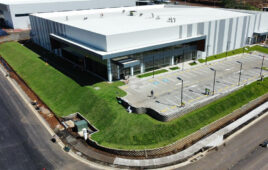
A photo of Forj Medical's Costa Rica manufacturing facility.
Forj Medical opens Costa Rica manufacturing site
“mdo
EXPAND YOUR KNOWLEDGE AND STAY CONNECTED
Get the latest medical device business news, application and technology trends.

DeviceTalks Weekly

See More >

MDO Digital Edition

Digital Edition

Subscribe to Medical Design & Outsourcing. Bookmark, share and interact with the leading medical design engineering magazine today.

MEDTECH 100 INDEX

Medtech 100 logo
Market Summary > Current Price
The MedTech 100 is a financial index calculated using the BIG100 companies covered in Medical Design and Outsourcing.

New MedTech Resource

Medical Tubing

MassDevice

Mass Device

The Medical Device Business Journal. MassDevice is the leading medical device news business journal telling the stories of the devices that save lives.

Visit Website
MDO ad
Medical Design and Outsourcing
  • MassDevice
  • DeviceTalks
  • MedTech100 Index
  • Medical Tubing + Extrusion
  • Medical Design Sourcing
  • Drug Delivery Business News
  • Drug Discovery & Development
  • Pharmaceutical Processing World
  • R&D World
  • About Us/Contact
  • Advertise With Us
  • Subscribe to Print Magazine
  • Subscribe to our E-Newsletter
  • Listen to our Weekly Podcasts
  • Join our DeviceTalks Tuesdays Discussion

Copyright © 2026 Arrowfly, LLC. All Rights Reserved. The material on this site may not be reproduced, distributed, transmitted, cached or otherwise used, except with the prior written permission of Arrowfly LLC. Site Map | Privacy Policy | RSS

Search Medical Design & Outsourcing

  • Home
  • Medical Device Business
    • Mergers & Acquisitions
    • Financial
    • Regulatory
  • Applications
    • Cardiovascular
    • Devices
    • Imaging
    • Implantables
    • Medical Equipment
    • Orthopedic
    • Surgical
  • Technologies
    • Supplies and Components Index
    • Contract Manufacturing
    • Components
    • Electronics
    • Extrusions
    • Materials
    • Motion Control
    • Prototyping
    • Pumps
    • Tubing
  • MedTech Resources
    • Medtech Events in 2026
    • The 2025 Medtech Big 100
    • Medical Device Handbook
    • MedTech 100 Index
    • Subscribe to Print Magazine
    • DeviceTalks
    • Digital Editions
    • eBooks
    • Educational Assets
    • Manufacturer Search
    • Podcasts
    • Webinars / Digital Events
    • Whitepapers
    • Voices
    • Views
    • Video
  • 2026 Leadership
    • 2025 Winners
    • 2024 Winners
    • 2023 Winners
    • 2022 Winners
    • 2021 Winners
  • Women in Medtech
  • Advertise
  • Subscribe