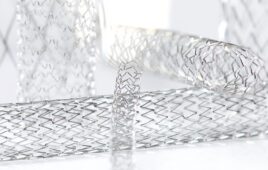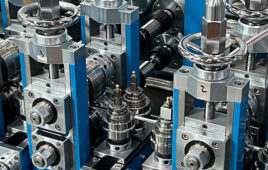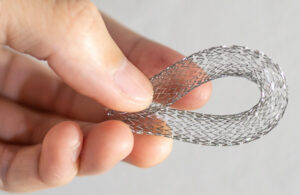
Nitinol prices are up due in part to climbing demand for the nickel-titanium alloy, which has superelastic and shape memory properties that enable a range of cutting-edge medical devices and procedures. [Photo by SMPTY at Stock.Adobe.com]
“Those are billion-dollar markets. They all come back to basically four tubing companies and two melt sources,” said Confluent Medical Technologies Chief Commercial Officer Doug Hutchison, who offered a nitinol supply chain update in an interview with Medical Design & Outsourcing.
Confluent announced a partnership with nitinol melter ATI in January, just a few months after its main competitor purchased its own melt supply in a $900 million deal.
With those deals, the top two melters now control a combined 85% to 90% of the world’s scalable sources of nitinol for the medical market, Hutchison estimated.
“With ATI, up until January of this year they were an open-source supplier, they would sell to whoever called,” Hutchison said. “Given our relationship and the deal we set up with them, we are now their order fulfillment partner. … We’re essentially their commercial arm. We get first access to all that material.”
Medical nitinol manufacturing: How this nickel-titanium alloy is made for medical devices
CMOs and CDMOs without direct access to nitinol melters now have to go through competitors like Confluent, which led to threats of lawsuits, but “most of that dust has settled” as companies set up supply contracts to ensure they’ll have access to nitinol, Hutchison said.
“Basically you have to go through Confluent/ATI or you have to go through [our competitor] If you want to get nitinol material that’s scalable for a medical device,” he said. “That has caused a lot of disruption in the market.”
Medical nitinol processing: How nitinol is turned into wire, tubes and sheets for medical devices
And nitinol prices are increasing, Hutchison said. ATI has raised prices approximately 20% each of the last two years.
Nitinol bars from melters typically cost $100 to $130 per pound for standard grades, while higher purity materials can cost $300 to $400 per pound, he said.
Costs have also increased for gun drilling to turn those bars into hollows that can be drawn into tubes. Hutchison estimated Confluent does about 80% of the medical market’s gun drilling, thanks in large part to Confluent’s 2019 purchase of nitinol gun-driller Tube Hollows International.

Confluent Medical Technologies Chief Commercial Officer Doug Hutchison [Photo courtesy of Confluent]
Nitinol know-how: Nitinol machining and finishing for medical devices
The cost to draw those hollows into tubes has also gone up 20% to 30% over the last couple of years, he said. Confluent is among the leading nitinol tubing companies, along with Resonetics, G.Rau and Cirtec Medical’s Vascotube.
These price increases are driven both by growing demand and limited supply, Hutchison said.
ATI’s lead time for nitinol tubing had grown to more than a year, but is now down to about 14 weeks through Confluent, Hutchison said.
“For almost two years now, we’ve been having these kind of conversations with OEM customers because they literally had no idea what their supply chain was, and we’ve been trying to educate them,” Hutchison said. “They need to look beyond just who they’re issuing a PO for to get a stent to show up.”