Medical Design and Outsourcing

  • Home
  • Medical Device Business
    • Mergers & Acquisitions
    • Financial
    • Regulatory
  • Applications
    • Cardiovascular
    • Devices
    • Imaging
    • Implantables
    • Medical Equipment
    • Orthopedic
    • Surgical
  • Technologies
    • Supplies and Components Index
    • Contract Manufacturing
    • Components
    • Electronics
    • Extrusions
    • Materials
    • Motion Control
    • Prototyping
    • Pumps
    • Tubing
  • MedTech Resources
    • Medtech Events in 2026
    • The 2025 Medtech Big 100
    • Medical Device Handbook
    • MedTech 100 Index
    • Subscribe to Print Magazine
    • DeviceTalks
    • Digital Editions
    • eBooks
    • Educational Assets
    • Manufacturer Search
    • Podcasts
    • Webinars / Digital Events
    • Whitepapers
    • Voices
    • Views
    • Video
  • 2026 Leadership
    • 2025 Winners
    • 2024 Winners
    • 2023 Winners
    • 2022 Winners
    • 2021 Winners
  • Women in Medtech
  • Advertise
  • Subscribe

Opioid Use Before Knee Replacement Surgery Results In Worse Pain Outcomes For Patients

May 24, 2017 By Brigham and Women's Hospital

There is growing concern regarding opiod use prior to a total knee replacement (TKR), and recent research has suggested that preoperative opioid use may lead to worse pain outcomes following surgery. A team of investigators at Brigham and Women’s Hospital evaluated pain relief associated with TKR in patients who had used opioids before their procedure and compared it to pain relief in patients who had not. The authors found that patients who had higher pain catastrophising, the degree of an exaggerated, negative response to pain, were more likely to take opioids for pain relief. They found that patients who used opioids to manage their knee pain before their total knee replacement had less pain relief after the operation. The study was published in the Journal of Bone and Joint Surgery.

“With these study results, we’d encourage physicians to consider discussing long term implications of opioid therapy with their patients,” says Elena Losina, PhD, lead author, director of the Policy and Innovation Evaluation in Orthopedic Treatments Center and co-director of the Orthopedics and Arthritis Center for Outcomes Research at Brigham and Women’s Hospital. “Although each patient case is different, patients and physicians should discuss the potential impact of using opioids in patients with knee osteoarthritis who are likely to consider total knee replacement within the next two years.”
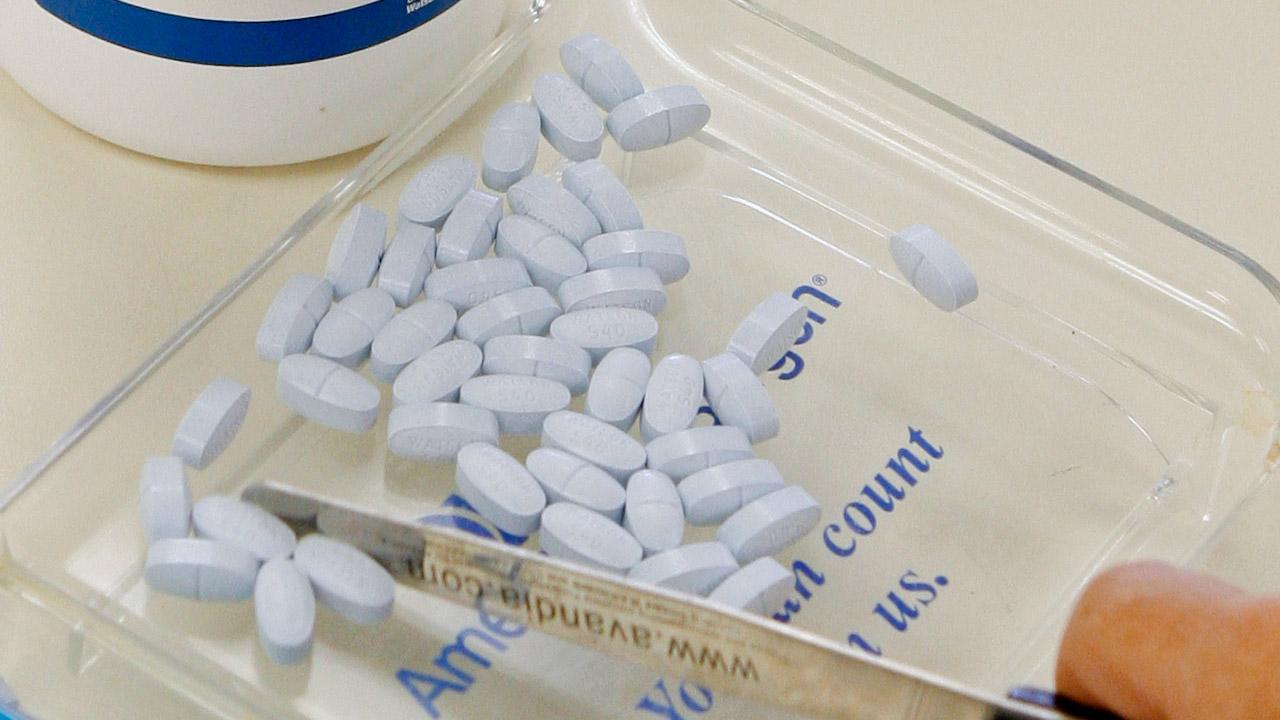
(Image credit: Associated Press)

Knee osteoarthritis is a condition associated with significant activity limitation and chronic pain. While a TKR is an effective treatment in relieving pain and restoring function, patients spend an average of 13 years using non-surgical options for pain management including the use of non-steroidal anti-inflammatory drugs, physical therapy, and intra-articular injections. As the authors quote in the paper, the United States has spent over $1.5 billion annually on prescription opioids for people with knee osteoarthritis. Additionally, opioid utilization has increased drastically, with nearly 40 percent of Medicare patients with knee osteoarthritis receiving at least one opioid prescription in 2009. Although previous studies have suggested that using opiods preoperatively is associated with poor pain outcomes, the research was based on limited sample sizes and pain catastrophizing was not considered.

The team reviewed data from 156 patients who had TKR at an average age of 66. They collected patient-reported outcomes and demographic data both before and six months after surgery, and abstracted data regarding opiod use from the patients’ medical records. Researchers found that prior to surgery, 23 percent of patients had at least one opioid prescription.

Using standard pain scales (Pain Catastrophizing Scale, the Western Ontario and the McMaster Universities Osteoarthritis Index (WOMAC)), researchers quantified the pain experiences of patients undergoing TKR. Researchers used sophisticated analytic methods to compare the change in the WOMAC pain score six months after knee surgery and establish the difference between patients who had and those who had not used opioids before TKR. Researchers found that the patients who used opioids prior to surgery had about 9 percent less pain reduction at six months following surgery.

“Our findings support previous research that indicated preoperative opiod use was associated with worse clinical outcomes. This data demonstrates that preoperative opioid use may also lead to lesser pain relief in the early postoperative period,” says Losina.

The researchers also note that since the U.S. spends over $1.5 billion annually on prescription opioids for patients with knee osteoarthritis, and nearly $30 billion on illicit use, reducing the use of opioids may decrease their harmful effects. Clinicians and policy makers may consider limiting the use of opioids prior to TKR to optimize post-TKR pain relief.


Related Articles Read More >

A photo of J&J MedTech SVP and Global Head of Digital Shan Jegatheeswaran.
Where Johnson & Johnson sees opportunity in surgical intelligence
A close of of Medical 21's Maverics graft.
A surgeon’s prayer helped St. Jude Medical founder Manny Villafaña size his latest device
A photo of Forj Medical's Costa Rica manufacturing facility.
Forj Medical opens Costa Rica manufacturing site
An image of the September 2026 Medical Design & Outsourcing magazine featuring the Medtech Big 100 ranking of the world's largest medical device companies.
September 2026 issue: The MDO Medtech Big 100 breaks $500 billion
“mdo
EXPAND YOUR KNOWLEDGE AND STAY CONNECTED
Get the latest medical device business news, application and technology trends.

DeviceTalks Weekly

See More >

MDO Digital Edition

Digital Edition

Subscribe to Medical Design & Outsourcing. Bookmark, share and interact with the leading medical design engineering magazine today.

MEDTECH 100 INDEX

Medtech 100 logo
Market Summary > Current Price
The MedTech 100 is a financial index calculated using the BIG100 companies covered in Medical Design and Outsourcing.

New MedTech Resource

Medical Tubing

MassDevice

Mass Device

The Medical Device Business Journal. MassDevice is the leading medical device news business journal telling the stories of the devices that save lives.

Visit Website
MDO ad
Medical Design and Outsourcing
  • MassDevice
  • DeviceTalks
  • MedTech100 Index
  • Medical Tubing + Extrusion
  • Medical Design Sourcing
  • Drug Delivery Business News
  • Drug Discovery & Development
  • Pharmaceutical Processing World
  • R&D World
  • About Us/Contact
  • Advertise With Us
  • Subscribe to Print Magazine
  • Subscribe to our E-Newsletter
  • Listen to our Weekly Podcasts
  • Join our DeviceTalks Tuesdays Discussion

Copyright © 2026 Arrowfly, LLC. All Rights Reserved. The material on this site may not be reproduced, distributed, transmitted, cached or otherwise used, except with the prior written permission of Arrowfly LLC. Site Map | Privacy Policy | RSS

Search Medical Design & Outsourcing

  • Home
  • Medical Device Business
    • Mergers & Acquisitions
    • Financial
    • Regulatory
  • Applications
    • Cardiovascular
    • Devices
    • Imaging
    • Implantables
    • Medical Equipment
    • Orthopedic
    • Surgical
  • Technologies
    • Supplies and Components Index
    • Contract Manufacturing
    • Components
    • Electronics
    • Extrusions
    • Materials
    • Motion Control
    • Prototyping
    • Pumps
    • Tubing
  • MedTech Resources
    • Medtech Events in 2026
    • The 2025 Medtech Big 100
    • Medical Device Handbook
    • MedTech 100 Index
    • Subscribe to Print Magazine
    • DeviceTalks
    • Digital Editions
    • eBooks
    • Educational Assets
    • Manufacturer Search
    • Podcasts
    • Webinars / Digital Events
    • Whitepapers
    • Voices
    • Views
    • Video
  • 2026 Leadership
    • 2025 Winners
    • 2024 Winners
    • 2023 Winners
    • 2022 Winners
    • 2021 Winners
  • Women in Medtech
  • Advertise
  • Subscribe