Peytant Solutions CEO John Schorgl explains how proactive engagement, disciplined teamwork, and data-driven strategy turned a complex FDA marketing application into a lasting market advantage.
By John Schorgl, Peytant Solutions
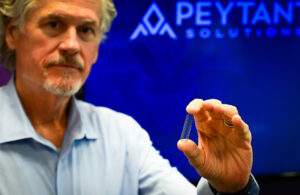
“The FDA’s de novo process isn’t a wall to scale,” says Peytant Solutions co-founder and CEO John Schorgl, pictured here with the AMStent system. “It’s a partnership to manage. If you engage early, listen closely, and design with the end game in mind, you can transform regulation into opportunity.” [Photo courtesy of Peytant Solutions]
At Peytant, we recently completed this journey with our AMStent Tracheobronchial Covered Stent System, a catheter-delivered nitinol stent covered with an amnion-derived material, indicated for use in the treatment of tracheobronchial strictures produced by malignant neoplasms in adult patients. Achieving regulatory grant via a de novo pathway was a multiyear effort that taught us hard but valuable lessons about leadership, strategy, and collaboration.
Treat the FDA as a partner, not an opponent
Understand that regulatory success depends on partnering with the FDA, not simply complying with it. We share a common goal of safe and effective treatments for patients.
We called on the agency early and often, sharing data, asking questions, and being transparent about our rationale. This approach built trust and accelerated progress.
We also designated a single official correspondent (our external regulatory lead, Lisa Pritchard of DuVal & Associates) to manage all communication with the FDA. That continuity was essential. Over a multiyear process, FDA staff can change and discussions can be hard to remember, but with one credible, well-prepared liaison, communication is more productive and efficient for both sides.
Build a cross-functional, disciplined team
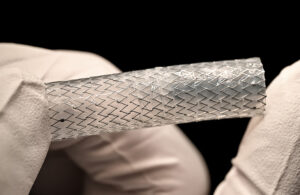
FDA required rigorous pre-clinical testing to support Peytant’s submission for its AMStent System, the first and only catheter-delivered stent covered with human-sourced amniotic membrane. [Photo courtesy of Peytant Solutions]
A well structured, cross-functional team led by a highly skilled project manager is vital to the journey. Our team held disciplined weekly meetings to drive decisions, track progress and hold ourselves accountable.
Our location in Minnesota’s Medical Alley boosted our chances of success. The Minneapolis–St. Paul region’s deep medtech expertise and collaborative culture gave us access to exceptional talent and experienced partners. One investor even told us, “I invested in Peytant because you’re in Minneapolis.”
That environment helped us assemble and sustain the right team to take a complex product through the equally complex de novo process.
Be strategic and proactive
From day one, we developed a regulatory strategy that aligned with our business goals. Our first step was filing a traditional 510(k), even knowing there were still some issues to be resolved. Doing so forced the FDA to clarify our regulatory pathway and requirements, with FDA eventually stating that a de novo pathway would be preferred.
That early stake in the ground saved time and money. Take initiative, propose solutions, and be ready to adapt as the FDA shows the way forward.
The FDA’s regulatory structure is designed to manage complexity across a broad range of product types. It is organized into specialized centers: the Center for Devices and Radiological Health (CDRH) regulates medical devices and radiation-emitting products; the Center for Biologics Evaluation and Research (CBER) oversees biological products such as vaccines, blood, and human tissue; and the Center for Drug Evaluation and Research (CDER) governs prescription and over-the-counter drugs.
Because many modern therapies blend these categories, the Office of Combination Products (OCP) plays a coordinating role across these centers. OCP assigns primary jurisdiction based on a product’s primary mode of action — whether it functions mainly as a device, drug, biologic or combination of those — and facilitates collaboration when classification is unclear. This structure allows the FDA to adapt to emerging technologies while maintaining regulatory consistency.
One challenge we faced was the uncertainty of our classification within this jurisdiction system. Would our AMStent System be considered a device, a biologic, or a combination of the two and, therefore, which agency would have primary jurisdiction?
CDRH told us that the amnion-derived biomaterial covering on our stent was a novel material that had not previously been used for this type of device. We were able to support the submission with published research articles on human amnion, including NIH-supported studies, and prior FDA review of other devices using human biomaterials. Our proactive advocacy and preparedness kept us on track. This dialogue focused the agency on our specific use of amnion.
The discussions around amnion triggered an inter-agency meeting involving the head of the OCP and representatives from CBER and CDRH to more closely examine our device. Ultimately, OCP asserted full oversight and assigned the AMStent to CDRH for review as a device, not a biologic or a combination product. This meant CDRH would have sole jurisdiction and enabled us to move forward with clarity.
Know when to push and when to pivot
FDA required an animal study to support our submission. When such requirements are issued, the instinct is to argue, but that can cost precious time and capital.
Instead, we acknowledged, adjusted, and moved forward. Ironically, those early animal tests paid dividends later, generating data (38 claims reviewed by the FDA) we now reference for marketing and scientific papers.
Keep detailed records and listen closely
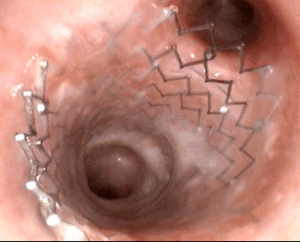
Pre-clinical outcomes demonstrated that the AMStent System (shown here via bronchoscopy at 3 months post-implant in a porcine model) is associated with significantly less mucus accumulation, stent migration, inflammation, and granuloma formation than a commercially available control stent. [Image courtesy of Peytant Solutions]
Just as important: listen between the lines. FDA reviewers often make subtle but crucial comments that can make or break a submission. In one meeting, for instance, a reviewer suggested we avoid describing our technology as a biologic and refrain from touting any regenerative benefits. They were signaling how to frame our story. By actively listening, we understood the guidance, adjusted our positioning, and kept the process moving.
We also learned the importance of responding to FDA requests with specific testing protocols. Those aren’t required, but are helpful to gain critical alignment to sustain progress. Responding to an FDA request by outlining a protocol and presenting it to the agency helped gain alignment before moving forward, allowing us to drive the direction and extent of testing.
For example, FDA requested a 90-day animal study. But we were working with pigs who don’t live that long when they have a pulmonary obstruction, so we documented and countered with a 30-day test as part of our protocol. This provided documentation to reference if a roadblock occurred along the way. The protocol “agreement” between the parties became a powerful tool.
Culture Is everything
Finally, none of this would have been possible without a culture of respect, collaboration and perseverance among the Peytant team. People must get along, communicate clearly and stay focused on shared goals.
That culture — combined with technical rigor and the rich Medical Alley network — allowed a small, determined team to succeed when faced with challenges and bureaucracy that often stall innovation.
The de novo process is demanding, but for those willing to actively partner with the FDA, plan strategically, and stay disciplined, it can yield an enduring competitive advantage beyond approval. At Peytant, it transformed us from a startup with a vision into a company defining a new category of care.
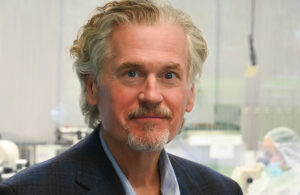
John Schorgl [Photo courtesy of Peytant Solutions]
Read more MDO Contributions and learn how to submit your own
The opinions expressed in this blog post are the author’s only and do not necessarily reflect those of Medical Design & Outsourcing or its employees.