Staying compliant and leading the market means planning for a future that’s already coming, and PFAS won’t be part of it.
By Nathan Rohner, Lubrizol
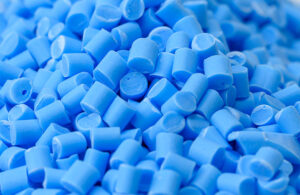
Thermoplastic polyurethane (TPU) is a unique type of plastic bridging the gap between rubbers and plastics. The key to its versatility is that its hardness can be customized to be as soft as rubber or as hard as rigid plastics. [Photo courtesy of Lubrizol]
Known for their thermal stability, chemical resistance, lubricity and biocompatibility, polymers comprised or produced with PFAS have become the default for a wide range of medical applications. Fluoropolymers like polytetrafluoroethylene (PTFE) and fluorinated ethylene propylene (FEP) are used in catheter liners, lubricious coatings and heat-shrink tubing, just to name a few.
But this functionality comes with an environmental trade-off. Some PFAS are persistent, bioaccumulative and toxic, the “PBT” trifecta that drives today’s regulatory pressure. These compounds don’t break down easily, can build up in the body and may be linked to certain health concerns. And while finished medical devices rarely leach PFAS, the upstream manufacturing and disposal (including incineration) of PFAS-containing materials are where real environmental risk shows up.
It’s the supply chain
Medical device exemptions still exist for now, particularly in the U.S., but that hasn’t stopped the industry from moving toward alternatives. Global suppliers are backing out of fluoropolymer markets and regulatory definitions are broadening. In the EU, anything with a carbon-fluorine bond is fair game under the Registration, Evaluation, Authorization and Restriction of Chemicals (REACH) regulation.
For medical device OEMs, the concern is regulatory and operational. If a supplier exits production of fluoropolymer-based raw materials for liners, shrinks and coatings, that leaves developers scrambling to qualify replacements on timelines that often exceed five to 10 years. Missing a materials window can mean losing an entire innovation cycle.
To stay ahead, many are already scouting alternatives, prototyping components and setting up validation programs for the next generation of devices. They’re not implementing changes yet, but they are watching the landscape closely.
TPU as the challenger

TPU materials are processed without fluorinated chemistry, meaning there are no intentionally added PFAS. [Photo courtesy of Lubrizol]
These materials are processed without fluorinated chemistry, meaning there are no intentionally added PFAS, and there’s no need for small-molecule PFAS intermediates or processing aids. TPU synthesis relies on components like diols and alcohols where there are no carbon-fluorine bonds involved. The result is strong extrusion quality, low-temperature processing, regulatory clarity and flexible compounding options that allow for customized performance tuning.
PFAS can show up as background contamination, even in city water. That’s why the industry is shifting toward terms like “no intentionally added PFAS” or “no measurable PFAS.” Lubrizol, for example, doesn’t add PFAS to its medical TPU materials and works with compounders to remove any residual additives that might come in via third-party inputs.
What’s slowing adoption?
Perception and risk aversion is slowing adoption, as TPU is often misunderstood. Even with data in hand, developers sometimes won’t believe in its performance until they feel it for themselves. There’s also strategic delay as OEMs are cautious about making early material changes. There’s a natural hesitation to invest in qualifying a new solution that could later be outpaced. Some teams are opting to watch how larger players approach PFAS replacement before making their own moves.
But supply chain disruptions don’t follow a schedule. When access to fluoropolymers disappears, either due to legislation or market shifts, retrofitting can become a scramble. Getting ahead of the curve means owning your innovation path instead of reacting to someone else’s.
TPUs won’t replace every use case. They won’t act like heat shrinks, and they won’t replicate the full thermal resistance of PTFE. But for liners, long-term implants, coatings and components where lubricity and biocompatibility are key, TPUs can deliver and are already being used successfully in many of these applications.
Start the clock
There is no miracle drop-in that checks every box PTFE does. The market offers additives that mimic lubricity or bio-based polymers pitched as sustainable PTFE replacements. But there remains no wholesale solution matching the full thermal-chemical-lubricious package.
That said, Lubrizol has already identified TPU grades that closely match commercial fluoropolymer performance in key dimensions, and the next step is getting them into the hands of OEMs for testing in real-world devices.
It’s about preparedness. Whether regulations arrive in 2027 or 2030 or beyond, the materials conversation is shifting fast, and developers who wait may find themselves locked out of critical markets or dependent on unstable supply chains.

Lubrizol Senior Scientist Nathan Rohner [Photo courtesy of Lubrizol]
Nathan Rohner is a senior scientist at Lubrizol, where he leads polymer innovation for pharmaceutical and medical device applications. With a background in biomedical engineering and more than a decade of experience in materials R&D, he specializes in the development of customized thermoplastic polyurethanes (TPUs) for combination products, implantable systems and controlled drug-delivery platforms. Rohner holds a doctorate in bioengineering from the Georgia Institute of Technology.
Read more MDO Contributions and learn how to submit your own
The opinions expressed in this blog post are the author’s only and do not necessarily reflect those of Medical Design & Outsourcing or its employees.