Using high energy ultrasound beams to destroy prostate cancer tumours may be as effective as surgery or radiotherapy, but with fewer side effects.
A new study, carried out at six hospitals across the UK, tracked 625 men with prostate cancer who received a type of treatment called high-intensity focused ultrasound (HIFU).
The research, published in the journal European Urology, is the largest ever study of HIFU treatment used to target prostate tumours. The treatment is similar to a ‘lumpectomy’ for other cancers – where doctors remove only tumour cells, leaving as much healthy tissue as possible.
The findings, from a number of institutions including Imperial College London, Imperial College Healthcare Trust and University College London, found that after five years the cancer survival rate from HIFU was 100 per cent. Approximately, 1 in 10 men needed further treatment. The cancer survival rate from surgery and radiotherapy is also 100 per cent at five years.
The research also showed the risk of side effects of HIFU, such as urinary incontinence and erectile dysfunction, were lower than other treatment options, at 2 per cent and 15 per cent respectively.
The study was funded by the Medical Research Council and SonaCare Inc., who manufacture the ultrasound equipment used in the procedure.
Professor Hashim Ahmed, lead author from the department of Surgery and Cancer at Imperial, said: “Although prostate cancer survival rates are now very good, the side effects of surgery or radiotherapy can be life-changing. Some patients are left requiring multiple incontinence pads every day, or with severe erectile dysfunction.”
He added: “We need to now focus on improving the quality of life for these men following treatment. This latest trial of focal HIFU – which is the largest and longest study of the treatment to date – suggests we may be able to tackle the cancer with fewer side effects.”
Prostate cancer is the most common cancer in men in the UK, with around 47,000 cases every year.
Treatments include surgery to remove the gland, or radiotherapy, which uses radiation to the entire prostate.
However, these treatments can cause collateral damage to surrounding sensitive tissues like nerves, muscles, urine passage, bladder and rectum. The prostate is roughly the size of a walnut and sits between the bladder and the penis.
Surgery and radiotherapy to the entire prostate are effective treatments but can lead to long term risk of urinary problems, like incontinence, of between 5-30 per cent. They also carry a risk of erectile dysfunction of between 30-60 per cent. Radiotherapy can also cause rectal problems like bleeding, diarrhoea and discomfort in 5 per cent of patients.
Ultrasound approach
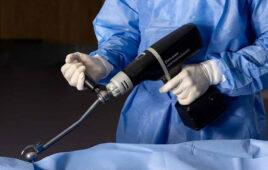
HIFU is a newer treatment, performed under general anaesthetic, which delivers beams of high energy ultrasound directly into the prostate gland, via a probe inserted up the back passage. There are no needles or cuts to skin. This allows a surgeon to precisely target tumour cells within the gland to millimetre accuracy, with less risk of damage to surrounding tissues.
In the new HIFU study, conducted on men with an average age of 65 and whose cancer hadn’t spread, the risk of urine incontinence (defined as requiring pad use) at five years after the treatment was 2 per cent, and the risk of erectile dysfunction 15 per cent. The team say the results include patients with medium to high risk cancer.
The scientists also tracked the number of patients who needed further treatment following HIFU, (such as surgery or radiotherapy), to treat any cancer cells that had returned. They found 10 per cent of patients needed further treatment by five years, which is comparable to number of patients needing further treatment after surgery or radiotherapy (5-15 per cent).
The team add that prostate cancer patients should talk through all possible treatments with their healthcare team, so they can consider their options fully.
Further follow-up trials are needed to track progress of the patients after ten years, as well as trials that directly compare HIFU with surgery and radiotherapy.
Dr. Caroline Moore, Reader in Urology from the UCL Faculty of Medical Sciences said: “The registry based data from over 600 men is very encouraging. We started the HIFU programme at UCLH in 2003, and now principally use it as a focal treatment, where we treat the cancer but not the entire prostate.
This means that men are much more likely to preserve urinary and sexual function, compared to traditional surgery or radiotherapy. Focal treatment is particularly suitable for men who have prostate cancer visible on MRI, which is contained to one area of the prostate.”
Anthony Murland underwent HIFU treatment in November last year at Imperial College Healthcare NHS Trust to treat his prostate cancer. “I first heard of the treatment from a friend, who had the procedure a few months before. My GP hadn’t heard of HIFU, but was very interested, so I ended up educating him about it. He then referred me for the treatment on the NHS” explained the 67-year-old from Suffolk.
“I liked the sound of the treatment as it seemed the least invasive option, with low risk. The treatment was over in a day – I went in first thing in the morning and was out by the evening. I didn’t have any pain, but needed a catheter for five days, which was a bit uncomfortable.
“I’m closely monitored by my GP, and so far the cancer has not returned.”