Medical Design and Outsourcing

  • Home
  • Medical Device Business
    • Mergers & Acquisitions
    • Financial
    • Regulatory
  • Applications
    • Cardiovascular
    • Devices
    • Imaging
    • Implantables
    • Medical Equipment
    • Orthopedic
    • Surgical
  • Technologies
    • Supplies and Components Index
    • Contract Manufacturing
    • Components
    • Electronics
    • Extrusions
    • Materials
    • Motion Control
    • Prototyping
    • Pumps
    • Tubing
  • MedTech Resources
    • Medtech Events in 2026
    • The 2026 Medtech Big 100
    • Medical Device Handbook
    • MedTech 100 Index
    • Subscribe to Print Magazine
    • DeviceTalks
    • Digital Editions
    • eBooks
    • Educational Assets
    • Manufacturer Search
    • Podcasts
    • Webinars / Digital Events
    • Whitepapers
    • Voices
    • Views
    • Video
  • 2026 Leadership
    • 2025 Winners
    • 2024 Winners
    • 2023 Winners
    • 2022 Winners
    • 2021 Winners
  • Women in Medtech
  • Advertise
  • Subscribe

Researchers release hundreds of cancer models to develop new treatments

August 11, 2026 By Julia Rock-Torcivia

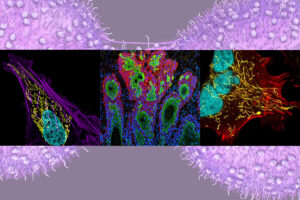
Image courtesy of NIH, iStock, MIT News

An international team of researchers developed almost 700 new cancer models derived from patient tumors that could help researchers identify new drug targets for cancer treatments.

The models are described in a paper published in Nature.

The models, which represent 25 different types of cancer and are openly available, were constructed under the 10-year Human Cancer Models Initiative, funded by the National Cancer Institute and the Wellcome Trust.

To construct a majority of the models, researchers converted tumor cells into organoids, which form three-dimensional clusters that more closely resemble the structure of the original tumor than traditional, two-dimensional cell lines.

Related: Researchers are reworking an ablation technique to develop a novel cancer treatment

Once the organoids and cell lines were established, which can take up to a year, the researchers analyzed them to ensure their genomic sequences, RNA expression and epigenomic modifications closely matched the original tumors.

“Since the sequencing of the human genome and the analysis of cancer genomes over the last 20 years, we have had many ideas about cancer targets, but we need experimental systems in the lab to validate those targets and launch drug discovery projects,” Jesse Boehm, one of the senior authors of the study, said in a press release.

The initiative began after the Cancer Genome Atlas, joint effort between the National Cancer Institute and the National Human Genome Research Institute, found that the diversity of tumor genetic profiles was not captured by the approximately 1,000 patient-derived cancer cell lines that existed at the time. The Atlas began as the three-year pilot focused on lung, brain and ovarian cancers before expanding to molecularly characterize 33 types of cancer.

“We realized that a thousand wasn’t enough, that the international community needed to invest in many more thousands to represent all cancers, all genotypes, all ethnicities,” Boehm said. “Most existing models come from European and Southeast Asian patients, and many rare cancers are missing.”

Related: Inside the first-of-its-kind Enable Injections enFuse drug delivery wearable

The researchers were able to convert approximately one third of the 2,700 tumor samples they received from participating hospitals across the U.S., UK and the Netherlands. Most samples came from common cancers, but they also included approximately 150 rare types of cancer.

The models now live in the American Type Culture Collection (ATCC), a nonprofit biological resource center based in Manassas, Virginia. The ATCC maintains what it describes as the world’s largest and most diverse collection of human and animal cell products, along with molecular genomic tools, microbe products and other materials.

Each model also includes data from the patient whose sample was used to start the cell line, germline mutations and information on previous treatments.

“We now have about 2,000, but if we really want to represent all humans with cancer in our preclinical research, more work is needed. We have to invite patients to donate tissue to make research tools that the whole world can use,” Boehm said. “I think this will hopefully be not the end, but the beginning.”

Editor’s note: This article was updated with additional information and attribution after initial publication.

Previously: Boston Scientific’s microscopic TheraSphere devices go from nuclear reactors to tumors to kill cancer

Related Articles Read More >

The most innovative medical devices of 2026
A photo of PTFE coating delamination.
Passing the tape test doesn’t mean your coating is reliable
An illustration showing Corcym's Memo 4D Curve's laser-cut nitinol core.
Laser-cut nitinol and a layered design let these cardiac implants flex
A photo of J&J MedTech SVP and Global Head of Digital Shan Jegatheeswaran.
Where Johnson & Johnson sees opportunity in surgical intelligence
“mdo
EXPAND YOUR KNOWLEDGE AND STAY CONNECTED
Get the latest medical device business news, application and technology trends.

DeviceTalks Weekly

See More >

MDO Digital Edition

Digital Edition

Subscribe to Medical Design & Outsourcing. Bookmark, share and interact with the leading medical design engineering magazine today.

MEDTECH 100 INDEX

Medtech 100 logo
Market Summary > Current Price
The MedTech 100 is a financial index calculated using the BIG100 companies covered in Medical Design and Outsourcing.

New MedTech Resource

Medical Tubing

MassDevice

Mass Device

The Medical Device Business Journal. MassDevice is the leading medical device news business journal telling the stories of the devices that save lives.

Visit Website
MDO ad
Medical Design and Outsourcing
  • MassDevice
  • DeviceTalks
  • MedTech100 Index
  • Medical Tubing + Extrusion
  • Medical Design Sourcing
  • Drug Delivery Business News
  • Drug Discovery & Development
  • Pharmaceutical Processing World
  • R&D World
  • About Us/Contact
  • Advertise With Us
  • Subscribe to Print Magazine
  • Subscribe to our E-Newsletter
  • Listen to our Weekly Podcasts
  • Join our DeviceTalks Tuesdays Discussion

Copyright © 2026 Arrowfly, LLC. All Rights Reserved. The material on this site may not be reproduced, distributed, transmitted, cached or otherwise used, except with the prior written permission of Arrowfly LLC. Site Map | Privacy Policy | RSS

Search Medical Design & Outsourcing

  • Home
  • Medical Device Business
    • Mergers & Acquisitions
    • Financial
    • Regulatory
  • Applications
    • Cardiovascular
    • Devices
    • Imaging
    • Implantables
    • Medical Equipment
    • Orthopedic
    • Surgical
  • Technologies
    • Supplies and Components Index
    • Contract Manufacturing
    • Components
    • Electronics
    • Extrusions
    • Materials
    • Motion Control
    • Prototyping
    • Pumps
    • Tubing
  • MedTech Resources
    • Medtech Events in 2026
    • The 2026 Medtech Big 100
    • Medical Device Handbook
    • MedTech 100 Index
    • Subscribe to Print Magazine
    • DeviceTalks
    • Digital Editions
    • eBooks
    • Educational Assets
    • Manufacturer Search
    • Podcasts
    • Webinars / Digital Events
    • Whitepapers
    • Voices
    • Views
    • Video
  • 2026 Leadership
    • 2025 Winners
    • 2024 Winners
    • 2023 Winners
    • 2022 Winners
    • 2021 Winners
  • Women in Medtech
  • Advertise
  • Subscribe

