Medical Design and Outsourcing

  • Home
  • Medical Device Business
    • Mergers & Acquisitions
    • Financial
    • Regulatory
  • Applications
    • Cardiovascular
    • Devices
    • Imaging
    • Implantables
    • Medical Equipment
    • Orthopedic
    • Surgical
  • Technologies
    • Supplies and Components Index
    • Contract Manufacturing
    • Components
    • Electronics
    • Extrusions
    • Materials
    • Motion Control
    • Prototyping
    • Pumps
    • Tubing
  • MedTech Resources
    • Medtech Events in 2026
    • The 2026 Medtech Big 100
    • Medical Device Handbook
    • MedTech 100 Index
    • Subscribe to Print Magazine
    • DeviceTalks
    • Digital Editions
    • eBooks
    • Educational Assets
    • Manufacturer Search
    • Podcasts
    • Webinars / Digital Events
    • Whitepapers
    • Voices
    • Views
    • Video
  • 2026 Leadership
    • 2025 Winners
    • 2024 Winners
    • 2023 Winners
    • 2022 Winners
    • 2021 Winners
  • Women in Medtech
  • Advertise
  • Subscribe

MIT researchers develop noninvasive blood glucose monitoring tech using near-infrared light

December 4, 2025 By Sean Whooley

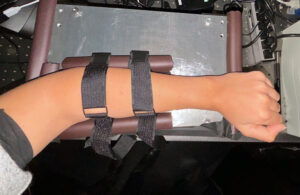
A photo of MIT's noninvasive glucose monitor device.

MIT researchers developed this noninvasive, shoebox-sized device that can measure blood glucose levels with Raman spectroscopy instead of needles. [Photo courtesy of MIT]

MIT researchers have developed a noninvasive method for measuring blood glucose levels, potentially offering an alternative to fingersticks.

Many people with diabetes today use continuous glucose monitors (CGMs) to keep track of their glucose levels. Those devices still have a small, minimally invasive interstitial needle inserted into the body when applied and don’t exceed a wear time of 15 days. Some people with diabetes still use the traditional fingerstick method, requiring them to draw blood from their fingers several times per day to check their glucose.

GCM market intel: Download the new MassDevice special report for detailed data on continuous glucose monitoring tech and the companies developing it

The MIT team may have found a more comfortable, noninvasive alternative using Raman spectroscopy. This technique reveals the chemical composition of tissues by shining near-infrared or visible light. The team centered its shoebox-sized device around this method to measure blood glucose levels without any needles.

The researchers tested their method on a healthy volunteer and found the measurements were similar to those obtained by a commercial CGM. While the device evaluated in this study remains too large to work as a wearable sensor, the researchers say they developed a wearable version now under evaluation in a small clinical study.

“For a long time, the fingerstick has been the standard method for measuring blood sugar, but nobody wants to prick their finger every day, multiple times a day. Naturally, many diabetic patients are under-testing their blood glucose levels, which can cause serious complications,” said Jeon Woong Kang, an MIT research scientist and the senior author of the study. “If we can make a noninvasive glucose monitor with high accuracy, then almost everyone with diabetes will benefit from this new technology.”

MIT postdoc Arianna Bresci served as lead author of the study, which appeared in the journal Analytical Chemistry. Other authors include Peter So, director of the MIT Laser Biomedical Research Center (LBRC) and an MIT professor of biological engineering and mechanical engineering; and Youngkyu Kim and Miyeon Jue of Apollon Inc., a biotechnology company based in South Korea.

More about the noninvasive glucose measuring technology

MIT Non-invasive blood glucose monitor system (1)

A noninvasive blood-glucose monitoring method developed at MIT could spare diabetes patients from frequent fingersticks and potentially replace traditional monitoring devices. [Image courtesy of Christine Daniloff/MIT]

Despite glucose signals normally being too small to discern from other signals generated by molecules in human tissue, the team found a way to filter out the unwanted signal, shining near-infrared light on the skin at a different angle from which they collect the resulting Raman signal.

The researchers obtained their first measurements using equipment around the size of a desktop printer, and for their latest study created a smaller device by analyzing just three bands in the Raman spectrum, which can typically contain around 1,000 bands. One band comes from glucose, plus two from background measurements. The approach enabled them to reduce the amount and cost of the equipment needed.

“By refraining from acquiring the whole spectrum, which has a lot of redundant information, we go down to three bands selected from about 1,000,” Bresci said. “With this new approach, we can change the components commonly used in Raman-based devices, and save space, time, and cost.”

Over a four-hour period, the team rested the arm of their healthy volunteer on top of the device. A near-infrared beam shone through a small glass window onto the skin to perform the measurement. Each measurement takes a little more than 30 seconds. The researchers took new readings every five minutes.

During the study, the volunteer consumed two 75 g glucose drinks to let the researchers monitor the changes in glucose concentration, observing similar levels of accuracy between their technology and two commercially available CGMs also worn by the subject.

Now, the researchers are testing an even smaller prototype that’s about the size of a cellphone. Next year, they plan to run a larger study with a local hospital to include people with diabetes. Ultimately, they hope to minimize the device even further, to about the size of a watch. They also want to ensure the device can obtain accurate readings from people with different skin tones.

MDO Min-Vasive Medtech: Download our free 72-page special report featuring interviews with minimally invasive device development experts and engineers at major OEMs and groundbreaking startups


About The Author

Avatar photo
Sean Whooley

Sean Whooley is an associate editor who mainly produces work for MassDevice, Medical Design & Outsourcing and Drug Delivery Business News. He received a bachelor's degree in multiplatform journalism from the University of Maryland, College Park. You can connect with him on LinkedIn or email him at [email protected].

Related Articles Read More >

The most innovative medical devices of 2026
A photo of Kolaleh Eskandanian.
Cleared for every child, covered for none, priced for the parents who can pay
A screenshot of the UpDoc app.
What’s UpDoc? The SaMD developer says it’s the first FDA-cleared clinical AI platform
A photo of Dexcom CEO Jake Leach.
Dexcom’s latest executive pay disclosure covers new CEO’s big year
“mdo
EXPAND YOUR KNOWLEDGE AND STAY CONNECTED
Get the latest medical device business news, application and technology trends.

DeviceTalks Weekly

See More >

MDO Digital Edition

Digital Edition

Subscribe to Medical Design & Outsourcing. Bookmark, share and interact with the leading medical design engineering magazine today.

MEDTECH 100 INDEX

Medtech 100 logo
Market Summary > Current Price
The MedTech 100 is a financial index calculated using the BIG100 companies covered in Medical Design and Outsourcing.

New MedTech Resource

Medical Tubing

MassDevice

Mass Device

The Medical Device Business Journal. MassDevice is the leading medical device news business journal telling the stories of the devices that save lives.

Visit Website
MDO ad
Medical Design and Outsourcing
  • MassDevice
  • DeviceTalks
  • MedTech100 Index
  • Medical Tubing + Extrusion
  • Medical Design Sourcing
  • Drug Delivery Business News
  • Drug Discovery & Development
  • Pharmaceutical Processing World
  • R&D World
  • About Us/Contact
  • Advertise With Us
  • Subscribe to Print Magazine
  • Subscribe to our E-Newsletter
  • Listen to our Weekly Podcasts
  • Join our DeviceTalks Tuesdays Discussion

Copyright © 2026 Arrowfly, LLC. All Rights Reserved. The material on this site may not be reproduced, distributed, transmitted, cached or otherwise used, except with the prior written permission of Arrowfly LLC. Site Map | Privacy Policy | RSS

Search Medical Design & Outsourcing

  • Home
  • Medical Device Business
    • Mergers & Acquisitions
    • Financial
    • Regulatory
  • Applications
    • Cardiovascular
    • Devices
    • Imaging
    • Implantables
    • Medical Equipment
    • Orthopedic
    • Surgical
  • Technologies
    • Supplies and Components Index
    • Contract Manufacturing
    • Components
    • Electronics
    • Extrusions
    • Materials
    • Motion Control
    • Prototyping
    • Pumps
    • Tubing
  • MedTech Resources
    • Medtech Events in 2026
    • The 2026 Medtech Big 100
    • Medical Device Handbook
    • MedTech 100 Index
    • Subscribe to Print Magazine
    • DeviceTalks
    • Digital Editions
    • eBooks
    • Educational Assets
    • Manufacturer Search
    • Podcasts
    • Webinars / Digital Events
    • Whitepapers
    • Voices
    • Views
    • Video
  • 2026 Leadership
    • 2025 Winners
    • 2024 Winners
    • 2023 Winners
    • 2022 Winners
    • 2021 Winners
  • Women in Medtech
  • Advertise
  • Subscribe