Medical Design and Outsourcing

  • Home
  • Medical Device Business
    • Mergers & Acquisitions
    • Financial
    • Regulatory
  • Applications
    • Cardiovascular
    • Devices
    • Imaging
    • Implantables
    • Medical Equipment
    • Orthopedic
    • Surgical
  • Technologies
    • Supplies and Components Index
    • Contract Manufacturing
    • Components
    • Electronics
    • Extrusions
    • Materials
    • Motion Control
    • Prototyping
    • Pumps
    • Tubing
  • MedTech Resources
    • Medtech Events in 2026
    • The 2025 Medtech Big 100
    • Medical Device Handbook
    • MedTech 100 Index
    • Subscribe to Print Magazine
    • DeviceTalks
    • Digital Editions
    • eBooks
    • Educational Assets
    • Manufacturer Search
    • Podcasts
    • Webinars / Digital Events
    • Whitepapers
    • Voices
    • Views
    • Video
  • 2026 Leadership
    • 2025 Winners
    • 2024 Winners
    • 2023 Winners
    • 2022 Winners
    • 2021 Winners
  • Women in Medtech
  • Advertise
  • Subscribe

Scientists Develop New Way To Identify Telltale Markers For Breast Cancer Tumors

September 7, 2018 By University Of Southern California - Health Sciences

A research team led by USC scientists has developed a new way to identify molecular markers of breast cancer tumors, a potentially life-saving breakthrough that could lead to better treatment for millions of women.

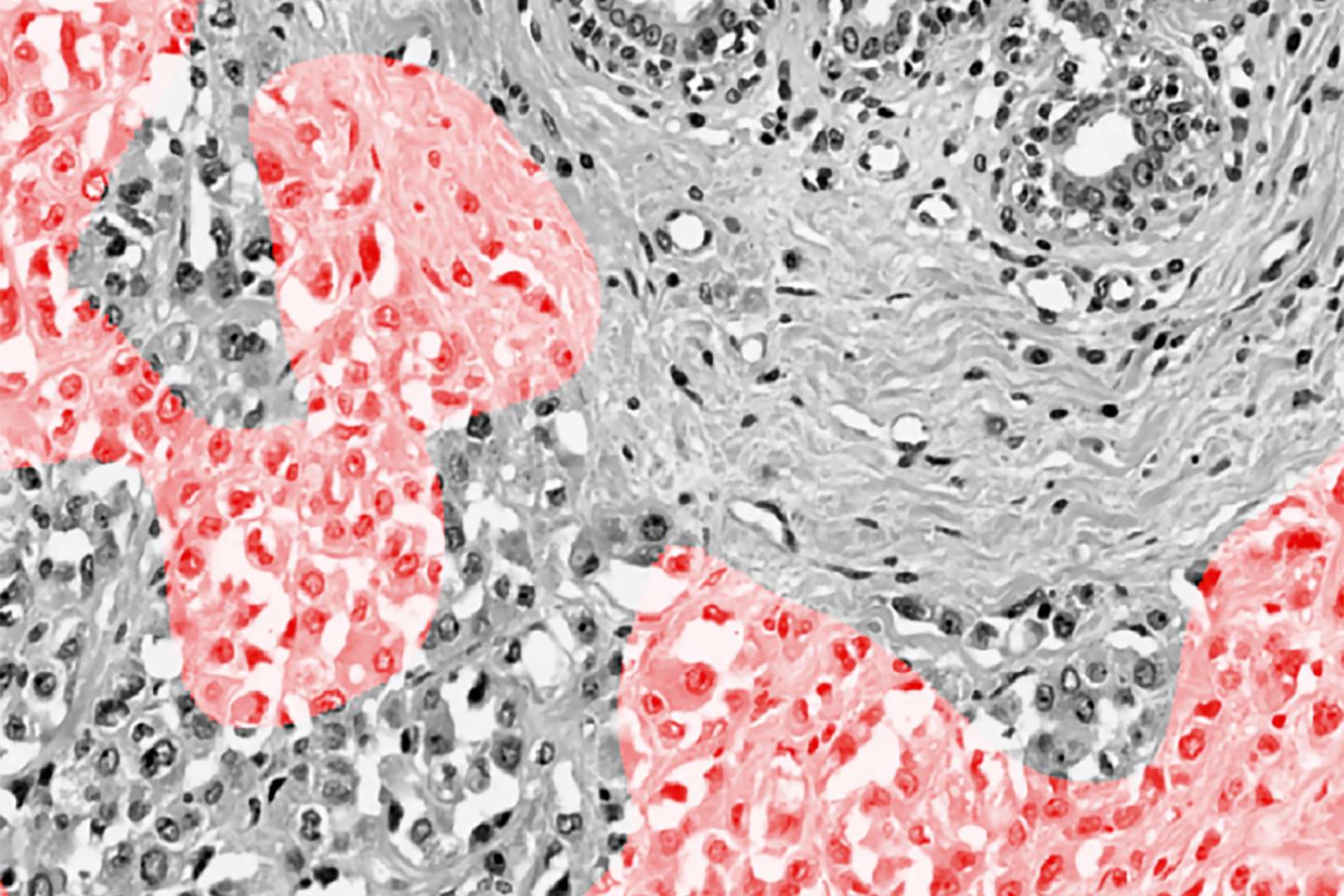
Aided by machine learning, the researchers taught a computer to rapidly sort images of breast tumors to identify which ones had estrogen receptors, a key to determining prognosis and treatment options. That’s a big step forward from microscopes and cell biopsies in use for more than a century, according to the scientists.

The work opens a new pathway for breast cancer treatment that promises faster results for less cost for more people worldwide, says David B. Agus, professor at the Keck School of Medicine of USC and the USC Viterbi School of Engineering. He is also CEO of the Lawrence J. Ellison Institute for Transformative Medicine of USC.

The findings appear this week in Nature Partner Journals Breast Cancer.
(Image credit: Courtesy of Rishi Rabat)

“It’s the beginning of a revolution to use machine learning to get new information about breast cancer to the physician,” Agus says. “We can use it to detect better treatments, get information to patients faster, and help more people. We’re unleashing this power to give new information to physicians and help treat cancer.”

Except for skin cancer, breast cancer is the most common cancer in women in the U.S. While deaths have declined, it remains the second-leading cause of cancer death among women and the leading cause of cancer death among Hispanic women.

About 237,000 cases of breast cancer are diagnosed in U.S. women and about 41,000 die from the disease each year, according to the U.S. Centers for Disease Control and Prevention.

The key to identifying and treating cancer is knowing the nature of the tumor. Cancer cells that contain receptors for estrogen and other hormones respond differently to cancer drugs that target these mechanisms. While doctors use these characteristics to classify tumors and select treatments, testing for markers is a slow and inefficient process.

For example, assays can be inconsistent depending on the laboratory doing the testing. They’re also expensive, take weeks to do and are unavailable in many developing countries.

“If you’re diagnosed with cancer, it’ll be a few weeks before you get a call from the doctor saying they’ve identified a marker,” says Dan Ruderman, one of the study authors and assistant professor of research medicine at the Keck School of Medicine. “With machine learning technology, we can tell you the same day, so there’s less delay, less stress and potentially better outcomes. It’s going to enable us to identify the right drug and dose more quickly. It’s a big step toward personalized medicine.”

While machine learning has been used before for cancer detection, the USC study adapted the technology to more clearly focus on telltale markers of a cell’s nucleus. The key was to extract parameters describing the shape of nuclei, and feeding these into a large neural network that could learn relationships between nucleus shape and molecular markers.

The scientists used publicly available hematoxylin-eosin (H&E) stained histopathology images. the cell-stained slides doctors have been using for more than a century. Next, they ascertained clinical status for 113 cancer patients, then split the patients into two groups, using one group to train a convolutional neural network algorithm, which is used to enhance visual imagery, and another to test the machine. When they compared the two sets, they found a strong correlation, providing high confidence that an algorithm can predict the estrogen receptor status of the tumor.

“We can use this technology to identify the molecular markers of the tumor and in the future will identify which therapeutics the tumor will respond to. Machine learning helps us get this information to patients sooner and may transform cancer care in the developing world where precise breast cancer marker assessment is in short supply,” says Rishi Rawat, a graduate student in the Keck School of Medicine and first author of the study.

So far, the research findings demonstrate that the new technology has the potential to improve clinical care. Validation studies are under way — an important step before it’s ready for use in the doctor’s office
Related Articles Read More >

An image of the September 2026 Medical Design & Outsourcing magazine featuring the Medtech Big 100 ranking of the world's largest medical device companies.
September 2026 issue: The MDO Medtech Big 100 breaks $500 billion
A photo of Petal Surgical co-founder and CEO Prash Chopra.
Petal Surgical CEO Prash Chopra offers advice for device developers
An image of Claria's system for minimally invasive hysterectomies.
This de novo minimally invasive system was designed for safer hysterectomies
A photo of Capstan Medical CEO Maggie Nixon posing with the structural heart startup's robotic catheter delivery system.
Capstan Medical CEO Maggie Nixon’s career advice, travel tips and how she starts her day
“mdo
EXPAND YOUR KNOWLEDGE AND STAY CONNECTED
Get the latest medical device business news, application and technology trends.

DeviceTalks Weekly

See More >

MDO Digital Edition

Digital Edition

Subscribe to Medical Design & Outsourcing. Bookmark, share and interact with the leading medical design engineering magazine today.

MEDTECH 100 INDEX

Medtech 100 logo
Market Summary > Current Price
The MedTech 100 is a financial index calculated using the BIG100 companies covered in Medical Design and Outsourcing.

New MedTech Resource

Medical Tubing

MassDevice

Mass Device

The Medical Device Business Journal. MassDevice is the leading medical device news business journal telling the stories of the devices that save lives.

Visit Website
MDO ad
Medical Design and Outsourcing
  • MassDevice
  • DeviceTalks
  • MedTech100 Index
  • Medical Tubing + Extrusion
  • Medical Design Sourcing
  • Drug Delivery Business News
  • Drug Discovery & Development
  • Pharmaceutical Processing World
  • R&D World
  • About Us/Contact
  • Advertise With Us
  • Subscribe to Print Magazine
  • Subscribe to our E-Newsletter
  • Listen to our Weekly Podcasts
  • Join our DeviceTalks Tuesdays Discussion

Copyright © 2026 Arrowfly, LLC. All Rights Reserved. The material on this site may not be reproduced, distributed, transmitted, cached or otherwise used, except with the prior written permission of Arrowfly LLC. Site Map | Privacy Policy | RSS

Search Medical Design & Outsourcing

  • Home
  • Medical Device Business
    • Mergers & Acquisitions
    • Financial
    • Regulatory
  • Applications
    • Cardiovascular
    • Devices
    • Imaging
    • Implantables
    • Medical Equipment
    • Orthopedic
    • Surgical
  • Technologies
    • Supplies and Components Index
    • Contract Manufacturing
    • Components
    • Electronics
    • Extrusions
    • Materials
    • Motion Control
    • Prototyping
    • Pumps
    • Tubing
  • MedTech Resources
    • Medtech Events in 2026
    • The 2025 Medtech Big 100
    • Medical Device Handbook
    • MedTech 100 Index
    • Subscribe to Print Magazine
    • DeviceTalks
    • Digital Editions
    • eBooks
    • Educational Assets
    • Manufacturer Search
    • Podcasts
    • Webinars / Digital Events
    • Whitepapers
    • Voices
    • Views
    • Video
  • 2026 Leadership
    • 2025 Winners
    • 2024 Winners
    • 2023 Winners
    • 2022 Winners
    • 2021 Winners
  • Women in Medtech
  • Advertise
  • Subscribe