Computers have drastically changed many things, including the world of medicine. One thing they have brought are medical simulation models. Once considered synonymous with pilot training, simulators are now used in a wide range of industries. They can be used in a wide variety of circumstances, from simulation of various medical system scenarios to a whole human simulation for training of medical students. While this doesn’t seem like something that could be immediately used for medical devices, they in fact can also benefit from the technology of simulation.
“Simulation software has been widely used to design specific aspects of the functioning of various medical products, including taking into account some level of uncertainties—such as in the operating conditions or the manufacturing tolerances that a medical product may see,” says Mahesh Kailasam, Vice President, Thornton Tomasetti. He emphasizes the importance of the increased sophistication in current medical simulation models.
Medical simulation isn’t a new concept at all – as far back as 1986 a game for the Mac, Surgeon, required you to repair an aortic aneurysm, and in 1988 there was an interactive computer game, Life and Death, where the object was to play an abdominal surgeon and work through a variety of medical scenarios, from kidney stones to appendicitis.
Current technologies incorporate wireless internet, smartphones and tablet devices. “These tools, when combined with significant improvements in tools and methods for optimization, uncertainty quantification, and automation, then allow for a far more detailed understanding of the deployment and functioning of entire medical product systems in real-world conditions,” Kailasam explains. With such models, it is more feasible to “test” devices in the simulation environment before moving on to real-world testing.
Kailasam speaks from experience – he previously led the commercialization for the Living Heart Project, a collaborative simulation of the human heart. The ultimate goal of the project is to develop various simulations that can be used for a variety of projects, such as education, research, medical judgments, and engineering practice.
While those tools have become more sophisticated, simulation of the whole human body remains a goal for the future. “This challenge is particularly evident when simulations also involve modeling the human body, the characteristics of which vary significantly within a population, as do interactions of medical products with the body.” Systems available still do not predict all the uncertainty present in the human body. Kailasam thinks that these systems and their limits “is a continuing challenge in realizing the full potential of simulation.”
Some examples already exist. Computer simulation played a key role in The Living Heart project (see Medical Design Technology feature “The Living Heart,” April 2018, page 8). Using software from Dassault Systems, scientists developed a 3D virtual reality model of the human heart that enables medical personnel to not only see close-ups of the various components of the heart (Figure 1), but enable them to study how these components interact with one another and the rest of the human body. Scientists hope this knowledge will help them understand the medical conditions that lead to heart disease and develop treatment and wellness regimes to prevent heart conditions from recurring.
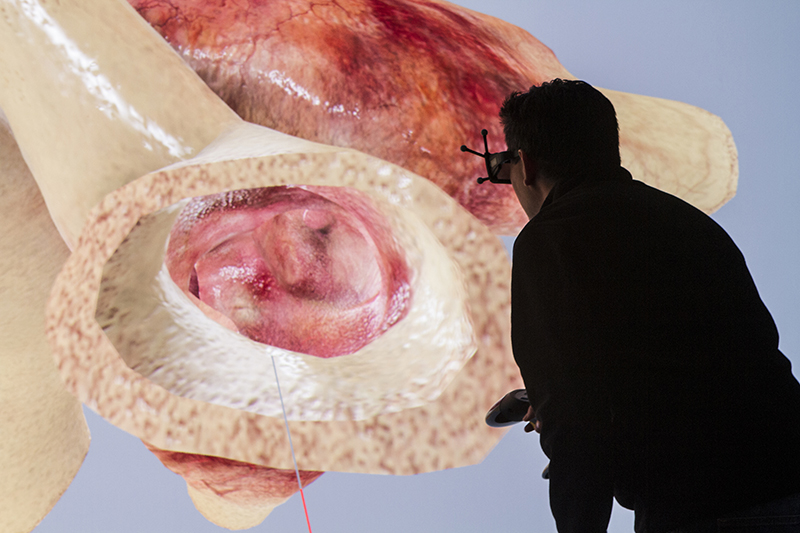
Figure 1. Software from Dassault Systems enabled scientists to develop a 3D simulation of the human heart that enables medical personnel to closely study heart functions and interactions.
Medical product design is also benefitting from simulation. For instance, simulation is helping manufacturers optimize the design of syringes so that they can penetrate the skin with less pain for the patient, as well as stand up to the stresses and strains of insertion, liquid ejection, and removal (Figure 2). Simulation helps medical design engineers analyze the performance of different design concepts and make changes to improve final product performance.
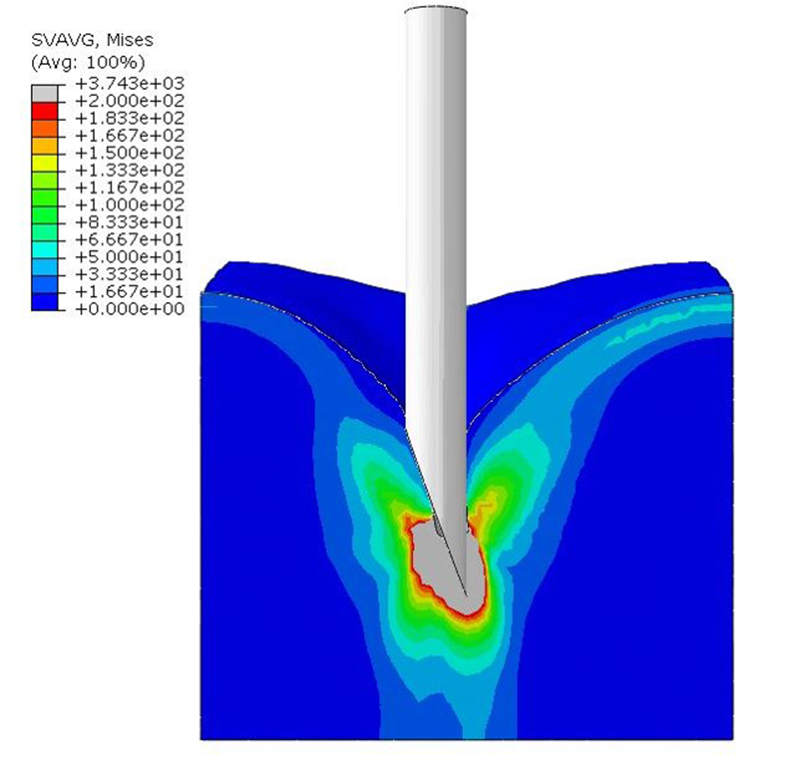
Figure 2. Simulation is helping manufacturers design syringes to enable them to penetrate the skin with less pain for the patient.
Medical simulation is now an accepted fellowship at medical centers like Massachusetts General Hospital. The army now has a whole center devoted to its practice. Since all devices have to meet strict industry and regulatory standards, those can be programmed into a simulation to demonstrate device performance and durability. Newer manufacturing technologies can also benefit from simulation, according to Kailasam. “Simulation of the additive manufacturing processes is proving to be very valuable for the industry in terms of quality,” he says.
Kailasam notes that virtually all types and classes of medical devices have the potential to be affected by simulation. “The design and manufacturing of all medical devices, independent of their classification as Class I, II, or III, and pharmaceutical manufacturing applications such as tablet compaction or vial filling, readily benefit from simulation.” The benefits include faster decisions on new design concepts, improved manufacturing processes that result in faster throughput without compromising quality, and reduced risks of product failure,” Faster decisions can result in a product going to market more quickly, faster manufacturing can increase overall output, and reduced product failure can save much of a company’s bottom line – all things that bode well for anyone in the industry.
The incorporation of adjustable variables in simulations will most likely increase the number of applications of those simulations already developed. “Integration of uncertainty quantification methods directly into simulation tools will greatly assist with more rigorous verification and validation, which in turn will expand the usage of these tools for medical applications,” explains Kailasam. “Simultaneously, the development of human body models that include disease states and statistical population representations will further expand the usage of simulation in newer medical application domains.”