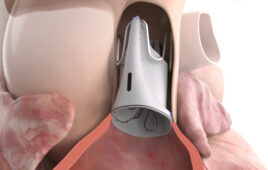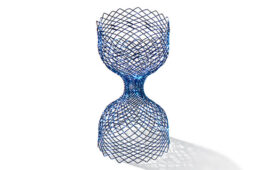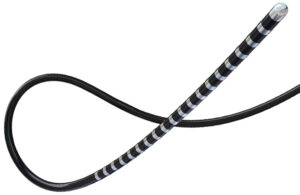
The Stereotaxis MAGiC Sweep catheter is FDA-cleared for for intracardiac
electrophysiological recording and/or stimulation for pacing in the heart. [Image courtesy of Stereotaxis]
The minimally invasive medtech developer also developed a CE-marked ablation catheter under the same MAGiC name, which is an abbreviation of magnetic interventional ablation catheter. Both MAGiC catheters are designed for use with Stereotaxis robotics systems.
Related: Surgical robotics takes center stage at DeviceTalks West
Stereotaxis said in FDA filings that the new MAGiC Sweep catheter has 19 electrodes and one tip electrode, with three different electrode spacings and 20 different magnet spacings for each electrode spacing configuration.
“The variety of configurations facilitate the navigation of the device to specific areas of the heart and facilitate recording of intracardiac signals and/or stimulation in the atrial and ventricular regions of the heart during electrophysiology studies,” Stereotaxis said in its FDA 510(k) submission.
Medical Design & Outsourcing asked Stereotaxis Director of Clinical Engineering and New Concepts Nathan Kastelein to discuss the new interventional catheter, including the components that make it possible, development challenges and solutions, and advice for other medical device designers and engineers.
The following has been lightly edited for space and clarity.
MDO: What’s the big advance that makes the MAGiC Sweep catheter possible?
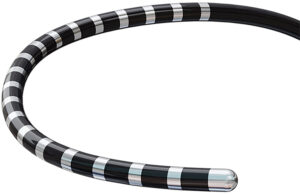
The Stereotaxis MAGiC Sweep catheter has 19 electrodes and one tip electrode, with three different electrode spacings and 20 different magnet spacings for each electrode spacing configuration. [Image courtesy of Stereotaxis]
What’s unique about neodymium magnets and why did you select them for this application?
Kastelein: “Cardiac catheters are small devices by design. They typically need to include design features such as location sensors, thermocouples, electrodes, wiring, and irrigation channels. When you add magnets to the list of required parts, you obviously need highly performing magnets in a small package. Rare earth magnets made with neodymium provide a strong magnetic moment in a small package that can be shaped into useful parts for inserting into the interior of a cardiac catheter. The strong response of these magnets is what enables precise shaping and placement of the MAGiC Sweep catheter without the need for pull wire mechanisms. The result is an atraumatic catheter design that avoids anatomic distention and delivers outstanding electrode-tissue contact as the catheter is essentially held against the tissue by the magnetic force.”
MDO Min-Vasive Medtech: Watch on-demand interviews and audience Q&As with minimally invasive engineers from Edwards Lifesciences, Jupiter Endovascular and Compremium
How did Stereotaxis develop MAGiC Sweep and what were the biggest technical challenges and solutions along the way?

The Stereotaxis Genesis X robotic magnetic navigation (RMN) system [Image courtesy of Stereotaxis]
“With an ablation catheter, the objective is to move the tip of the device to where the therapy needs to be delivered. With a multi-polar mapping device, the objective is to lay the shaft of the device along the endocardial surface so that the many electrodes along the shaft can capture the electrical data from many points on the heart’s surface. To do this, we used computer modeling and physical prototyping to assess various potential approaches to multi-polar mapping using the magnetic navigation system.”
Can you tell us more about that modeling and prototyping and applications for other devices or systems?

Stereotaxis won a CE mark for its MAGiC radiofrequency ablation catheter in January 2025. [Image courtesy of Stereotaxis]
“The development of Sweep has definitely increased our technical knowledge and intellectual property. Increased experience with a broader range of robotically-steered interventional devices and is contributing to our continued robust pipeline of R&D efforts. We look forward to bringing many more catheter innovations to patients and physicians in the coming years.”
What advice would you offer to medical device designers and engineers based on what you’ve learned in your own career?

Stereotaxis Director of Clinical Engineering and New Concepts Nathan Kastelein [Photo courtesy of Stereotaxis]
Related: Why Stereotaxis says magnets are so attractive for minimally invasive medtech