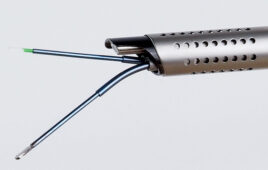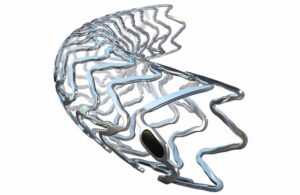
The Teleflex Freesolve RMS (resorbable magnesium scaffold) uses proprietary magnesium alloy and bioabsorbable coating technology to provide vessel support during and after implantation. [Image courtesy of Teleflex]
In October 2026, the Teleflex Freesolve RMS (resorbable magnesium scaffold) won FDA Breakthrough Device designation for percutaneous coronary intervention (PCI), which should fast-track the drug-eluting stent’s regulatory review in the U.S.
The catheter-delivered device already had a CE mark and was also available in Asian-Pacific, South American and Middle Eastern countries. In 2024, Freesolve RMS developer Biotronik (which sold the technology with the rest of the its Vascular Intervention Business to Teleflex in 2025) secured breakthrough designation for below-the-knee treatment of chronic limb-threatening ischemia (CLTI).
Fontana — who is a member of Medical Design & Outsourcing’s new Medtech Innovation Board — discussed the Freesolve RMS device, the resorbable technology behind it and the “next frontier” of PCI in an MDO interview. The following has been lightly edited for length and clarity.
MDO: I know you’ve just joined Teleflex, but what can you tell us about this product’s R&D journey?
Fontana: “What’s really cool and exciting about Freesolve is the team at Biotronik and then ultimately Teleflex set out to solve this age-old problem of how to deliver a product with contemporary drug-eluting stents, how to safely keep the scaffold open during the time the drug is being eluted, and how to make it go away when it’s done its job. This journey was first understanding. Then they developed the proprietary BIOmag absorbable magnesium scaffold to deliver like a standard drug-eluting stent, but be in place for long enough to provide that scaffold and provide that drug, and then reabsorb. This dynamic required some unbelievable engineering and unbelievable preclinical and clinical work. For me, it’s exciting to be at the end of one part of the journey and the beginning of the next part of the journey with Breakthrough Device designation.”
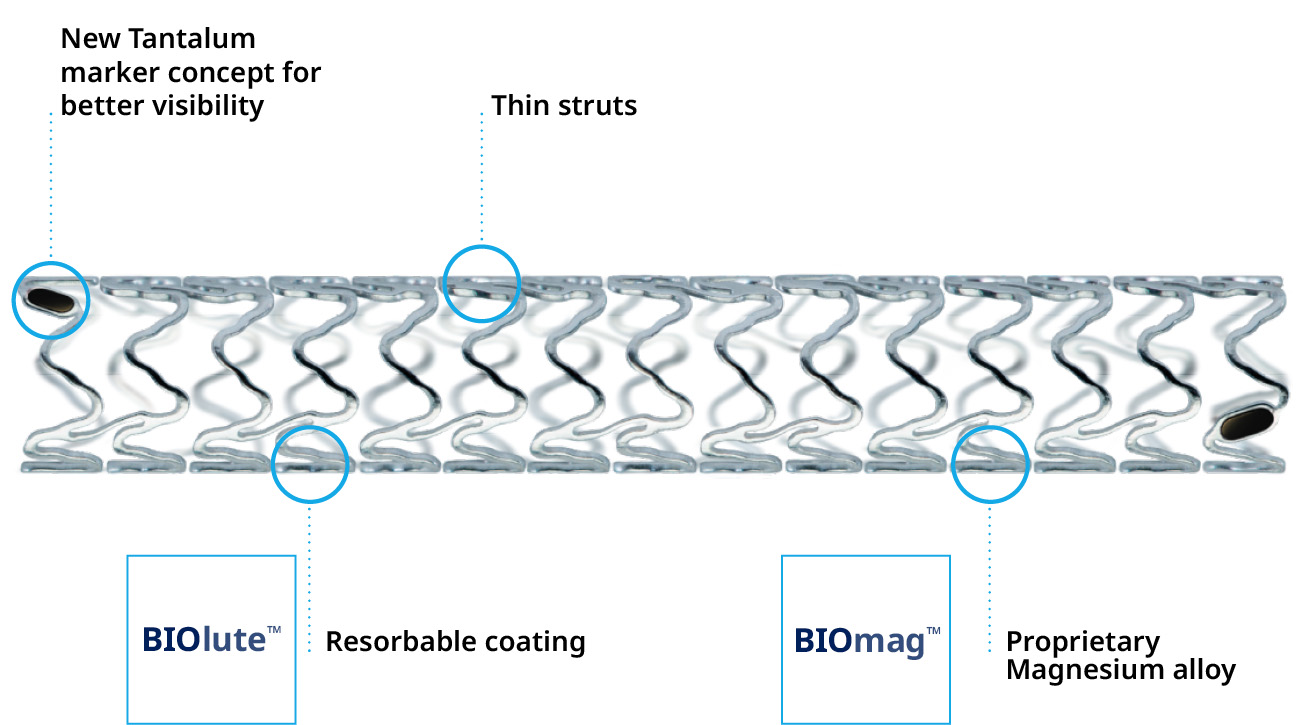
The Teleflex Freesolve RMS has a scaffold made of absorbable magnesium and aluminum with an oval Tantalum marker at each end. [Image courtesy of Teleflex]
What’s the opportunity in terms of patient population and total addressable market (TAM), if you can discuss that yet?
Fontana: “Not yet from a TAM perspective, but there’s unfortunately millions of people with coronary disease and millions of stents and millions of PCIs done each year. This opportunity is unique because patients and physicians are searching for this nothing-left-behind dynamic. We’ve seen that with the uptick of drug-coated balloons and the advancement of drug-coated balloon technology, which has been in Europe forever with two recently approved in the U.S. and more under study, and we have one that is now coming to the United States. Ultimately, if physicians could have something they’re used to delivering that is there when it needs to be there and then goes away, I think it’s the next frontier of PCI, which is exciting. We have set of clinical trials to really define the evidence to define the opportunity. We’ve done our first-in-human trial, BIOMAG-I, completed enrollment of our nearly 2,000-patient, randomized BIOMAG-II outside the U.S., and now we’re in the enrollment of our third trial, which will be used for U.S. FDA approval, BIOMAG-III. Sometimes when people think about new technologies, they generally don’t fully grasp the amount of evidence that’s being generated behind them, and we’re really committed to that going forward. So not necessarily the TAM answer, but the opportunity is available just from a PCI perspective, and we’re generating that evidence now.”
What’s the importance of leaving nothing behind for patients?
Teleflex Interventional President and GM Jason Fontana [File photo courtesy of Medtronic]
What’s special about this magnesium alloy and the absorbable coating that you’re using in Freesolve RMS and elsewhere in your portfolio?
Fontana: “It’s pretty neat, right? BIOmag is our proprietary magnesium alloy that goes away pretty much in that roughly one-year timeframe. What’s super cool is we’ve also combined that with a polymer called BIOlute, which elutes sirolimus — our drug — and that polymer goes away. So we have the polymer going away after eluting the drug and the whole scaffolding going away, two proprietary nothing-left-behind approaches with our technology.”
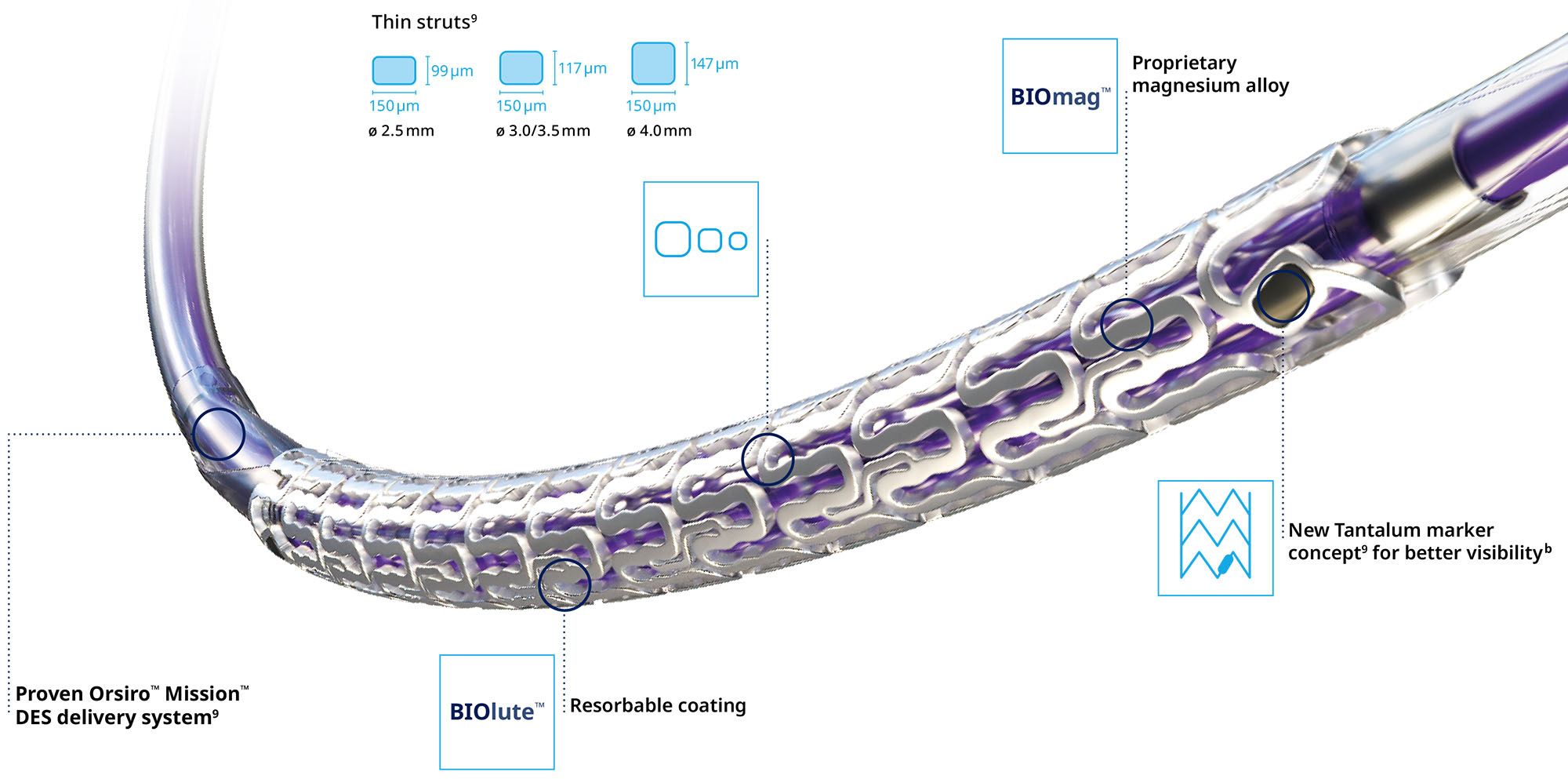
The Teleflex Freesolve RMS (resorbable magnesium scaffold) uses a bioabsorbable Poly-L-Lactide (PLLA) coating to release a limus drug. [Image courtesy of Teleflex]
Are there other potential applications of these technologies?
Fontana: “One of the immediate ones is we also have Breakthrough Device designation for the use of Freesolve in the peripheral space below the knee. That becomes another really interesting area as we approach thinking about vessels and leaving nothing behind. With both coronary and peripheral applications, it’s very intriguing. I think there are others behind that, but we’re still thinking through the application of this technology in that area.”
Teleflex is the world’s 55th largest medical device company according to Medical Design & Outsourcing‘s 2026 Medtech Big 100 ranking by revenue.