Speed is the name of the game in getting a product to market before the competition. One technique medical device manufacturers are employing to help achieve faster design cycles for their products is rapid prototyping. This article looks at this time saving alternative for prototype part fabrication.
By Jeff Kane
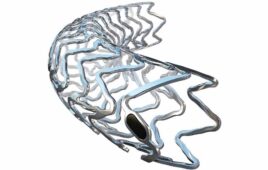
 Layers of epoxy were built-up by stereolithography to create these prototype samples. |
AT A GLANCE
If you’re a medical device design engineer and not yet using rapid prototyping, chances are you will be. Rapid prototyping is perhaps one of the most effective and versatile design tools an R&D engineer can use in the creation of a new device or component.
First introduced in the 1980s, rapid prototyping (RP) really came into its own within the past ten or fifteen years as a relatively easy-to-use, cost-effective tool for quickly designing—and even manufacturing—components. Initially conceived as a way to produce models and prototypes, RP is also being used in some cases to manufacture low-volume production parts. Today, rapid prototyping has become an indispensable tool for the medical device industry, driven by the need to reduce product development time and cost while providing critical performance feedback and documentation during virtually every phase of development and production—from design to review to manufacture.
 Products are rendered using a variety of popular CAD programs such as SolidWorks; the files are used to create prototypes by either incrementally adding layers of material or removing material from solid blocks. |
The advantages of rapid prototyping start at the very beginning of product R&D. Using CAD-generated designs, RP systems can use any one of several different technologies, including additive fabrication, solid freeform fabrication, layered modeling, and 3D printing to create physical models in one day, often in a few hours. Regardless of the technique used, the process involves the prototyping system reading digital data and building up a corresponding model using any number of liquid or powdered compounds. The resulting object is typically cured or cut in some fashion, using heat or exposure to one of a wide range of laser-generated frequencies to produce a final, hardened model or actual component. It is even possible to use several materials simultaneously with different meltpoints, enabling the designer to create moving, functional models by having the curing stage remove filler materials with low meltpoints, leaving behind higher threshold shapes that are now movable.
Just as important as speeding up the modeling process is the ability of rapid prototyping to enable engineers to assess critical design factors such as ergonomics and aesthetics. Don’t like how a prototype interacts with a skeletal structure or operates in an IV therapy system? Revise the digital files and create another model within hours, compared to perhaps several weeks using more traditional injection molding tooling.
And it doesn’t stop there. RP is ideal for improving communication between design teams and management as well as with customers. Need to get a new concept across at an important trade show? RP is useful in creating models for display and demonstration, helping sales and marketing improve presentation effectiveness, and shorten sales cycles.
“I’ve Got an Idea!”
If you’re a product design engineer, you know the importance of flexibility and creativity in the quest for breakthrough technology and next generation products. RP is a fraction of the cost of injection molding, making it ideal for testing even “crazy” ideas—it frees up designers to explore concepts and innovations they might think twice about if using traditional, more expensive methods.
There are over half a dozen different techniques used for rapid prototyping. As RP technology continues to evolve and improve, features and specifications change. This quick overview is intended to provide simply a basic understanding of the various processes:
Stereolithography (SLA)
Considered the “granddaddy” of RP techniques, SLA uses various solid-state laser wavelengths to cure photosensitive, epoxy-based polymers in incremental layers. While a relatively slow technique, SLA is ideal for modeling complex geometries.
Selective Laser Sintering (SLS)
This technique uses CO2 lasers to cure various powders (nylon, polycarbonate, polystyrene, and thermoplastic elastomers) in incremental layers. Generally faster than SLA, SLS is good for creating model features typically less than 0.7 mm (0.03 in.).
Droplet Based Manufacturing (DBM)
Precise but slow, DBM uses one nozzle head to deposit very fine layers of a waxy resin and another head to deposit support material. This technique is better suited for slightly larger components—the minimum feature size is only 0.25 mm (0.01 in.). However, virtually no clean-up is required, making it very attractive from an environmental standpoint.
MultiJet Modelling (MJM)
Another sprayer/waxy material-based system, MJM is perhaps the least expensive and smallest RP system available. This technique uses an array of inkjet nozzles to “print” nonfunctioning components with a waxy polymer. Relatively quick, the MJM’s speed depends on the y-axis dimension.
Laminated Object Manufacturing (LOM)
This technique involves laser-cutting layers of adhesive paper or polyester sheets to create the final model. Build times vary with geometry and complexity, but accuracies of ±0.13 mm (0.005 in.) and no shrinkage make this technique ideal for dense sectioned components with the quality of wood patterns.
Fused Deposition Modelling (FDM)
Using a heated extrusion nozzle to lay down a polymer or polymeric filament material such as ABS, polysulfone, or polycarbonate, FDM is slower than laser techniques but, depending on nozzle size, is typically accurate down to 0.3 mm (0.012 in.). Solid parts with good durability and functionality can be made by extruding around the perimeter, then filling in with alternate layers in alternate directions.
Three-Dimensional Printing (3DP)
Another inkjet technique, 3DP uses a liquid binder to solidify layers of powder in a tank—starch (rough) or gypsum (finer and stronger), which can be impregnated to increase strength. The powder also serves the dual function of supporting the model during the build. The fastest of the RP technologies, it is used mainly for aesthetics and casting formers.
Laser Engineered Net Shaping (LENS)
LENS uses metal powder (and sometimes metal wire) melted coaxially around a high-powered laser beam, building the component, layer by layer, on the y-axis. LENS is the only RP technique that creates metal models directly from raw materials with no secondary process such as curing. The result is fully dense parts with good grain structure. Metals that can be used include aluminum, titanium, stainless steel, copper, and inconel. LENS is a good RP technique to use when “near net” shapes are being created without exact specifications; they can then be refined with machining and finishing.
 Components of varying size and complexity can be created using a variety of rapid prototyping techniques and compounds; the samples shown here are all produced using stereolithography. |
Regardless of the technique, the materials used in RP modeling have become increasingly more advanced and reliable over the years—SLA resins that were once too brittle to be good for anything but appearance models can now be used for living hinges and physical testing. With this increase in dependability comes versatility and flexibility, enabling design engineers to speed up the entire process of bringing new products to market. Instead of building just a few, expensive, static prototypes that slowly make their way through the design and review process with an increased chance for failure, RP gives the design engineer a powerful new tool to creatively design and revise on the fly.
The ability to create fast, close-tolerance, cost-efficient models and prototypes without the need for cumbersome, expensive tooling and equipment has revolutionized the product design process. Rapid prototyping has provided medical device design engineers with a powerful tool to envision, test, and improve product designs with previously unheard-of flexibility and speed. As the need for ever-smaller and more complex medical components grows, rapid prototyping will become even more indispensable to the design process.
ONLINE
For additional information on the technologies and products discussed in this article, see the following websites:
Jeff Kane is the director of R&D for NP Medical Inc., 101 Union St., Clinton, MA 01510. He is responsible for the design of new and innovative fluid control devices for intravenous applications. Kane can be reached at 978-365-9721 or [email protected].