Of the 100 largest medical device companies, these 10 firms have spent the largest portion of their revenues on research and development.
Each year, Medical Design & Outsourcing compiles a list of the 100 largest medtech companies worldwide and ranks them based on annual revenue for the most recently reported fiscal year. We also consider research and development spending because it can indicate where innovation occurs in the industry.
Of the companies on our Medtech Big 100 list, 73 disclosed their annual R&D spending for a total of $29.2 billion across the industry. Aggregate spending is up less than one percent year-over-year, and just 43 companies reported increased R&D spending over our 2024 analysis. Twenty-three companies cut R&D spending year-over-year. Six of those companies had double-digit reductions.
According to this year’s Big 100 analysis, the ranking of the companies that spent the largest percentage of their revenue on R&D consisted of sleep apnea, cardiology, ophthalmology and cancer devices. Additionally, companies that are in the bottom 50 of our Big 100 list were more likely to dedicate a greater portion of their revenue to research and development. Only one company on the R&D spenders list was ranked among the top 25 on the Big 100: Edwards Lifesciences.
Read on to discover the 10 medtech companies spending the largest portion of their budget on R&D and what the businesses did in their most recent fiscal years. Go here for a free download of MDO’s Medtech Big 100 Special Report that takes a deep look at the world’s 100 largest medical device companies.
1. Glaukos
The Glaukos iStent infinite Trabecular Micro-Bypass System [Image courtesy of Glaukos]
Total R&D expenditures: $136,425,000
Big 100 rank: 96
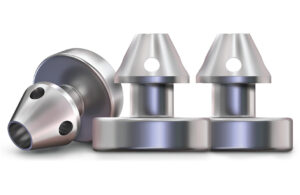
Glaukos develops glaucoma and corneal health therapies. iDose TR is a long‑duration, anchored intracameral travoprost implant that the company designed to lower intraocular pressure in open‑angle glaucoma or ocular hypertension. It elutes drugs directly into the anterior chamber of the eye, reducing pressure. The FDA approved iDose TR in December 2023. Glaukos’ iStent implant consists of two heparin-coated titanium micro-bypass stents implanted into Schlemm’s canal to enhance trabecular outflow. It is indicated with cataract surgery for mild to moderate primary open-angle glaucoma. The iStent system won EU MDR certification in June.
2. Novocure

Novocure developed the Optune wearable device to deliver Tumor Treating Fields, electric fields that slow or stop cancer cells from dividing. [Photo courtesy of Novocure]
Total R&D expenditures: $209,645,000
Big 100 rank: 85
Novocure’s Tumor Treating Fields (TTFields) therapy uses low‑intensity, alternating electric fields to disrupt cancer cell division. Wearable arrays connect to a portable generator to deliver therapy continuously to tumor regions. In June 2025, Novocure reported that the Phase 3 PANOVA-3 trial in pancreatic cancer met its primary endpoint with improved survival using TTFields plus chemotherapy.
TTFields are tuned to an intermediate frequency range (about 100–500 kHz) to target dividing tumor cells and interfere with mitosis. The therapy is noninvasive and designed for continuous, at-home use. Because TTFields act through a different mechanism than drugs or radiation, clinicians can combine them with more systemic therapies such as chemotherapy.
Novocure contributed an article about its technology to MDO in 2023.
3. Tandem Diabetes Care

The t:slim X2 insulin pump is Tandem Diabetes Care’s flagship AID system. [Photo courtesy of Tandem Diabetes Care]
Total R&D expenditures: $198,877,000
Big 100 rank: 73
Tandem makes automated insulin delivery systems, including the t:slim X2 and the smaller Mobi pump. Control‑IQ+ is Tandem’s latest algorithm with added features like Temp Basal during automation and expanded indications. It predicts glucose 30 minutes ahead, automatically adjusts basal insulin and can deliver automatic correction boluses. Earlier this year, the FDA cleared Control‑IQ+ for adults with type 2 diabetes, and Tandem launched the algorithm in the U.S. shortly after. The company’s Tandem Mobi supports full iPhone control and compatibility with Dexcom G7. Tandem’s t:slim X2 also recently added compatibility with the Abbott FreeStyle Libre 3 Plus.
Control-IQ+ adds a Temp Basal Rate option while automation is active and supports an extended bolus of up to eight hours. It can deliver an automatic correction bolus when glucose is predicted to exceed 180 mg/dL, and it includes optional sleep and exercise settings that adjust treatment values. Tandem lists expanded age and weight indications for Control-IQ+, with availability for ages 2 and up.
4. MicroPort
R&D as a percent of revenue: 21%
Total R&D expenditures: $216,500,000
Big 100 rank: 70
MicroPort’s devices span multiple cardiovascular categories. Its Cardiac Rhythm Management unit develops pacemakers, defibrillators, cardiac resynchronization systems and remote monitoring tools. It also offers PCI stents and a TAVR system within its cardiovascular portfolio.
The company reported Chinese regulatory approval for MicroPort MedBot’s Toumai SP laparoscopic surgical robot in March. Toumai SP uses an integrated single-port design that enables a roughly 2.5 cm umbilical incision, with three snake-shaped instruments and a flexible, snake-shaped endoscope passed through one access point. The platform includes a 3D high-definition electronic endoscope with low latency, dual-lens synchronous focusing and multiple control modes. A crossed dual C-arm architecture provides a fixed point for two robotic arms through the same incision, which can help avoid repositioning during abdominal and pelvic cases. MicroPort said the system has a small footprint and high adjustability intended for operating rooms with limited space.
5. AtriCure
R&D as a percent of revenue: 20.7%
Total R&D expenditures: $96,178,000
Big 100 rank: 89
AtriCure has a niche developing surgical (versus catheter-delivered) devices for the treatment of atrial fibrillation and left atrial appendage management. Its Isolator Synergy bipolar RF clamps are FDA‑approved for treating AFib in specific settings. The EPi‑Sense system supports hybrid AF therapy for long‑standing persistent AFib. AtriCure also offers cryoICE cryoablation probes and multiple Synergy clamp variants for different approaches. In July 2025, AtriCure completed enrollment in the 6,500‑patient LeAAPS stroke‑prevention trial.
EPi-Sense has integrated suction to stabilize tissue and an irrigated suction to stabilize tissue, plus an irrigated 3 cm electrode, designed by AtriCure, to create long, linear epicardial lesions on the posterior left atrial wall. It includes sensing electrodes, allowing clinicians to view epicardial electrograms before, during and after ablation. Additionally, surgeons can access the pericardial space through a small subxiphoid cannula. Isolator Synergy clamps use opposing bipolar RF electrodes to deliver consistent transmural lesions and are the only FDA-approved ablation device indicated to treat persistent and long-standing persistent AFib.
6. Edwards Lifesciences

The Edwards Lifesciences SAPIEN 3 Ultra RESILIA Transcatheter Aortic Heart Valve [Photo courtesy of Edwards Lifesciences]
Total R&D expenditures: $1,053,000,000
Big 100 rank: 24
Edwards is a major company in the transcatheter heart therapies space with its Sapien TAVR technology; it also continues to create devices implanted through open-heart surgery. Its transcatheter mitral and tricuspid portfolio includes the Pascal Precision repair system and the Evoque tricuspid valve replacement system. In April 2025, Edwards announced CE mark for the Sapien M3 transfemoral transcatheter mitral valve replacement system. The following month, the company’s Sapien 3 TAVR system won the first FDA approval for a TAVR system to treat severe aortic stenosis (AS) in people who do not have symptoms.
Sapien M3 uses a two-step, dock-and-valve approach delivered through a transseptal, transfemoral route. A dock encircles the native mitral leaflets and chordae to create a stable area for the Sapien M3 valve to be placed. Engineers designed the sequence to allow for catheter access in TMVR to give operators control in complex mitral anatomies. Edwards’ Pascal Precision enables leaflet capture with independently actuated clasps and a central spacer that fills the regurgitation. The implant is delivered through femoral venous access with a transseptal approach for mitral repair.
7. Applied Medical Resources
R&D as a percent of revenue: 19%
Total R&D expenditures: $166,000,000
Big 100 rank: 76
Applied Medical develops minimally invasive surgery technologies. The Voyant Intelligent Energy System uses advanced bipolar energy and software that adapts during sealing. Access platforms include GelPOINT for single‑incision or reduced‑port procedures and Kii trocars with fixation and optical entry options. Alexis wound protectors/retractors provide circumferential retraction and incision protection. Applied also offers the Inzii Ripstop redeployable retrieval system for specimen extraction.
8. Elekta
R&D as a percent of revenue: 14.9%
Total R&D expenditures: $253,064,004
Big 100 rank: 57
Elekta provides precision radiation therapy systems, stereotactic radiosurgery equipment, oncology software, brachytherapy devices and neurosurgery tools. Its Elekta ONE delivers a unified oncology software experience. Its radiation therapy products include linac systems such as Elekta Unity, Versa HD, Harmony and Infinity. Elekta also offers intraoperative radiation therapy via the Xoft system for early‑stage breast cancer. In July 2025, Elekta received FDA 510(k) clearance to expand indications for its Leksell Gamma Knife radiosurgery system.
9. LivaNova

LivaNova’s Essenz Perfusion System [Image courtesy of LivaNova]
Total R&D expenditures: $182,514,000
Big 100 rank: 65
LivaNova develops neuromodulation devices and cardiopulmonary systems. It offers VNS (vagus nerve stimulation) therapy for drug‑resistant epilepsy and is advancing a nerve stimulation implant for obstructive sleep apnea (OSA). LivaNova’s cardiopulmonary portfolio includes heart‑lung machines, oxygenators, autotransfusion systems and cannulae, including the Essenz perfusion platform and disposable components. In May 2025, LivaNova submitted its OSA implant to the FDA, following clinical data from the OSPREY study.
VNS Therapy includes AutoStim, which delivers an extra dose of stimulation when the device detects a rapid rise in heart rate associated with seizures. Clinicians can also trigger on-demand therapy with a magnet, and SenTiva programming support day-night and scheduled settings. The Essenz platform combines a heart-lung machine, patient monitor and sensing modules. It has mast-mounted pumps to help minimize priming volume, separate cockpit and monitor operation, redundant safety mechanisms and integrated alarms to support patient-tailored perfusion. LivaNova’s aura6000 system for OSA stimulates the hypoglossal nerve through a lead on an implanted pulse generator to move the tongue during sleep.
LivaNova discussed Essenz technology in a contributed MDO article in 2023.
10. Inspire Medical Systems
R&D as a percent of revenue: 14.2%
Total R&D expenditures: $114,128,000
Big 100 rank: 78
Inspire Medical Systems makes an implantable system that treats obstructive sleep apnea by stimulating the hypoglossal nerve during sleep. The implant senses breathing and delivers mild pulses to keep the airway open. The system includes the implant, a patient remote, and clinician programming tools such as SleepSync. The company won FDA approval for its Inspire V neurostimulation system in August 2024 and began the full U.S. launch in May 2025. The company also started the EuroStim registry in Europe to evaluate outcomes in routine practice.
Inspire V integrates a breathing sensor into the generator to eliminate the separate respiratory-sensing lead used in previous iterations of the system. It reduces implanted hardware and incisions, and can simplify the procedure. The Inspire V pairs with a single hypoglossal stimulation lead and works with the SleepSync platform for programming and follow-up. R&D is increasingly important for the company as Belgium-based Nyxoah enters the U.S. market with Genio, a leadless hypoglossal nerve stimulator powered through a disposable patch placed on the skin under the chin.