Medical Design and Outsourcing

  • Home
  • Medical Device Business
    • Mergers & Acquisitions
    • Financial
    • Regulatory
  • Applications
    • Cardiovascular
    • Devices
    • Imaging
    • Implantables
    • Medical Equipment
    • Orthopedic
    • Surgical
  • Technologies
    • Supplies and Components Index
    • Contract Manufacturing
    • Components
    • Electronics
    • Extrusions
    • Materials
    • Motion Control
    • Prototyping
    • Pumps
    • Tubing
  • MedTech Resources
    • Medtech Events in 2026
    • The 2026 Medtech Big 100
    • Medical Device Handbook
    • MedTech 100 Index
    • Subscribe to Print Magazine
    • DeviceTalks
    • Digital Editions
    • eBooks
    • Educational Assets
    • Manufacturer Search
    • Podcasts
    • Webinars / Digital Events
    • Whitepapers
    • Voices
    • Views
    • Video
  • 2026 Leadership
    • 2025 Winners
    • 2024 Winners
    • 2023 Winners
    • 2022 Winners
    • 2021 Winners
  • Women in Medtech
  • Advertisers
    • Advertise
    • PR Submissions
    • Eblast Submissions
  • Subscribe

How should I think about insert molding in medical devices?

December 6, 2016 By Danielle Kirsh

Justin Strike/Program Manager/Sil-Pro 

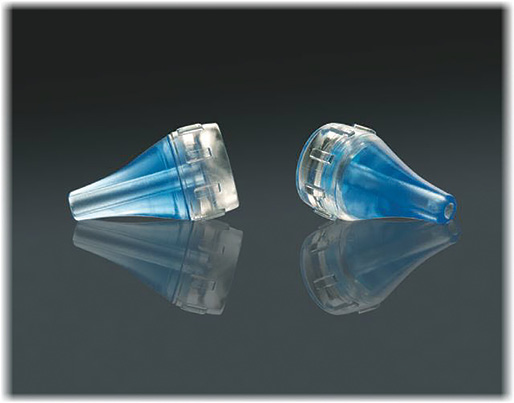
Does your device have sufficient mechanical interfacing to meet performance requirements? Can plasma or corona treatments enhance product performance? Will mechanical surface prepping, chemical adhesion or a combination of both processes be necessary for your product? Overmolding or insert molding is ideal for projects with complex final molded component designs. Overmolding offers extended functionality and aesthetic enhancements that can differentiate your products from the competition. In medical devices, overmolding adds complexity and development time to new products. There is often an increase in up-front tooling costs and handling steps, but overmolding can be a more favorable solution with minimal impact to overall price. Overmolding is defined as the placing of a previously formed component (molded, machined, extruded, etc.) into an injection molding tool and the process to form a composite part assembly once both parts are removed from the mold. The forming methods for the inserts in overmolding applications are limitless. Typical overmolding uses machined metal, injection molded components or extruded components.

Molders use many different materials for several different applications such as radio-opaque inserts in silicone, glass-filled nylon over stainless-steel inserts, silicone over PEEK, polyurethanes over PC, silicone on PC and silicone over silicone.

There are requirements to consider when identifying the materials and method of manufacture for the insert of an overmolded product. The requirements are defined by the secondary material and molding processes. These requirements include temperature of tool, structural deformation around shut-offs and deformation from secondary material shrink. Several bonding methods are less costly to develop but they each have their own challenges. Adhesive bonding often results in a compromise of aesthetic control versus quality of bond. Sonic welding can limit your choice of materials and restrict design options. Bonding or sonic welding of silicone or soft/flexible polymers is very difficult to achieve. Overmolding with silicone or flexible thermoplastic materials is much more common.

When designing for an overmold solution it’s important to understand that the second-shot steel does not move, so the shut-off surfaces of the first shot will need to be repeatable. For a successful overmold, you may need to design the second-shot tool and process first. Items to consider are the second-shot material, shut-off surfaces, areas of flash and gate location. There are benefits to increasing the surface area contact of the second material’s flow to minimize the steel-to-part interface. All surfaces should be clean and free of debris and chemicals. Cleaning with isopropyl alcohol (IPA) can enhance the overmolding process resulting in a repeatable bond. Other treatments such as media blasting, corona, plasma and priming have also proven effective in the cleaning process. Overmolding can add complexity to development, but it can be overcome with proper tooling and design. The proper selection of materials, gate locations, shut-offs and locating features in the second-shot tool design can help reduce the impact of variation of the first shot and reduce the variable stack up that delays product development.

About The Author

Danielle Kirsh

Danielle Kirsh is an award-winning journalist and senior editor for Medical Design & Outsourcing, MassDevice, and Medical Tubing + Extrusion, and the founder of Women in Medtech and lead editor for Big 100. She received her bachelor's degree in broadcast journalism and mass communication from Norfolk State University and is pursuing her master's in global strategic communications at the University of Florida. You can connect with her on Twitter and LinkedIn, or email her at [email protected].

Related Articles Read More >

The Engineer’s Guide to barbed connector selection: Part 2
The Engineer’s Guide to barbed connector selection: Part 1
PE firm Vance Street merges medtech suppliers MRPC, PDC and Injectech
Currier-Sheridan Capital Partners
Sheridan Capital Partners invests in Currier Plastics, names new CEO
“mdo
EXPAND YOUR KNOWLEDGE AND STAY CONNECTED
Get the latest medical device business news, application and technology trends.

DeviceTalks Weekly

See More >

MDO Digital Edition

Digital Edition

Subscribe to Medical Design & Outsourcing. Bookmark, share and interact with the leading medical design engineering magazine today.

MEDTECH 100 INDEX

Medtech 100 logo
Market Summary > Current Price
The MedTech 100 is a financial index calculated using the BIG100 companies covered in Medical Design and Outsourcing.

New MedTech Resource

Medical Tubing

MassDevice

Mass Device

The Medical Device Business Journal. MassDevice is the leading medical device news business journal telling the stories of the devices that save lives.

Visit Website
MDO ad
Medical Design and Outsourcing
  • MassDevice
  • DeviceTalks
  • MedTech100 Index
  • Medical Tubing + Extrusion
  • Medical Design Sourcing
  • Drug Delivery Business News
  • Drug Discovery & Development
  • Pharmaceutical Processing World
  • R&D World
  • About Us/Contact
  • Advertise With Us
  • Subscribe to Print Magazine
  • Subscribe to our E-Newsletter
  • Listen to our Weekly Podcasts
  • Join our DeviceTalks Tuesdays Discussion

Copyright © 2026 Arrowfly, LLC. All Rights Reserved. The material on this site may not be reproduced, distributed, transmitted, cached or otherwise used, except with the prior written permission of Arrowfly LLC. Site Map | Privacy Policy | RSS

Search Medical Design & Outsourcing

  • Home
  • Medical Device Business
    • Mergers & Acquisitions
    • Financial
    • Regulatory
  • Applications
    • Cardiovascular
    • Devices
    • Imaging
    • Implantables
    • Medical Equipment
    • Orthopedic
    • Surgical
  • Technologies
    • Supplies and Components Index
    • Contract Manufacturing
    • Components
    • Electronics
    • Extrusions
    • Materials
    • Motion Control
    • Prototyping
    • Pumps
    • Tubing
  • MedTech Resources
    • Medtech Events in 2026
    • The 2026 Medtech Big 100
    • Medical Device Handbook
    • MedTech 100 Index
    • Subscribe to Print Magazine
    • DeviceTalks
    • Digital Editions
    • eBooks
    • Educational Assets
    • Manufacturer Search
    • Podcasts
    • Webinars / Digital Events
    • Whitepapers
    • Voices
    • Views
    • Video
  • 2026 Leadership
    • 2025 Winners
    • 2024 Winners
    • 2023 Winners
    • 2022 Winners
    • 2021 Winners
  • Women in Medtech
  • Advertisers
    • Advertise
    • PR Submissions
    • Eblast Submissions
  • Subscribe