Device manufacturers are using titanium etching to take advantage of this medtech metal’s many benefits.
By Taylor Mazzali, PEI
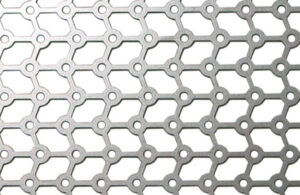
Titanium maxillofacial mesh [Photo courtesy of PEI]
Because of its strength, corrosion resistance and ability to handle intricate designs that defy conventional machining, titanium is an ideal choice for innovative medical devices that rely on the durability and performance of their components.
Titanium is one of the strongest medtech materials but lighter than commonly used metals such as steel and nitinol (an alloy of nickel and titanium) and offers unmatched biocompatibility. Titanium is nontoxic and well tolerated by the human body, though some patients have a rare allergy to titanium.
These properties make titanium well suited for components in cardiovascular devices such as stents and pacemakers, as well as orthopedic implants like artificial knee and hip joints.
Titanium etching provides tailored solutions for many medical applications. Device manufacturers that invest in titanium etching capabilities will be better equipped to meet the rising demands for reliable, intricate medical components.
About titanium etching
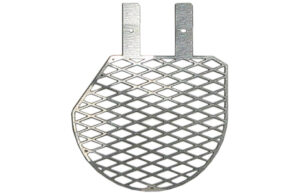
Etched titanium anodes/cathodes for implantable batteries [Photo courtesy of PEI]
While the etching process is versatile for many different metals, titanium’s exceptional flexibility makes it a preferred material in precision metal manufacturing. Photochemical etching refines titanium’s remarkable properties, offering a range of benefits to device manufacturers and their customers, including:
- Precision and control: Titanium etching lets device manufacturers remove material with unparalleled accuracy to meet stringent safety standards for products such as custom medical implants and microelectronics.
- Improved surface finish: The customized surface finish of titanium etched components improves aesthetics and integration with surrounding tissue or hardware, promotes long-term stability and biocompatibility, and reduces friction and wear. This is critical for implants, surgical tools, and other precision devices where durability and functionality are paramount. Additionally, the chemical machining process produces burr-free components for implantable products such as maxillofacial surgical mesh.
- Customization: Device manufacturers can tailor solutions specific to a patient’s unique needs with low-cost photo-tooling and rapid manufacturing cycle times.
- Enhanced bonding: Etching creates a textured surface to improve the adhesion of coatings, adhesives or other materials where device makers want to reduce inefficiencies and damage. For some implants, etched surface conditions also help promote osseointegration, allowing bones to securely merge with the implant.
- Corrosion resistance: Chemical etching does not alter the inherent corrosion-resistant properties of the titanium substrate, ensuring long-term durability for medical devices.
Expanding titanium etching capabilities
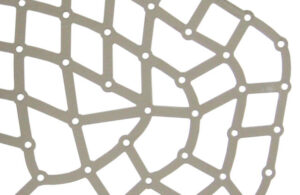
Titanium maxillofacial mesh [Photo courtesy of PEI]
Examples include LED-based direct photo-lithography imagers that eliminate physical phototools and reduce foreign object debris, clean rooms to support higher production yields and medical applications, nitrogen laser cutting systems to complement etching processes while lowering costs, and laser marking systems for improved panel traceability.
These investments enable next-generation solutions for essential medical applications, driving more accurate feature control, increased production yields, and compressed time to market, helping meet clinical demands while advancing the future of patient care and medical device innovation.
As device OEMs look for ways to expand their manufacturing capabilities to contribute to life-saving technology and patient-centered innovations, they can trust that titanium etching is a viable solution.

Photofabrication Engineering Inc. (PEI) Director of Engineering Taylor Mazzali [Photo courtesy of PEI]
Read more MDO Contributions and learn how to submit your own
The opinions expressed in this blog post are the author’s only and do not necessarily reflect those of Medical Design & Outsourcing or its employees.