Medical Design and Outsourcing

  • Home
  • Medical Device Business
    • Mergers & Acquisitions
    • Financial
    • Regulatory
  • Applications
    • Cardiovascular
    • Devices
    • Imaging
    • Implantables
    • Medical Equipment
    • Orthopedic
    • Surgical
  • Technologies
    • Supplies and Components Index
    • Contract Manufacturing
    • Components
    • Electronics
    • Extrusions
    • Materials
    • Motion Control
    • Prototyping
    • Pumps
    • Tubing
  • MedTech Resources
    • Medtech Events in 2026
    • The 2026 Medtech Big 100
    • Medical Device Handbook
    • MedTech 100 Index
    • Subscribe to Print Magazine
    • DeviceTalks
    • Digital Editions
    • eBooks
    • Educational Assets
    • Manufacturer Search
    • Podcasts
    • Webinars / Digital Events
    • Whitepapers
    • Voices
    • Views
    • Video
  • 2026 Leadership
    • 2025 Winners
    • 2024 Winners
    • 2023 Winners
    • 2022 Winners
    • 2021 Winners
  • Women in Medtech
  • Advertise
  • Subscribe

Ultraviolet Light Sensor for Wearable Devices

April 25, 2017 By Phys.org

The new UV light sensor technology uses only silicon semiconductors to selectively detect and measure the light intensity of UV-A and UV-B light wavebands. (Credit: Tohoku University)

Mass production technology for silicon based ultraviolet (UV) light sensors, suitable for smartphones and wearable devices in the Internet of Things (IoT) era, has been jointly developed by a research team at Tohoku University and SII Semiconductor Corporation, a semiconductor manufacturer at Seiko Instruments Group.

In recent years, there’s been growing interest within the healthcare community in the prevention of sunburns and skin blemishes. As such, easy measurement of UV light through the use of a smartphone or a wearable device could be of great benefit to healthcare and aesthetic medicine. In fact, the need to measure invisible UV light is also increasing in industrial fields, where equipment such as UV curing machines and printers using UV curable ink are being used more frequently now than ever before.

The new UV light sensor technology, developed by the research team led by Professor Shigetoshi Sugawa and Associate Professor Rihito Kuroda at Tohoku University’s Graduate School of Engineering, uses only silicon semiconductors to selectively detect and measure the light intensity of UV-A (315~400nm) and UV-B (280~315nm) light wavebands. These are the wavebands to which sunburns and skin blemishes are attributed. Versatile silicon semiconductor sensors are more adaptive to integrations with circuits and add more functions than compound semiconductor UV sensors.

Conventionally, silicon photodiode UV light sensors employ optical filters that cut off undesired visible light wavebands. By utilizing the differential spectral response of silicon photodiodes with high and low UV light sensitivities, the researchers were able to develop a sensor with UV range selective sensing capabilities without employing an optical filter.

The optical filter-less structure obtains a higher sensitivity by preventing a decrease of incident UV light intensity to the sensor.

Sugawa and Kuroda had previously developed a silicon photodiode technology providing 190~1100nm wide spectral response and high performance resistance against UV light irradiation. They did this through the JST SENTAN-project which ran from 2011 to 2013.

That silicon photodiode technology has now been applied to the mass production technology of the UV light sensors, which utilizes the newly introduced differential spectral response method. The developed UV light sensors are then loaded to small transparent resin packages with little constraints for assembly, which makes them suitable for use in smartphones and wearable devices. It is expected that anyone can detect and measure UV light using this newly developed technology.

SII Semiconductor Corporation plans to start shipments of the products in spring 2018.

Related Articles Read More >

The most innovative medical devices of 2026
Reconstructed 3D fluorescence image of the stained biohybrid mesh-tissue integration. The red, green, and blue colors correspond to the mesh, F-actin, and nuclei, respectively.
Researchers mesh electronics with human cells to develop living battery
A photo of the Paradromics Connexus brain-computer interface on a fingertip.
How Paradromics designed its Connexus brain-computer interface system
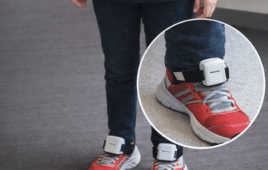
A photo of the wearable gait sensors used in the study.
Yale-led study finds wearable sensors match motion capture for gait tracking in knee osteoarthritis
“mdo
EXPAND YOUR KNOWLEDGE AND STAY CONNECTED
Get the latest medical device business news, application and technology trends.

DeviceTalks Weekly

See More >

MDO Digital Edition

Digital Edition

Subscribe to Medical Design & Outsourcing. Bookmark, share and interact with the leading medical design engineering magazine today.

MEDTECH 100 INDEX

Medtech 100 logo
Market Summary > Current Price
The MedTech 100 is a financial index calculated using the BIG100 companies covered in Medical Design and Outsourcing.

New MedTech Resource

Medical Tubing

MassDevice

Mass Device

The Medical Device Business Journal. MassDevice is the leading medical device news business journal telling the stories of the devices that save lives.

Visit Website
MDO ad
Medical Design and Outsourcing
  • MassDevice
  • DeviceTalks
  • MedTech100 Index
  • Medical Tubing + Extrusion
  • Medical Design Sourcing
  • Drug Delivery Business News
  • Drug Discovery & Development
  • Pharmaceutical Processing World
  • R&D World
  • About Us/Contact
  • Advertise With Us
  • Subscribe to Print Magazine
  • Subscribe to our E-Newsletter
  • Listen to our Weekly Podcasts
  • Join our DeviceTalks Tuesdays Discussion

Copyright © 2026 Arrowfly, LLC. All Rights Reserved. The material on this site may not be reproduced, distributed, transmitted, cached or otherwise used, except with the prior written permission of Arrowfly LLC. Site Map | Privacy Policy | RSS

Search Medical Design & Outsourcing

  • Home
  • Medical Device Business
    • Mergers & Acquisitions
    • Financial
    • Regulatory
  • Applications
    • Cardiovascular
    • Devices
    • Imaging
    • Implantables
    • Medical Equipment
    • Orthopedic
    • Surgical
  • Technologies
    • Supplies and Components Index
    • Contract Manufacturing
    • Components
    • Electronics
    • Extrusions
    • Materials
    • Motion Control
    • Prototyping
    • Pumps
    • Tubing
  • MedTech Resources
    • Medtech Events in 2026
    • The 2026 Medtech Big 100
    • Medical Device Handbook
    • MedTech 100 Index
    • Subscribe to Print Magazine
    • DeviceTalks
    • Digital Editions
    • eBooks
    • Educational Assets
    • Manufacturer Search
    • Podcasts
    • Webinars / Digital Events
    • Whitepapers
    • Voices
    • Views
    • Video
  • 2026 Leadership
    • 2025 Winners
    • 2024 Winners
    • 2023 Winners
    • 2022 Winners
    • 2021 Winners
  • Women in Medtech
  • Advertise
  • Subscribe