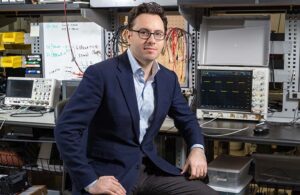
Dr. Stavros Zanos is a professor at the Institute of Bioelectronic Medicine at the Feinstein Institutes and leader of the vagus nerve project. [Photo courtesy of Feinstein Institutes for Medical Research]
The vagus nerve controls autonomic nervous system functions such as heart rate, breathing, digestion, immune response and inflammation. Currently, autonomic nervous system neuromodulation (ANS-NM) is proven to treat conditions in the brain like epilepsy, depression and post-stroke rehabilitation.
“ANS-NM works via different mechanisms that are initiated by the electrical activation of vagal fibers,” Zanos said in a Medical Design & Outsourcing interview. “Those mechanisms include changes in the excitability of brain circuits, mechanisms of neuroplasticity, and suppression of inflammation in joints.”
Watch on-demand: The 2026 MDO Min-Vasive Medtech webinar series
Zanos and other researchers are exploring precision autonomic neuromodulation as a therapeutic option for conditions outside the brain and in the inflammatory realm, like rheumatoid arthritis, heart failure, pulmonary hypertension, arrhythmias, diabetes and obesity. The human vagus nerve map could provide the information to develop therapies for patients in need.
After publishing the first dataset from the human vagus nerve project, Zanos explained to MDO how medical device developers could innovate with his first-of-its-kind findings.
The following has been lightly edited for space and clarity.
MDO: What’s the big advance that makes this anatomical map possible?
Zanos: “There was not a single big advance but a few that took place around the same time from our team. Perhaps the biggest advance was that we developed the capability to perform imaging at fine detail and at a fast pace, a combination that is difficult to accomplish. This allowed us to image many nerves within a short period of time at unprecedented detail.”
What medtech opportunities for device developers could arise from the map? What should they look for while developing potential therapies?
Zanos: “I envision the design and fabrication of new generations of vagus nerve stimulation (VNS) devices that will take advantage of the unique anatomical organization of the human vagus nerve to deliver more targeted, organ-selective therapies. An example would be VNS that specifically targets the many smaller sensory fibers (counting >80% of the total fibers) that are currently outside the reach of currently used stimulators. Activating those fibers may open new indications for VNS, due to the involvement of those fibers in many autonomic reflexes implicated in the pathophysiology and pathogenesis of numerous diseases.
“The spatial organization of fibers of different functional subtypes within single nerves, and the similarities and differences across subjects, would be a major source of clinically relevant data for the design of safer and more consistently effective neuromodulation devices.”
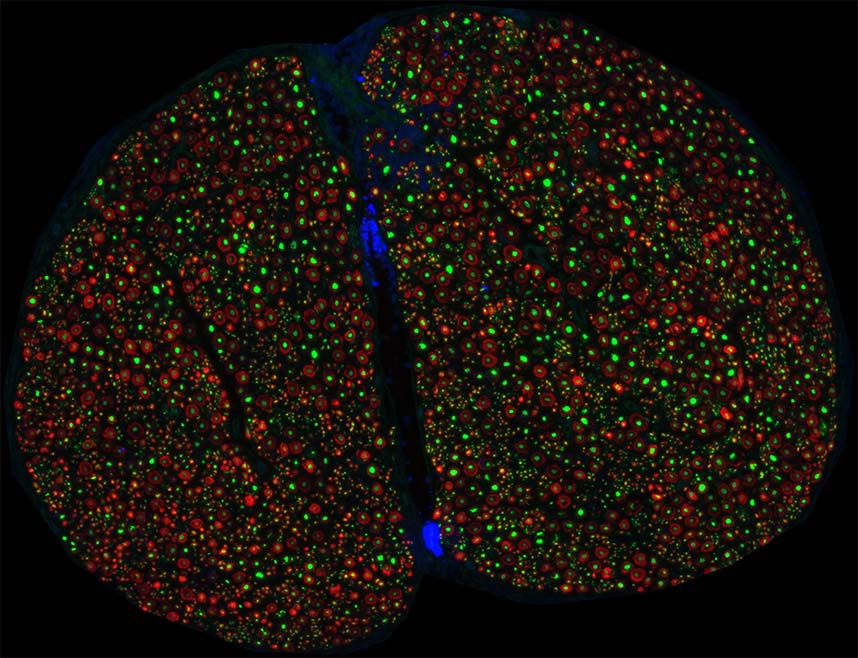
With the comprehensive map, researchers could gain insight into how the vagus nerve (pictured here) communicates with organs and impacts health and disease through the organization of fascicles and fibers. [Image courtesy of Naveen Jayaprakash, Nicole Carpentiere, Parisa Saleknezhad and Khaled Qanud]
What have you learned about neuromodulation throughout your career that could help device developers?
Zanos: “During preclinical and clinical studies, we tend to focus our attention on specific desired and side effects of neuromodulation. ANS-NM therapies elicit a multitude of responses from specific organs, the brain and the immune system at different time scales. Medical device developers should try to gather as much data as feasible on those responses and integrate this knowledge in the therapies they develop.”
Where is neuromodulation headed and what technologies are needed to get it there?
Zanos: “Therapy personalization has been gathering steam for years and for good reason: It is likely to improve outcomes in some conditions. The choice of biomarkers, and accordingly of the elements of personalization whether it is electrode design or stimulation parameters, will be important. At the same time, there may be opportunities to limit the parameter space by taking into account inherent anatomical and physiological similarities between subjects. Both applied and more fundamental studies in neuromodulation devices and in the targeted neural structures will be critical.”