Medical Design and Outsourcing

  • Home
  • Medical Device Business
    • Mergers & Acquisitions
    • Financial
    • Regulatory
  • Applications
    • Cardiovascular
    • Devices
    • Imaging
    • Implantables
    • Medical Equipment
    • Orthopedic
    • Surgical
  • Technologies
    • Supplies and Components Index
    • Contract Manufacturing
    • Components
    • Electronics
    • Extrusions
    • Materials
    • Motion Control
    • Prototyping
    • Pumps
    • Tubing
  • MedTech Resources
    • Medtech Events in 2026
    • The 2025 Medtech Big 100
    • Medical Device Handbook
    • MedTech 100 Index
    • Subscribe to Print Magazine
    • DeviceTalks
    • Digital Editions
    • eBooks
    • Educational Assets
    • Manufacturer Search
    • Podcasts
    • Webinars / Digital Events
    • Whitepapers
    • Voices
    • Views
    • Video
  • 2026 Leadership
    • 2025 Winners
    • 2024 Winners
    • 2023 Winners
    • 2022 Winners
    • 2021 Winners
  • Women in Medtech
  • Advertise
  • Subscribe

Wristband Sensors Tested on ER Patients Who Receive Pain Medication

June 23, 2016 By Journal of Medical Toxicology

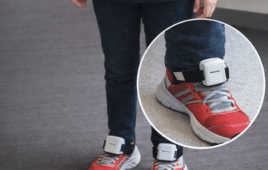
There is merit in looking at the use of wearable biosensors to detect whether opioid users stay focused on their rehabilitation programs, based on a preliminary study led by Stephanie Carreiro of the University of Massachusetts Medical School and reported in in Springer’s Journal of Medical Toxicology.

The team tested the use of wristband sensors worn by a group of patients in an emergency room who were receiving opioids for severe pain relief.

Non-invasive devices worn close to the body are becoming popular among other uses as health tracking tools. These small and user-friendly biosensors provide continuous data that can be stored and reviewed later, or be transmitted wirelessly to allow for real time review and analysis.

More data on physical changes and activity are, however, needed before such devices can be put into use as part of substance abuse treatment programs. Numerous studies are underway to determine the biometric profiles of people who are using opioids.

To this end, Carreiro’s team conducted preliminary research involving 30 emergency room patients. They were prescribed intravenous opioid analgesics to treat their acute pain. The particular medication and dose administered to each patient was decided on by the attending physician.

The patients agreed to wear a wristband biosensor, which allowed the researchers to detect how the patients’ bodies reacted to the dosages. The patients were asked how often in the past they had used opioids, and their medical records were also investigated.

Heavy users were classified as those who chronically used opioids daily, were part of an opioid maintenance therapy program (involving for instance the drugs methadone and buprenorphine) or abused the drug.

All in all, it was possible to detect when an opioid was administered, based on the readings of the biosensor. It picked up that patients moved less after they received the drug, and that their skin temperature also rose. These are among the ways in which the body is known to react to an opioid.

Distinguishable features were also found between heavy and non-heavy opioid users, and between different age groups. In particular, there was a greater decrease in the so-called short amplitude movements of heavy users and older patients, which means that they became less fidgety.

“The patterns may be useful to detect episodes of opioid use in real time,” according to Carreiro, who says that more work is needed before wearable biosensors can become part of treatment programs. “The ability to identify instances of opioid use and opioid tolerance in real time could for instance be helpful to manage pain or during substance abuse treatment.”

Biosensors could help monitor developing opioid tolerance and identify people who are at risk for substance abuse or addiction. They could also be applied to opioid addicts in rehabilitation to detect whether they are relapsing.

Such relapse data can either be reviewed retrospectively or transmitted wirelessly to trigger an intervention (for example to alert a family member or a community support system).

Related Articles Read More >

A photo of the Paradromics Connexus brain-computer interface on a fingertip.
How Paradromics designed its Connexus brain-computer interface system
A photo of the wearable gait sensors used in the study.
Yale-led study finds wearable sensors match motion capture for gait tracking in knee osteoarthritis
An illustration of CSF flow through the brain.
MIT researchers find pink noise can encourage CSF flow during sleep
A photo of an Oura Ring 5.
Oura discloses pay packages for top executives ahead of IPO
“mdo
EXPAND YOUR KNOWLEDGE AND STAY CONNECTED
Get the latest medical device business news, application and technology trends.

DeviceTalks Weekly

See More >

MDO Digital Edition

Digital Edition

Subscribe to Medical Design & Outsourcing. Bookmark, share and interact with the leading medical design engineering magazine today.

MEDTECH 100 INDEX

Medtech 100 logo
Market Summary > Current Price
The MedTech 100 is a financial index calculated using the BIG100 companies covered in Medical Design and Outsourcing.

New MedTech Resource

Medical Tubing

MassDevice

Mass Device

The Medical Device Business Journal. MassDevice is the leading medical device news business journal telling the stories of the devices that save lives.

Visit Website
MDO ad
Medical Design and Outsourcing
  • MassDevice
  • DeviceTalks
  • MedTech100 Index
  • Medical Tubing + Extrusion
  • Medical Design Sourcing
  • Drug Delivery Business News
  • Drug Discovery & Development
  • Pharmaceutical Processing World
  • R&D World
  • About Us/Contact
  • Advertise With Us
  • Subscribe to Print Magazine
  • Subscribe to our E-Newsletter
  • Listen to our Weekly Podcasts
  • Join our DeviceTalks Tuesdays Discussion

Copyright © 2026 Arrowfly, LLC. All Rights Reserved. The material on this site may not be reproduced, distributed, transmitted, cached or otherwise used, except with the prior written permission of Arrowfly LLC. Site Map | Privacy Policy | RSS

Search Medical Design & Outsourcing

  • Home
  • Medical Device Business
    • Mergers & Acquisitions
    • Financial
    • Regulatory
  • Applications
    • Cardiovascular
    • Devices
    • Imaging
    • Implantables
    • Medical Equipment
    • Orthopedic
    • Surgical
  • Technologies
    • Supplies and Components Index
    • Contract Manufacturing
    • Components
    • Electronics
    • Extrusions
    • Materials
    • Motion Control
    • Prototyping
    • Pumps
    • Tubing
  • MedTech Resources
    • Medtech Events in 2026
    • The 2025 Medtech Big 100
    • Medical Device Handbook
    • MedTech 100 Index
    • Subscribe to Print Magazine
    • DeviceTalks
    • Digital Editions
    • eBooks
    • Educational Assets
    • Manufacturer Search
    • Podcasts
    • Webinars / Digital Events
    • Whitepapers
    • Voices
    • Views
    • Video
  • 2026 Leadership
    • 2025 Winners
    • 2024 Winners
    • 2023 Winners
    • 2022 Winners
    • 2021 Winners
  • Women in Medtech
  • Advertise
  • Subscribe