Supply chain disruptions happen, but having an ISO-certified partner can reduce the risks.
Qosina

(Image by Marcelo Leal on Unsplash)
To ensure the best patient care without interruption, some hospitals elect to manage their supply chain internally. While this may seem like a way to decrease steps between inventory shortage and replenishment, the burden of managing this huge, evolving product suite creates numerous supply chain challenges for hospitals.
Integration of merging healthcare facilities
The rapid consolidation of healthcare facilities creates a lag in merging systems. Newly joined facilities continue operating essentially as independent entities, although they are now under one parent organization. Keeping each facility’s supply chain independent misses the opportunity to take advantage of the scale economies on which the new, larger company had planned.
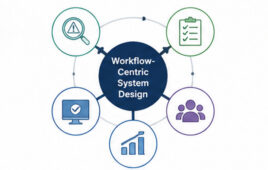
Poor workflow design
Having portions of a facility’s supply chain disconnected leads to inefficiency due to poor workflow. Operating multiple supply chain strategies for the same products can create redundancy and introduce the simultaneous risk of over-constraining some processes and underspecifying others. Despite these risks, 78% of hospital workers (surveyed in 2017 by Cardinal Health) still manage their supply chain manually.
Insufficient healthcare IT
Providing decision-makers with supply chain data helps quantify the opportunity of integration. Simply by tracking and analyzing data, healthcare facilities’ supply-chain costs tend to decrease.
Cost
After compromised patient care, cost is the next-most prevalent indicator of a non-resilient supply chain. Emergency overnight shipments and fees associated with scarce availability of a device are examples of excessive costs due to inefficiently managed inventory.
Modular contracting with suppliers
An increasingly popular option to allow the supplier network to absorb the ebbs and flows of demand is to build a modular network of contract suppliers, each of which can be turned on and off. Doing so lets a hospital adopt a scalable supplier network with short order periods.
In principle, this limits exposure to risk if the supplier is not a good fit. However, a Band-Aid solution to a variation in part demand is not usually an optimal solution. Because switching suppliers typically occurs in emergency situations, it may not be possible to fully validate a new supplier.
The external option
Ideally, hospitals will assemble a base of reputable firms that offer quick time-to-market, low cost, and state-of-the-art systems. This value-based model aligns the supply partner’s goals exactly with the customer’s objectives. Having a partner with certified expertise to manage your entire supply chain will help move the hospital toward an ideal supply chain model. Taking the modular approach will take the burden off of the end-user while using the cohesiveness of a single-party coordinator.
Look for partner certification
Not all supply partners are created equal. A properly certified partner is more likely to deliver on commitments and maintain your reputation. ISO 22301:2012 (Business Continuity Management System) was written to protect companies from risks stemming from unplanned supply chain disruptions. Teaming with a certified supply chain partner will ensure the proper level of training for a team to quickly recover from a breakdown or product delivery flow emergency.
Supply-chain disruptions happen, no matter what, whether for issues with products or those linked to timing or availability. A partner that complies with ISO 22031 offers a lower likelihood of such a failure. That partner maintains a comprehensive list of mandatory documentation and information, primarily focused on communication channels, risk assessments, business case impacts, data and results of go-and-see monitoring activities.
Achieving certification — including standard procurement, training, documentation management software and internal/ external auditing — require significant time and cost investments. An ISO 22301-certified partner has committed to the discipline needed to ensure the supply chain solution is as secure and smooth as possible.