Medical Design and Outsourcing

  • Home
  • Medical Device Business
    • Mergers & Acquisitions
    • Financial
    • Regulatory
  • Applications
    • Cardiovascular
    • Devices
    • Imaging
    • Implantables
    • Medical Equipment
    • Orthopedic
    • Surgical
  • Technologies
    • Supplies and Components Index
    • Contract Manufacturing
    • Components
    • Electronics
    • Extrusions
    • Materials
    • Motion Control
    • Prototyping
    • Pumps
    • Tubing
  • MedTech Resources
    • Medtech Events in 2026
    • The 2026 Medtech Big 100
    • Medical Device Handbook
    • MedTech 100 Index
    • Subscribe to Print Magazine
    • DeviceTalks
    • Digital Editions
    • eBooks
    • Educational Assets
    • Manufacturer Search
    • Podcasts
    • Webinars / Digital Events
    • Whitepapers
    • Voices
    • Views
    • Video
  • 2026 Leadership
    • 2025 Winners
    • 2024 Winners
    • 2023 Winners
    • 2022 Winners
    • 2021 Winners
  • Women in Medtech
  • Advertise
  • Subscribe

Nature-inspired biomimetic stimulation powers next-gen neuroprosthetics

February 22, 2024 By Sean Whooley

ETH Zurich bio-inspired neuroprosthesis neuroprosthetics Restoring natural sensory feedback results in functional and cognitive benefits for leg prosthesis users

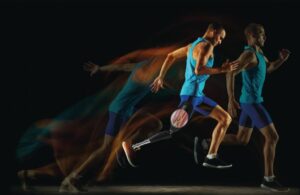
Restoring natural sensory feedback results in functional and cognitive benefits for leg prosthesis users. The team at ETH Zurich applied this in neuroprosthetics. [Image courtesy of Pietro Comaschi/ETH Zurich]

A team of researchers at ETH Zurich found evidence that neuroprosthetics work better when they use signals that are inspired by nature.

The team, working under Professor Stanisa Raspopovic at the ETH Zurich Neuroengineering Lab, garnered attention years ago with prosthetic legs that enabled amputees to feel sensations from the artificial body part for the first time, according to ETH. This device connected to the sciatic nerve in the thigh through implanted electrodes. The electrical connection enabled the neuroprosthesis to communicate with the patient’s brain.

With this connection, the neuroprosthetics could relay information on the constant changes in pressure detected on the prosthetic foot’s sole when walking. That gave the test subjects more confidence in their prosthesis and enabled them to walk faster on challenging terrains.

In a recently published paper, Raspopovic and his team used the example of their leg prostheses to highlight the benefits of using naturally inspired, biomimetic stimulation to develop the next generation of neuroprosthetics.

Using neuroprosthetics to simulate the activation of nerves in the sole

To generate biomimetic signals, Natalija Katic – a doctoral student in Raspopovic’s research group – developed a computer model called FootSim. Katic used data collected by collaborators in Canada to develop this model. They recorded the activity of natural receptors — mechanoreceptors — in the sole of the foot while touching different points on the feet of volunteers with a vibrating rod.

The model simulates the behavior of those receptors on the sole of the foot. It then generates neural signals that shoot up the nerves in the leg toward the brain. This occurs from the moment the heel hits the ground and the body’s weight begins to shift toward the outside of the foot before the toes push off the ground, ready for the next step.

“Thanks to this model, we can see how semsory receptors from the sole, and the connected nerves, behave during walking or running, which is experimentally impossible to measure” Katic said.

Giacomo Valle – a postdoc in Raspopovic’s research group – worked with colleagues in Germany, Serbia and Russia on experiments with cats, whose nervous system processes movement in a similar way to that of humans, in an effort to understand how biomimetic signals correspond to the ones emitted by real neurons. The experiments took place in 2019 at the Pavlov Institute of Physiology in St. Petersburg and were carried out in accordance with the relevant European Union guidelines.

Researchers implanted electrodes, connecting some to the nerve in the leg and some to the spinal cord. When applying pressure to the bottom of the cat’s paw, they evoked the natural neural response that occurs when a cat takes a step. They saw the peculiar pattern of activity in the spinal cord that resembled patterns elicited when the researchers stimulated the leg nerve with biomimetic signals.

However, they saw stimulation of the sciatic nerve in the cat elicit a much different pattern compared to the spine.

“This clearly shows that the commonly used stimulation methods cause the neural networks in the spine to be flooded with information,” Valle said. “This information overload could be the reason for the unpleasant sensations or paraesthesia reported by some users of neuroprosthetics,” Raspopovic adds.

Learning how the nervous system works here

In a clinical trial with leg amputees, the researchers showed the superiority of biomimetic stimulation compared to time-constant stimulation. Their work showed how the signals that mimicked nature produced better results.

Not only could test subjects climb steps faster, but they made fewer mistakes in a task requiring them to climb the same steps while spelling words backward.

“Biomimetic neurostimulation allows subjects to concentrate on other things while walking,” Raspopovic said, “so we concluded that this type of stimulation is more naturally processed and less taxing on the brain.”

Raspopovic believes the new findings highlight the need to move away from unnatural, time-constant stimulation and toward biomimetic signals. This applies to a number of other aids and devices, he says, including spinal implants and electrodes for brain stimulation.

“We need to learn the language of the nervous system,” he said. “Then we’ll be able to communicate with the brain in ways it really understands.”

About The Author

Avatar photo
Sean Whooley

Sean Whooley is an associate editor who mainly produces work for MassDevice, Medical Design & Outsourcing and Drug Delivery Business News. He received a bachelor's degree in multiplatform journalism from the University of Maryland, College Park. You can connect with him on LinkedIn or email him at [email protected].

Related Articles Read More >

An image of Metacarpal's GEM prosthetic hand.
Prosthetics developer Metacarpal seizes on reliability
A patient stacks wooden blocks using a DEKA advanced prosthetic arm and hand.
Next-gen prosthetics tech developer Blue Arbor hits more milestones
Katzschmann-Filippi_robotic-arm_Soft Robotics Lab_ETH Zurich
Biohybrid solutions could enhance medical robotics, implants
HP showcases breakthrough orthotics and prosthetics case studies
“mdo
EXPAND YOUR KNOWLEDGE AND STAY CONNECTED
Get the latest medical device business news, application and technology trends.

DeviceTalks Weekly

See More >

MDO Digital Edition

Digital Edition

Subscribe to Medical Design & Outsourcing. Bookmark, share and interact with the leading medical design engineering magazine today.

MEDTECH 100 INDEX

Medtech 100 logo
Market Summary > Current Price
The MedTech 100 is a financial index calculated using the BIG100 companies covered in Medical Design and Outsourcing.

New MedTech Resource

Medical Tubing

MassDevice

Mass Device

The Medical Device Business Journal. MassDevice is the leading medical device news business journal telling the stories of the devices that save lives.

Visit Website
MDO ad
Medical Design and Outsourcing
  • MassDevice
  • DeviceTalks
  • MedTech100 Index
  • Medical Tubing + Extrusion
  • Medical Design Sourcing
  • Drug Delivery Business News
  • Drug Discovery & Development
  • Pharmaceutical Processing World
  • R&D World
  • About Us/Contact
  • Advertise With Us
  • Subscribe to Print Magazine
  • Subscribe to our E-Newsletter
  • Listen to our Weekly Podcasts
  • Join our DeviceTalks Tuesdays Discussion

Copyright © 2026 Arrowfly, LLC. All Rights Reserved. The material on this site may not be reproduced, distributed, transmitted, cached or otherwise used, except with the prior written permission of Arrowfly LLC. Site Map | Privacy Policy | RSS

Search Medical Design & Outsourcing

  • Home
  • Medical Device Business
    • Mergers & Acquisitions
    • Financial
    • Regulatory
  • Applications
    • Cardiovascular
    • Devices
    • Imaging
    • Implantables
    • Medical Equipment
    • Orthopedic
    • Surgical
  • Technologies
    • Supplies and Components Index
    • Contract Manufacturing
    • Components
    • Electronics
    • Extrusions
    • Materials
    • Motion Control
    • Prototyping
    • Pumps
    • Tubing
  • MedTech Resources
    • Medtech Events in 2026
    • The 2026 Medtech Big 100
    • Medical Device Handbook
    • MedTech 100 Index
    • Subscribe to Print Magazine
    • DeviceTalks
    • Digital Editions
    • eBooks
    • Educational Assets
    • Manufacturer Search
    • Podcasts
    • Webinars / Digital Events
    • Whitepapers
    • Voices
    • Views
    • Video
  • 2026 Leadership
    • 2025 Winners
    • 2024 Winners
    • 2023 Winners
    • 2022 Winners
    • 2021 Winners
  • Women in Medtech
  • Advertise
  • Subscribe