Medical Design and Outsourcing

  • Home
  • Medical Device Business
    • Mergers & Acquisitions
    • Financial
    • Regulatory
  • Applications
    • Cardiovascular
    • Devices
    • Imaging
    • Implantables
    • Medical Equipment
    • Orthopedic
    • Surgical
  • Technologies
    • Supplies and Components Index
    • Contract Manufacturing
    • Components
    • Electronics
    • Extrusions
    • Materials
    • Motion Control
    • Prototyping
    • Pumps
    • Tubing
  • MedTech Resources
    • Medtech Events in 2026
    • The 2026 Medtech Big 100
    • Medical Device Handbook
    • MedTech 100 Index
    • Subscribe to Print Magazine
    • DeviceTalks
    • Digital Editions
    • eBooks
    • Educational Assets
    • Manufacturer Search
    • Podcasts
    • Webinars / Digital Events
    • Whitepapers
    • Voices
    • Views
    • Video
  • 2026 Leadership
    • 2025 Winners
    • 2024 Winners
    • 2023 Winners
    • 2022 Winners
    • 2021 Winners
  • Women in Medtech
  • Advertise
  • Subscribe

Stryker leaders talk medtech trends at DeviceTalks Boston: ‘If you’re slow, you’re going to lose’

May 11, 2022 By Jim Hammerand

The first day of DeviceTalks Boston closed with a panel of Stryker (NYSE:SYK) executives discussing new tools, technologies and strategies in medtech.

Digital VP Tracy Robertson, Digital, Robotics, and Enabling Technologies President Robert Cohen and Surgical Technologies VP of Digital Innovation Siddarth Satish offered their thoughts on industry trends in healthcare and at the Kalamazoo, Michigan–based orthopedic device giant.

It was only the first question posed to the panel, which also featured Dave Lively — SVP of Product Management, Vocera (now part of Stryker) — and was moderated by Orthopaedics and Spine Group President Spencer Stiles. Watch for more from the discussion at Medical Design & Outsourcing.

The following has been lightly edited for space and clarity.

A portrait of Stryker executive Tracy Robertson

Tracy Robertson is VP of Digital at Stryker. [Photo courtesy of Stryker]

Tracy Robertson: “The one that I think about the most is in the area of product security and privacy. … As we continue to evolve and expand our digital offerings, our ecosystem of customers is expanding. We’re spending more time with IT, legal, C-suite, security, and one of their top concerns is product security and privacy. Unfortunately, healthcare is plagued with constant cyberattacks and ransomware attacks and it is not slowing down. More than any other industry, they are at the top. One of the reasons for that is patient data is worth a lot of money, more so than other data, private data such as social security or credit card data. What we’re going to see there — and we already are — is a lot more government regulation, which is really going to fundamentally change how we operate and design products through product life cycle development.”

A portrait of Stryker executive Robert Cohen

Robert Cohen is president of Stryker’s Digital, Robotics, and Enabling Technologies organization. [Photo courtesy of Stryker]

Cohen: “This is the most exciting time. …  Look at some of the disruption in the marketplace, and look at where these disruptors are coming from. These disruptors are coming from not necessarily medtech, they’re coming from many, many different places, and we have to pay attention to that. We pay attention to that. Stryker’s no longer just a metal-on-plastic-in-a-box-type company. We look now for what’s meaningful beyond that, all the added parts. For instance, improved outcomes. Now industry is asked to contribute with data to help a physician maybe personalize medicine for a specific patient, to understand what to do with an implant, where to put an implant. What about quality of care, quality dashboards, safety, patient safety, fall detection, all those kind of things? Those are in the procedures that Stryker actually participates in. And then we can get into economics, hospital efficiency, inventory efficiency, and it’s remarkable. Just think of the four big companies right now that you would not necessarily have thought would be influencing us in medtech. Look at Algebra and Google and all that they’re doing with electronic health records. Look at how interoperability and things like that are now partially solved, but electronic health records can now be put into databases and be queried. Look at what Amazon’s doing. Everyone here should think that Amazon is going to disrupt the supply chain and distribution models. That may actually help us from an inventory management perspective. Look at what Apple’s done with an iPhone and wearables data that we did not have to define ourselves, but data that we have access to, we can incorporate it into the big picture. Look at things like Microsoft cloud services. Now hospitals have access to cloud services and people to help them understand it. And then look at some of the small company disruptors, just focus on diagnostics for a second. It’s remarkable what some of these small companies have done with ultrasound imaging, MRI, CT scans, and the insights they’ve got with artificial intelligence. So companies — like Stryker — doesn’t matter how you grew, been around for 80 years. If you’re slow, you’re going to lose. You have to look at product development in completely different ways. You cannot have this waterfall effect of development that we’re typically used to for decades in this industry. We as an industry have to look at partnerships with hospitals differently, partnerships with digital companies differently. We don’t have to do it all inside. The key performers have to figure out which companies to partner with, what to go after first. And agility is an absolute must. We need to accelerate and we need to move fast, and we’ve formed within Stryker ways to do that.

A portrait of Stryker executive Siddarth Satish

Siddarth Satish is VP of Digital Innovation for the Surgical Technologies business at Stryker.[Photo courtesy of Stryker]

Satish: “[At Stryker] you have access to 80, 90 devices that all are collecting very interesting types of data. There are many, many cameras and other visual sources of data. … Connect these multiple devices across the continuum of care, and you can start to mine those data feeds that are coming off those devices. Processing is now possible to the point where you can deploy these computer-vision/machine-learning algorithms in very different ways. And there really will be a little bit of AI almost in every part of our business. … My bet is that AI is going to be a foundational piece of technology in medicine for the next several decades. It’s just going to take over more and more, initially as clinical decision support. But ultimately you’re going to start to see parts of these procedures be automated in ways that truly reduce variability, improve outcomes and reduce costs.”

Executive Editor Chris Newmarker contributed to this report.

You may also like:


  • Medtronic’s VC leader discusses risk, returns, strategy and an ‘ugly…
  • Harvard Science and Engineering Complex SEC SEAS Harvard John A. Paulson School of Engineering and Applied Sciences
    Here’s where Harvard’s engineering dean sees medtech research going

About The Author

Jim Hammerand

Jim Hammerand is the managing editor of Arrowfly's Medical Design & Outsourcing, where he leads coverage of medtech innovation, design, engineering and manufacturing. He also reports breaking news at Arrowfly's MassDevice and contributes to our DeviceTalks podcasts and live events. Hammerand has more than two decades of journalism experience spanning newspapers, magazines, websites, live events, radio and TV news. For nearly a decade, Hammerand reported and edited business news for American City Business Journals as a reporter and digital editor at the Minneapolis/St. Paul Business Journal and then as managing editor of the Puget Sound Business Journal in Seattle. He holds degrees in journalism and management from the University of Minnesota and has won journalism awards from the Society of Professional Journalists, American Society of Business Publication Editors, and Trade, Association, Business Publications International. Connect with him on LinkedIn or by email at [email protected].

Related Articles Read More >

The most innovative medical devices of 2026
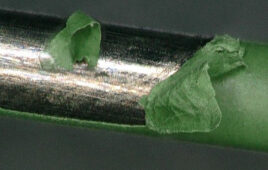
A photo of PTFE coating delamination.
Passing the tape test doesn’t mean your coating is reliable
An illustration showing Corcym's Memo 4D Curve's laser-cut nitinol core.
Laser-cut nitinol and a layered design let these cardiac implants flex
A photo of J&J MedTech SVP and Global Head of Digital Shan Jegatheeswaran.
Where Johnson & Johnson sees opportunity in surgical intelligence
“mdo
EXPAND YOUR KNOWLEDGE AND STAY CONNECTED
Get the latest medical device business news, application and technology trends.

DeviceTalks Weekly

See More >

MDO Digital Edition

Digital Edition

Subscribe to Medical Design & Outsourcing. Bookmark, share and interact with the leading medical design engineering magazine today.

MEDTECH 100 INDEX

Medtech 100 logo
Market Summary > Current Price
The MedTech 100 is a financial index calculated using the BIG100 companies covered in Medical Design and Outsourcing.

New MedTech Resource

Medical Tubing

MassDevice

Mass Device

The Medical Device Business Journal. MassDevice is the leading medical device news business journal telling the stories of the devices that save lives.

Visit Website
MDO ad
Medical Design and Outsourcing
  • MassDevice
  • DeviceTalks
  • MedTech100 Index
  • Medical Tubing + Extrusion
  • Medical Design Sourcing
  • Drug Delivery Business News
  • Drug Discovery & Development
  • Pharmaceutical Processing World
  • R&D World
  • About Us/Contact
  • Advertise With Us
  • Subscribe to Print Magazine
  • Subscribe to our E-Newsletter
  • Listen to our Weekly Podcasts
  • Join our DeviceTalks Tuesdays Discussion

Copyright © 2026 Arrowfly, LLC. All Rights Reserved. The material on this site may not be reproduced, distributed, transmitted, cached or otherwise used, except with the prior written permission of Arrowfly LLC. Site Map | Privacy Policy | RSS

Search Medical Design & Outsourcing

  • Home
  • Medical Device Business
    • Mergers & Acquisitions
    • Financial
    • Regulatory
  • Applications
    • Cardiovascular
    • Devices
    • Imaging
    • Implantables
    • Medical Equipment
    • Orthopedic
    • Surgical
  • Technologies
    • Supplies and Components Index
    • Contract Manufacturing
    • Components
    • Electronics
    • Extrusions
    • Materials
    • Motion Control
    • Prototyping
    • Pumps
    • Tubing
  • MedTech Resources
    • Medtech Events in 2026
    • The 2026 Medtech Big 100
    • Medical Device Handbook
    • MedTech 100 Index
    • Subscribe to Print Magazine
    • DeviceTalks
    • Digital Editions
    • eBooks
    • Educational Assets
    • Manufacturer Search
    • Podcasts
    • Webinars / Digital Events
    • Whitepapers
    • Voices
    • Views
    • Video
  • 2026 Leadership
    • 2025 Winners
    • 2024 Winners
    • 2023 Winners
    • 2022 Winners
    • 2021 Winners
  • Women in Medtech
  • Advertise
  • Subscribe