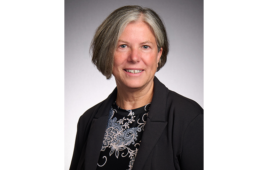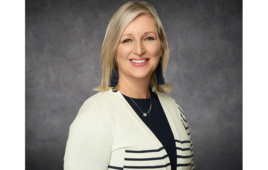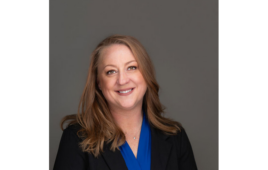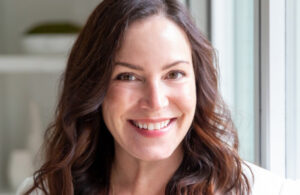
Medtronic Enabling Technologies U.S. Sales VP Melaine DiLuzio [Photo courtesy of Medtronic]
The world’s largest medical device company puts field and clinical teams inside the operating room so “we don’t drop something off in a hospital and then it becomes a coat hanger,” said Melaine DiLuzio, VP of U.S. sales for enabling technologies at Medtronic.
Over season two of the DeviceTalks Women in MedTech podcast, DiLuzio joined former Medtronic Structural Heart and Aortic SVP and President Nina Goodheart, Edwards Lifesciences Public Affairs Corporate VP Sarah Huoh, Biolinq Advanced Sensor Technologies VP Rebecca Gottlieb, Plexāā Chief Operating Officer Gaele Lalahy, and Astrin Biosciences Chief Marketing Officer Jaime LaMontagne in identifying a critical gap between a device that clears and a device that gets used.
These conversations kept coming back to the same three tests. Pass all three and a cleared device becomes a used device.
Test 1: Did you ask the people who have to use the device?
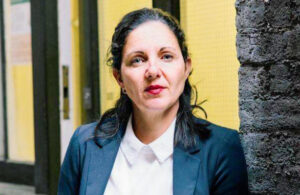
Plexāā Chief Operating Officer Gaele Lalahy [Photo courtesy of Plexāā]
“The first thing I did is gathered patients,” Lalahy said. “And we asked them, ‘What do you want? What do you need right now?’ We spent so much time immersing ourselves in their world to understand.”
Taking it a step further at the breast cancer prehabilitation tech developer, she said, “we’re very proud of having a patient champion in our senior executive team.”
Plexāā Patient Champion Carly Moussa is a breast cancer survivor, and “no big decision is ever made until we ask Carly,” Lalahy said.
Adding to Lalahy’s point, Huoh described the patient engagement teams she leads at Edwards asking nearly identical questions: “What would you have liked to have known? What would you have as a resource?”
And it’s not just talk.
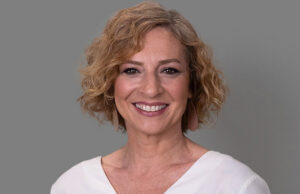
Biolinq Advanced Sensor Technologies VP Rebecca Gottlieb [Photo courtesy of Biolinq]
Those conversations helped inform the needle-free glucose sensing devices that Biolinq now ships. The help patients with type 2 diabetes manage medications, diet, and exercise, “we have this really unique user interface giving people a range guidance,” Gottlieb said. “We’re saying: You’re in range or you’re not in range.”
Patients are half the question. The device also has to survive the person holding it in the operating room.
DiLuzio, who came up through the operating room herself, names the OR’s routine as where adoption breaks down.
“I really think it’s workflow, said DiLuzio. “If we launch something that requires a surgeon or an OR to completely abandon their existing workflow and adopt a completely new workflow, those technologies fail.”
Not just underperform but fail. And DiLuzio has watched it happen often enough to say, “I can give you 200 examples of that particular problem.”
Test 2: Do you have the evidence everyone needs to say yes?

Former Medtronic SVP and Structural Heart and Aortic President Nina Goodheart [Photo courtesy of Medtronic]
Goodheart went looking for specific data nobody had and Medtronic ran the SMART (Small Annuli Randomized to Evolut or Sapien) trial to get it.
“We see a lot of people talking about health equity,” said Goodheart. “But we decided to do a study to give physicians the data so that they can go back and say, ‘This is a way I can treat my patients better.’”
Medtronic had to run the trial nobody had run. Plexāā had to prove the mechanism first. Plexāā founder Dr. Saahil Mehta conducted a full randomized control trial on patients in the U.K. and it “took him … about seven years to demonstrate the benefit of supraphysiological preconditioning on wound healing,” said Lalahy.
The second yes is financial, and two people hold it.
“If there isn’t going to be a Medicare payment strategy or the hospitals don’t have a way to actually cover this, patients still won’t get the access,” Huoh said.
Adding to Huoh’s point, DiLuzio described what a hospital administrator actually asks.
“It’s cost. What is the total cost of ownership? What’s my return on investment?” DiLuzio said. “There’s always a strong economic story that needs to come into play when administrators are making these decisions.”
The final yes comes from inside the device developer. Regulatory and legal reviewers decide which claims the evidence actually supports, and every claim has to trace back to a source document.
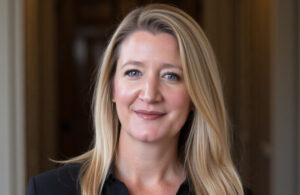
Astrin Biosciences Chief Marketing Officer Jaime LaMontagne [Photo courtesy of Astrin Biosciences]
Test 3: Are you still there after the device ships?
The first two tests can be passed once. The third needs to be passed every day the device remains in use.
For Gottlieb, that meant turning a daily habit into a standing structure for adoption at Medtronic Diabetes.
“There wasn’t a great way to get information from patients every day back to the engineering teams. So I created Inventure, which was to draw ideas out from anywhere in the company,” she said. “We had teams that would come from the helpline, from manufacturing, from quality groups … and would bring ideas forward.”
At Plexāā, staying starts before the device ever ships. “We’ve created a whole program pre- and post-operation,” Lalahy said.
That starts with picturing the patient preparing to use the device the night before surgery. Lalahy wanted them “to see a product that looks pristine, already charged, with all the information you need,” but didn’t want to leave that up to care providers.
“Instead of adding more burden to the hospital and asking them to rent the device to the patients and to charge it and please make sure it’s clean … we have a company in the U.S. make sure the product is tested, charged, looks new in a beautiful box with a return label, prepaid envelope and sent to the patient a week in advance,” she said. “… The hospital doesn’t have to worry. We’re taking care of the whole user experience ourselves just to make sure it’s the best it can be,.”
Medtronic makes the same calculation at scale, DiLuzio said.
“We are very invested in the utilization of the technology and making sure that we’re building programs in partnership with our customers,” she said. “But that’s really the starting point of where things go, and after that we’re committed to the program.”

Edwards Lifesciences Public Affairs Corporate VP Sarah Huoh [Photo courtesy of Edwards Lifesciences]
None of that happens because a device cleared. It happens because somebody decided the device wouldn’t become a coat hanger, and then decided it again, every day after.
Season two of Women in MedTech with Kayleen Brown, a DeviceTalks podcast that reverse-engineers the making of a medtech leader, is now available on all major podcast platforms.