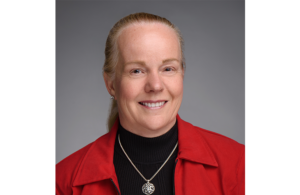
 Dawn Frazer is Senior Vice President of Quality & Regulatory at ARCH Medical Solutions (AMS) and serves as the General Manager of ARCH Medical Solutions – Seabrook facility. Over her 35+ years in the medical device industry, she has gained specialized expertise in all aspects of manufacturing, quality, and regulatory.
Rather than gaining experience by changing places of employment, in contrast, Dawn has expanded her knowledge by growing from within. She has held positions in two OEM businesses and one contract manufacturing company, all of which produced medical devices.
She started her career in Research and Development, stepped into Quality and Regulatory positions, migrated to Operations, and finally landed at General Manager. While some might say that the changing areas of responsibility can make one a “jack of all trades, master of none”, in Dawn’s case, it has given her an extensive knowledge base and the ability to look at problems as part of the big picture.
Under Dawn’s leadership, AMS Seabrook has optimized its organization structure, improved supervisory capabilities by promoting from within, implemented live business metrics and enhanced continuous improvement initiatives leading to a sizeable increase in the company’s EBIDTA and revenue per employee metrics.
She enjoys reviewing processes, identifying the weaknesses and overcoming them with solutions that are effective and efficient. A successful day is one in which an improvement is implemented for the business, its stakeholders, its employees or its customers.
What initially attracted you to the medtech industry? How has your perspective on the industry evolved over the course of your career?
As a young adult making decisions about my future career, I was drawn to the idea of becoming a doctor. I entered Biomedical Engineering School at Tulane due to the offering of an accelerated program. After meeting some medical students and residents while at Tulane, I decided that I was not well suited to be a medical professional. This was in part due to my intolerance for “blood” and second, due to my observation of the “crazy” hours worked by medical students. Instead, I turned to a Master’s degree in Engineering. This change led to my first job as a Biomedical Engineer at a division of Medtronic that designed and manufactured ECG / TENS / Defibrillation electrodes and associated cables. Working in R&D on patient products seemed to be the next best thing to direct patient contact.
As I entered the work force in the mid-1980s, the medical device industry was far less controlled and far less broad than it is today. The FDA had authority over Good Manufacturing Practices (GMP) for medical devices. Design Control requirements were written into the 1996 Quality System Regulation (QSR), which became effective on June 1, 1997 and then regulated Design Control requirements for medical devices. Now, in 2024, we see the FDA issuing the Quality Management System Regulation (QMSR) to harmonize the FDA’s cGMP regulatory framework with that used by other regulatory authorities. This latest move by the FDA works to promote consistency between international and US requirements by referencing the international standards specific for medical device quality management systems set by International Organization for Standardization (ISO), ISO 13485:2016.
I still enjoy the ability to produce products to serve patients in need. The increasing requirements that have come over the decades make this endeavor reliant on cost effective processes to be able to meet both the regulatory and business pressures.
As a seasoned professional in the industry, how do you envision the future of medtech? What emerging technologies or trends do you believe will have the most significant impact?
The future of medtech is incredibly promising with the emergence of machine automation, augmented reality, and additive manufacturing.
Inspection of medical devices would be easier with high-resolution advanced imaging inspection tools, such as CT scanners, identifying any defects or inconsistencies before medical devices reach the market, ensuring quality and reliability.
Augmented Reality is widely used for surgical procedures. The reality is that this will sooner or later be incorporated for use in medical device manufacturing, providing immersive training experiences for employees to interact with 3D models of medical devices and understand assembly processes. This would allow operators to compare real-time images of manufactured parts with digital models, thus helping to quickly identify deviations from design specifications.
Furthermore, the advent of additive manufacturing is transforming the way we approach medical devices. With the global market for 3D printed medical devices projected to reach $3.2 billion by 2026, we can expect a surge in the adoption of customized, patient-specific medical solutions. Patient-matched devices, tailored to the unique anatomy of patients, are now more achievable. This customization not only enhances the effectiveness of treatments but also reduces the risk of complications.
From your experience, what are some of the key challenges that medtech engineers are likely to face in the coming years? How can professionals in the industry prepare for and navigate these challenges effectively?
In the field of medical device manufacturing, I envision an increase in the complexity of device designs that will in turn suggest a more complex production process, quality requirements, and regulatory pathways within an economy that is constantly looking for lower priced products. The complexity of the medical devices is in juxtaposition with the price wanted to be paid for the technology. To be able to respond to the changing market needs, medtech businesses need to create an efficient environment for change.
According to a recent study by the U.S. Bureau of Labor Statistics, there’s a noticeable decline in the number of individuals pursuing careers in manufacturing. In contrast, there has been a rapid increase in manufacturing technologies. The question here is who will operate these machines? Who will train personnel on the usage of these amazing innovations? Manufacturing facilities should prepare for this potential exodus of labor by investing in comprehensive internal training programs at every level, so that employees are well-prepared to transition into their new roles after promotion.
Maintaining a robust quality system is essential to meet the high standards of regulatory compliance and operational excellence. However, it’s equally important to foster an environment where employees feel empowered to implement their ideas for process improvements. Our structured approach at AMS Seabrook ensures that we meet all necessary regulations, but we also value the input of every team member, recognizing that innovation often comes from those closest to the work.
By combining a strong quality system with a dynamic, employee-driven approach to innovation, we ensure that our operations remain agile and responsive to both industry changes and internal insights. In addition, as the regulatory landscape evolves, we keep ourselves informed of the applicable regulations to ensure patient safety. This approach allows us to not only meet current demands but also to stay ahead, driving sustainable advancements in both engineering and production.
As technology continues to advance rapidly, how do you think MedTech engineers can stay ahead of the curve and ensure they are equipped with the necessary skills and knowledge?
As devices become more complex with new features and tighter tolerances, it is crucial to prioritize training of the manufacturing labor force. Dedicating adequate time to train employees allows MedTech engineers to stay updated with current industry needs and necessary skills. This includes a high-level understanding of manufacturing equipment and the programming of machines. Once employees achieve the required level of expertise within their specialized areas, opportunities arise to expand their knowledge across other areas of the business. For instance, attending trade shows is one way that our engineers at AMS Seabrook stay up to date with new innovations in the industry.
From a broader perspective, how do you see the role of MedTech engineering in shaping the future of healthcare? What impact do you anticipate it will have on patient care and outcomes?
It is important to consider the purpose behind innovation within the MedTech space; to allow for patients to have timely access to quality and safe medical devices that improve patient outcomes. Manufacturing technology is currently driven by a market demand for products. This means that design engineers must build products to meet their customer’s needs, and therefore the patient’s needs. Currently, the need for robotic instrumentation and smaller devices is prominent in the MedTech industry. These new innovations allow for improved patient outcomes including reduced surgical site trauma. Since these devices are more complex and include tighter tolerances, MedTech engineers will play an extremely important role in determining the ways in which manufacturers can produce these devices to satisfy customer needs.
Considering the increasing importance of interdisciplinary collaboration, how do you think MedTech engineers can effectively collaborate with professionals from other fields, such as medicine and computer science, to drive innovation in the industry?
Collaboration between engineers and computer science professionals has allowed for several efficiency improvements at AMS Seabrook. One example of this is the display of real-time data metrics across key areas of the business that have been made available to all employees. In addition, our production queues are accessible to all employees to ensure that priorities are communicated between departments. Both developments have emphasized the importance of interdisciplinary collaboration as employees can visualize how different areas work together to achieve quality objectives and business goals.
It is equally as important for engineers to work with professionals in the medical field, particularly regulatory professionals. Regulatory changes in the manufacturing process can be cumbersome at times. The faster the manufacturer can react to industry regulations the quicker the innovated devices can reach the market. Collaboration between production engineers and regulatory professionals is necessary to allow for the production of safe and effective medical devices in a timely manner.
How do you think diversity and inclusion can contribute to the advancement of medtech engineering? How do you foster a culture of innovation within your team or organization?
AMS Seabrook welcomes individuals from varied backgrounds and experiences, opening doors to new perspectives and creative solutions that can revolutionize the industry. One current practice at Seabrook is to promote internally and acquire new and diverse talent to encourage an innovative environment. Diverse teams naturally generate a wider range of ideas, driving creative problem-solving.
Seabrook also fosters a culture of teamwork where employees across various departments within the organization are brought together to brainstorm solutions when new challenges are identified. This approach has been shown to lead to more creative solutions and greater commitment to the implementation plan.
A few key initiatives at Seabrook which were designed to foster a culture of innovation are as follows:
Culture of Advancement. Innovation thrives on the manufacturing floor where an open dialog, supported by data and feedback, is encouraged. By doing so, this allows AMS Seabrook to identify areas for enhancement without compromising quality. The balance between structure and flexibility promotes a culture of continuous improvement, where employees are not only encouraged but expected to contribute to refining processes.
Focus on Employee Training. We provide ongoing training opportunities for our employees to ensure that they are equipped with the skills necessary to meet the company’s evolving needs. Offering training to large groups—not just individuals—democratizes access to knowledge and promotes shared growth. This is critical for developing procedures and encouraging active participation in process reviews.
Hiring Beyond the Norm. We recruit employees from outside traditional medical device roles to bring fresh insights and skills to the team. Cross-industry hires can introduce methodologies or perspectives that haven’t yet been considered within medtech, further diversifying problem-solving approaches.
Transparent Communication & Feedback Loops. We also promote open communication, utilizing tools such as an electronic suggestion box, open-door policies, department meetings, and quarterly site-wide meetings. These channels provide employees with a voice and an opportunity to contribute to process improvements, fostering a sense of ownership and accountability across all levels.
Creating opportunities for open brainstorming sessions in a safe, judgment-free space encourages team members to voice their thoughts and concerns. This not only fosters innovation but also creates a platform to identify and resolve issues more effectively.