Medical Design and Outsourcing

  • Home
  • Medical Device Business
    • Mergers & Acquisitions
    • Financial
    • Regulatory
  • Applications
    • Cardiovascular
    • Devices
    • Imaging
    • Implantables
    • Medical Equipment
    • Orthopedic
    • Surgical
  • Technologies
    • Supplies and Components Index
    • Contract Manufacturing
    • Components
    • Electronics
    • Extrusions
    • Materials
    • Motion Control
    • Prototyping
    • Pumps
    • Tubing
  • MedTech Resources
    • Medtech Events in 2026
    • The 2025 Medtech Big 100
    • Medical Device Handbook
    • MedTech 100 Index
    • Subscribe to Print Magazine
    • DeviceTalks
    • Digital Editions
    • eBooks
    • Educational Assets
    • Manufacturer Search
    • Podcasts
    • Webinars / Digital Events
    • Whitepapers
    • Voices
    • Views
    • Video
  • 2026 Leadership
    • 2025 Winners
    • 2024 Winners
    • 2023 Winners
    • 2022 Winners
    • 2021 Winners
  • Women in Medtech
  • Advertise
  • Subscribe

These artificial heart muscle patches can repair dead heart muscles

December 12, 2017 By Danielle Kirsh

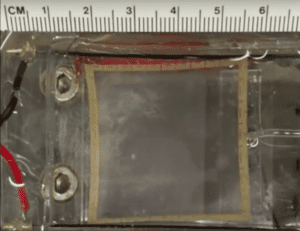
Duke Heart Tissue

[Image from Duke University]

A team of biomedical engineers have developed a fully functioning artificial human heart muscle that can be used as a patch to repair dead heart muscle.

Duke University biomedical engineers developed the patch to be used in human patients who have previously suffered a heart attack.

“Right now, virtually all existing therapies are aimed at reducing the symptoms from the damage that’s already been done to the heart, but no approaches have been able to replace the muscle that’s lost, because once it’s dead, it does not grow back on its own,” Ilia Shadrin, a biomedical engineering doctoral student at Duke University and first author on the study, said in a press release. “This is a way that we could replace lost muscle with tissue made outside the body.”

Following a heart attack, the heart is unable to natural regenerate itself. Scar tissue replaces dead muscle and electrical signals are no longer transmitted to contracted, which means a heartbeat will not be as strong or as smooth as before the heart attack.

When the heart is unable to regenerate itself, heart failure occurs. Approximately 5.7 million Americans have heart failure, according to the CDC. Almost half of the people diagnosed with heart failure will die within five years.

Researchers have been testing using stem cells from bone marrow, blood or the heart and implanting them into the damaged area to replenish damaged muscle. However, fewer than 1% of injected cells are able to survive and stay in the heart and an even smaller amount become heart muscle cells.

Heart patches implanted over dead heart muscles are able to stay active for a longer period of time while giving the heart the strength it needs for electrical signals to move through it. The patches are also able to secrete enzymes and growth factors that helps damaged tissues that have not died.

The Duke University-developed heart patch is the first artificial heart muscle patch that is both big enough to cover the damaged area and strong and electrically active enough to be an option in repairing dead heart muscle cells.

“Creating individual cardiac muscle cells is pretty commonplace, but people have been focused on growing miniature tissues for drug development,” said Nenad Bursac, professor of biomedical engineering at Duke University. “Scaling it up to this size is something that has never been done and it required a lot of engineering ingenuity.”

The cells are grown from human pluripotent stem calls that can transform into any cell type in the body. Heart cells are able to be grown from cardiomyocytes, fibroblasts and endothelial and smooth muscle cells. The right combination of cells, support structures, growth factors, nutrients and culture conditions can create the right environment to grow large, fully functional human heart tissue patches, a process that the research team has worked on for years.

“It turns out that rocking the samples to bathe and splash them to improve nutrient delivery is extremely important,” said Shadrin. “We obtained three-to-five times better results with the rocking cultures compared to our static samples.”

Results were better that other 1 sq. cm and 4 sq. cm patches they previously developed. After making the patches bigger at 16 sq. cm and five to eight cells thick, the heart muscle was shown to be fully functional with electrical, mechanical and structural properties that mimicked a normal, healthy heart.

“This is extremely difficult to do, as the larger the tissue that is grown, the harder it is to maintain the same properties throughout it,” said Bursac. “Equally challenging has been making the tissues mature to adult strength on a fast timescale of five weeks while achieving properties that typically take years of normal human development.”

The heart patches have been tested in mouse and rat hearts and have been able to survive, become vascularized and remain functional after implanted. The researchers suggest that for the heart patch to be a viable replacement of dead cardiac muscle in human patients, it would need to be thicker than what they developed. The patches need to be vascularized so cells can get enough oxygen and nutrients to be thick enough to function has cardiac muscle in the human heart.

“Full integration like that is really important, not just to improve the heart’s mechanical pumping, but to ensure the smooth spread of electrical waves and minimize the risk of arrhythmias,” said Shadrin.

“We are actively working on that, as are others, but for now, we are thrilled to have the ‘size matters’ part figured out,” Bursac said.

Sharon and Bursac plan to integrate the patches into pig hearts with the help of researchers at the University of Alabama while researchers at the University of Wisconsin-Madison will work on developing improved stem cells to create the main cell types that make up heart patches to minimize immune response in implants.

The research was published in the journal Nature Communications and was funded by the National Institutes of Health.


About The Author

Danielle Kirsh

Danielle Kirsh is an award-winning journalist and senior editor for Medical Design & Outsourcing, MassDevice, and Medical Tubing + Extrusion, and the founder of Women in Medtech and lead editor for Big 100. She received her bachelor's degree in broadcast journalism and mass communication from Norfolk State University and is pursuing her master's in global strategic communications at the University of Florida. You can connect with her on Twitter and LinkedIn, or email her at [email protected].

Related Articles Read More >

An illustration showing Corcym's Memo 4D Curve's laser-cut nitinol core.
Laser-cut nitinol and a layered design let these cardiac implants flex
Reconstructed 3D fluorescence image of the stained biohybrid mesh-tissue integration. The red, green, and blue colors correspond to the mesh, F-actin, and nuclei, respectively.
Researchers mesh electronics with human cells to develop living battery
A photo of J&J MedTech SVP and Global Head of Digital Shan Jegatheeswaran.
Where Johnson & Johnson sees opportunity in surgical intelligence
A close of of Medical 21's Maverics graft.
A surgeon’s prayer helped St. Jude Medical founder Manny Villafaña size his latest device
“mdo
EXPAND YOUR KNOWLEDGE AND STAY CONNECTED
Get the latest medical device business news, application and technology trends.

DeviceTalks Weekly

See More >

MDO Digital Edition

Digital Edition

Subscribe to Medical Design & Outsourcing. Bookmark, share and interact with the leading medical design engineering magazine today.

MEDTECH 100 INDEX

Medtech 100 logo
Market Summary > Current Price
The MedTech 100 is a financial index calculated using the BIG100 companies covered in Medical Design and Outsourcing.

New MedTech Resource

Medical Tubing

MassDevice

Mass Device

The Medical Device Business Journal. MassDevice is the leading medical device news business journal telling the stories of the devices that save lives.

Visit Website
MDO ad
Medical Design and Outsourcing
  • MassDevice
  • DeviceTalks
  • MedTech100 Index
  • Medical Tubing + Extrusion
  • Medical Design Sourcing
  • Drug Delivery Business News
  • Drug Discovery & Development
  • Pharmaceutical Processing World
  • R&D World
  • About Us/Contact
  • Advertise With Us
  • Subscribe to Print Magazine
  • Subscribe to our E-Newsletter
  • Listen to our Weekly Podcasts
  • Join our DeviceTalks Tuesdays Discussion

Copyright © 2026 Arrowfly, LLC. All Rights Reserved. The material on this site may not be reproduced, distributed, transmitted, cached or otherwise used, except with the prior written permission of Arrowfly LLC. Site Map | Privacy Policy | RSS

Search Medical Design & Outsourcing

  • Home
  • Medical Device Business
    • Mergers & Acquisitions
    • Financial
    • Regulatory
  • Applications
    • Cardiovascular
    • Devices
    • Imaging
    • Implantables
    • Medical Equipment
    • Orthopedic
    • Surgical
  • Technologies
    • Supplies and Components Index
    • Contract Manufacturing
    • Components
    • Electronics
    • Extrusions
    • Materials
    • Motion Control
    • Prototyping
    • Pumps
    • Tubing
  • MedTech Resources
    • Medtech Events in 2026
    • The 2025 Medtech Big 100
    • Medical Device Handbook
    • MedTech 100 Index
    • Subscribe to Print Magazine
    • DeviceTalks
    • Digital Editions
    • eBooks
    • Educational Assets
    • Manufacturer Search
    • Podcasts
    • Webinars / Digital Events
    • Whitepapers
    • Voices
    • Views
    • Video
  • 2026 Leadership
    • 2025 Winners
    • 2024 Winners
    • 2023 Winners
    • 2022 Winners
    • 2021 Winners
  • Women in Medtech
  • Advertise
  • Subscribe


