Medical Design and Outsourcing

  • Home
  • Medical Device Business
    • Mergers & Acquisitions
    • Financial
    • Regulatory
  • Applications
    • Cardiovascular
    • Devices
    • Imaging
    • Implantables
    • Medical Equipment
    • Orthopedic
    • Surgical
  • Technologies
    • Supplies and Components Index
    • Contract Manufacturing
    • Components
    • Electronics
    • Extrusions
    • Materials
    • Motion Control
    • Prototyping
    • Pumps
    • Tubing
  • MedTech Resources
    • Medtech Events in 2026
    • The 2026 Medtech Big 100
    • Medical Device Handbook
    • MedTech 100 Index
    • Subscribe to Print Magazine
    • DeviceTalks
    • Digital Editions
    • eBooks
    • Educational Assets
    • Manufacturer Search
    • Podcasts
    • Webinars / Digital Events
    • Whitepapers
    • Voices
    • Views
    • Video
  • 2026 Leadership
    • 2025 Winners
    • 2024 Winners
    • 2023 Winners
    • 2022 Winners
    • 2021 Winners
  • Women in Medtech
  • Advertise
  • Subscribe

Engineers Create Sensor to Monitor Heart Cells

January 8, 2019 By University of Tokyo

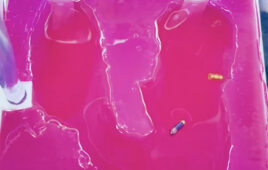
For the first time, engineers have demonstrated an electronic device to closely monitor beating heart cells without affecting their behavior. A collaboration between the University of Tokyo, Tokyo Women’s Medical University and RIKEN in Japan produced a functional sample of heart cells with a soft nanomesh sensor in direct contact with the tissue. This device could aid study of other cells, organs and medicines. It also paves the way for future embedded medical devices.

Inside each of us beats a life-sustaining heart. Unfortunately, the organ is not always perfect and sometimes goes wrong. One way or another research on the heart is fundamentally important to us all. So when Sunghoon Lee, a researcher in Professor Takao Someya’s group at the University of Tokyo, came up with the idea for an ultrasoft electronic sensor that could monitor functioning cells, his team jumped at the chance to use this sensor to study heart cells, or cardiomyocytes, as they beat.

“When researchers study cardiomyocytes in action they culture them on hard petri dishes and attach rigid sensor probes. These impede the cells’ natural tendency to move as the sample beats, so observations do not reflect reality well,” said Lee. “Our nanomesh sensor frees researchers to study cardiomyocytes and other cell cultures in a way more faithful to how they are in nature. The key is to use the sensor in conjunction with a flexible substrate, or base, for the cells to grow on.”

For this research, collaborators from Tokyo Women’s Medical University supplied a healthy culture of cardiomyocytes derived from human stem cells. The base for the culture was a very soft material called fibrin gel. Lee placed the nanomesh sensor on top of the cell culture in a complex process, which involved removing and adding liquid medium at the proper times. This was important to correctly orient the nanomesh sensor.

“The fine mesh sensor is difficult to place perfectly. This reflects the delicate touch necessary to fabricate it in the first place,” continued Lee. “The polyurethane strands which underlie the entire mesh sensor are 10 times thinner than a human hair. It took a lot of practice and pushed my patience to its limit, but eventually I made some working prototypes.”

To make the sensors, first a process called electro-spinning extrudes ultrafine polyurethane strands into a flat sheet, similar to how some common 3D printers work. This spiderweb like sheet is then coated in parylene, a type of plastic, to strengthen it. The parylene on certain sections of the mesh is removed by a dry etching process with a stencil. Gold is then applied to these areas to make the sensor probes and communication wires. Additional parylene isolates the probes so their signals do not interfere with one another.

With three probes, the sensor reads voltage present at three locations. The readout appears familiar to anyone who’s watched a hospital drama as it’s essentially a cardiogram. Thanks to the multiple probes, researchers can see propagation of signals, which result from and trigger the cells to beat. These signals are known as an action or field potential and are extremely important when assessing the effect of drugs on the heart.

“Drug samples need to get to the cell sample and a solid sensor would either poorly distribute the drug or prevent it reaching the sample altogether. So the porous nature of the nanomesh sensor was intentional and a driving force behind the whole idea,” said Lee. “Whether it’s for drug research, heart monitors or to reduce animal testing, I can’t wait to see this device produced and used in the field. I still get a powerful feeling when I see the close-up images of those golden threads.”
Related Articles Read More >

A photo of Johns Hopkins researcher's mini robots in a phantom heart benchtop test.
Johns Hopkins researchers develop miniature magnetic drug delivery robots to target infections at the site
An image showing a three-dimensional (3D) model of a heart.
Mussallem CHD Alliance launches 3D cardiac modeling collaboration
The most innovative medical devices of 2026
An illustration showing Corcym's Memo 4D Curve's laser-cut nitinol core.
Laser-cut nitinol and a layered design let these cardiac implants flex
“mdo
EXPAND YOUR KNOWLEDGE AND STAY CONNECTED
Get the latest medical device business news, application and technology trends.

DeviceTalks Weekly

See More >

MDO Digital Edition

Digital Edition

Subscribe to Medical Design & Outsourcing. Bookmark, share and interact with the leading medical design engineering magazine today.

MEDTECH 100 INDEX

Medtech 100 logo
Market Summary > Current Price
The MedTech 100 is a financial index calculated using the BIG100 companies covered in Medical Design and Outsourcing.

New MedTech Resource

Medical Tubing

MassDevice

Mass Device

The Medical Device Business Journal. MassDevice is the leading medical device news business journal telling the stories of the devices that save lives.

Visit Website
MDO ad
Medical Design and Outsourcing
  • MassDevice
  • DeviceTalks
  • MedTech100 Index
  • Medical Tubing + Extrusion
  • Medical Design Sourcing
  • Drug Delivery Business News
  • Drug Discovery & Development
  • Pharmaceutical Processing World
  • R&D World
  • About Us/Contact
  • Advertise With Us
  • Subscribe to Print Magazine
  • Subscribe to our E-Newsletter
  • Listen to our Weekly Podcasts
  • Join our DeviceTalks Tuesdays Discussion

Copyright © 2026 Arrowfly, LLC. All Rights Reserved. The material on this site may not be reproduced, distributed, transmitted, cached or otherwise used, except with the prior written permission of Arrowfly LLC. Site Map | Privacy Policy | RSS

Search Medical Design & Outsourcing

  • Home
  • Medical Device Business
    • Mergers & Acquisitions
    • Financial
    • Regulatory
  • Applications
    • Cardiovascular
    • Devices
    • Imaging
    • Implantables
    • Medical Equipment
    • Orthopedic
    • Surgical
  • Technologies
    • Supplies and Components Index
    • Contract Manufacturing
    • Components
    • Electronics
    • Extrusions
    • Materials
    • Motion Control
    • Prototyping
    • Pumps
    • Tubing
  • MedTech Resources
    • Medtech Events in 2026
    • The 2026 Medtech Big 100
    • Medical Device Handbook
    • MedTech 100 Index
    • Subscribe to Print Magazine
    • DeviceTalks
    • Digital Editions
    • eBooks
    • Educational Assets
    • Manufacturer Search
    • Podcasts
    • Webinars / Digital Events
    • Whitepapers
    • Voices
    • Views
    • Video
  • 2026 Leadership
    • 2025 Winners
    • 2024 Winners
    • 2023 Winners
    • 2022 Winners
    • 2021 Winners
  • Women in Medtech
  • Advertise
  • Subscribe

