Medical Design and Outsourcing

  • Home
  • Medical Device Business
    • Mergers & Acquisitions
    • Financial
    • Regulatory
  • Applications
    • Cardiovascular
    • Devices
    • Imaging
    • Implantables
    • Medical Equipment
    • Orthopedic
    • Surgical
  • Technologies
    • Supplies and Components Index
    • Contract Manufacturing
    • Components
    • Electronics
    • Extrusions
    • Materials
    • Motion Control
    • Prototyping
    • Pumps
    • Tubing
  • MedTech Resources
    • Medtech Events in 2026
    • The 2026 Medtech Big 100
    • Medical Device Handbook
    • MedTech 100 Index
    • Subscribe to Print Magazine
    • DeviceTalks
    • Digital Editions
    • eBooks
    • Educational Assets
    • Manufacturer Search
    • Podcasts
    • Webinars / Digital Events
    • Whitepapers
    • Voices
    • Views
    • Video
  • 2026 Leadership
    • 2025 Winners
    • 2024 Winners
    • 2023 Winners
    • 2022 Winners
    • 2021 Winners
  • Women in Medtech
  • Advertise
  • Subscribe

Hybrid Organic-Inorganic Materials Can Self-Assemble into Tiny Doughnut-Like Structures

January 17, 2017 By Phys.org

Engineered nanometer- and micrometer-scale structures have a vast array of uses in electronics, sensors, and biomedical applications. Because these are difficult to fabricate, KAUST researchers are trying a bottom-up philosophy, which harnesses the natural forces between atoms and molecules such that microstructures form themselves.

This approach, a departure from the usual top-down approach, involves the etching away of material to leave the desired sculpted structure behind; however, because this approach can be tricky, expensive and time consuming, KAUST researchers became motivated to find a new approach.

(Credit: KAUST/Xavier Pita)

Associate Professor of Chemical Science Niveen Khashab and her team and colleagues from the Imaging and Characterization Core Lab and the Max-Planck-Institute of Colloids and Interfaces in Germany demonstrated this bottom-up approach in the self-assembly of microscale toroids (doughnut-shaped forms), made of both inorganic and organic materials.

A number of forces can bring atoms and molecules together including surface tension, electrostatic attraction, and repulsion, and a weak fundamental force known as van der Waals interactions.

The toroids created by Khashab’s team were formed via metal coordination.

A metallic sodium chloride atom, an amphiphilic (both hydrophilic and lipophilic) molecule called saponin and a polymer known as chitosan were combined and formed weak chemical bonds.

“This is a result of what is known as coordination-driven self-assembly,” explains Khashab. “The metal ions interact with different chemical motifs leading to the formation of novel frameworks and morphologies.”

Within just a few minutes, coordination bonding between the iron atoms and the oxygen and the hydrogen in the molecules initially drives the self-assembly of star-like nanostructures. Repulsive electrostatic and hydrophobic interactions then lead to the formation of toroids.

The toroids were approximately 3.9 to 4.8 micrometers in diameter and held their shape even a month after fabrication. Disassembly of the microstructures required five hours of mechanically stirring the solution.

There are numerous naturally occurring biological structures that take a toroid shape; for example, proteins and DNA of some types of viruses and bacteria self-assemble in this way. Many of these are known to play an important role in the formation of pores in biomembranes.

This research could help to build a better understanding of how these complex biostructures are created and provide a way of mimicking them at the molecular level.

“Next, we hope to prepare a new generation of these hybrid structures with a temperature-responsive gap size,” says Khashab. “These toroid structures could be used as pockets for active catalysis and separation.”

Related Articles Read More >

The most innovative medical devices of 2026
Reconstructed 3D fluorescence image of the stained biohybrid mesh-tissue integration. The red, green, and blue colors correspond to the mesh, F-actin, and nuclei, respectively.
Researchers mesh electronics with human cells to develop living battery
A photo of the Paradromics Connexus brain-computer interface on a fingertip.
How Paradromics designed its Connexus brain-computer interface system
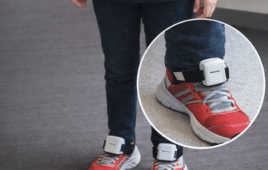
A photo of the wearable gait sensors used in the study.
Yale-led study finds wearable sensors match motion capture for gait tracking in knee osteoarthritis
“mdo
EXPAND YOUR KNOWLEDGE AND STAY CONNECTED
Get the latest medical device business news, application and technology trends.

DeviceTalks Weekly

See More >

MDO Digital Edition

Digital Edition

Subscribe to Medical Design & Outsourcing. Bookmark, share and interact with the leading medical design engineering magazine today.

MEDTECH 100 INDEX

Medtech 100 logo
Market Summary > Current Price
The MedTech 100 is a financial index calculated using the BIG100 companies covered in Medical Design and Outsourcing.

New MedTech Resource

Medical Tubing

MassDevice

Mass Device

The Medical Device Business Journal. MassDevice is the leading medical device news business journal telling the stories of the devices that save lives.

Visit Website
MDO ad
Medical Design and Outsourcing
  • MassDevice
  • DeviceTalks
  • MedTech100 Index
  • Medical Tubing + Extrusion
  • Medical Design Sourcing
  • Drug Delivery Business News
  • Drug Discovery & Development
  • Pharmaceutical Processing World
  • R&D World
  • About Us/Contact
  • Advertise With Us
  • Subscribe to Print Magazine
  • Subscribe to our E-Newsletter
  • Listen to our Weekly Podcasts
  • Join our DeviceTalks Tuesdays Discussion

Copyright © 2026 Arrowfly, LLC. All Rights Reserved. The material on this site may not be reproduced, distributed, transmitted, cached or otherwise used, except with the prior written permission of Arrowfly LLC. Site Map | Privacy Policy | RSS

Search Medical Design & Outsourcing

  • Home
  • Medical Device Business
    • Mergers & Acquisitions
    • Financial
    • Regulatory
  • Applications
    • Cardiovascular
    • Devices
    • Imaging
    • Implantables
    • Medical Equipment
    • Orthopedic
    • Surgical
  • Technologies
    • Supplies and Components Index
    • Contract Manufacturing
    • Components
    • Electronics
    • Extrusions
    • Materials
    • Motion Control
    • Prototyping
    • Pumps
    • Tubing
  • MedTech Resources
    • Medtech Events in 2026
    • The 2026 Medtech Big 100
    • Medical Device Handbook
    • MedTech 100 Index
    • Subscribe to Print Magazine
    • DeviceTalks
    • Digital Editions
    • eBooks
    • Educational Assets
    • Manufacturer Search
    • Podcasts
    • Webinars / Digital Events
    • Whitepapers
    • Voices
    • Views
    • Video
  • 2026 Leadership
    • 2025 Winners
    • 2024 Winners
    • 2023 Winners
    • 2022 Winners
    • 2021 Winners
  • Women in Medtech
  • Advertise
  • Subscribe